
Signs you need ac service
- Furnace will not start, short-cycles or blows cold air
- AC runs but the house will not cool down
- Ice on the outdoor unit or refrigerant lines
- Water around the furnace or indoor ductless head
- Higher energy bills without a change in use
- New noises: banging, squealing, grinding or rattling
What is included
- Thermostat and electrical checks
- Inspection of burners, flame sensor, igniter and heat exchanger (furnaces)
- Coil, filter and condensate drain checks (AC, heat pump, ductless)
- Airflow and temperature split measurements
- Written summary and options
What is not included
- Major parts such as compressors, heat exchangers or blower motors (quoted first)
- Ductwork redesign
- Electrical panel upgrades
Our process
- 1
Book
Tell us the equipment type and what is happening.
- 2
Diagnose
We test the system and find the root cause.
- 3
Quote
You get a clear repair or replacement option with pricing.
- 4
Fix and verify
We complete the work and confirm the system heats or cools properly.
Repair or replace?
Furnaces and AC units are often worth repairing up to around 12 to 15 years old. If the equipment is older, uses phased-out refrigerant, or needs a major part, replacement is often the better long-term value.
Customer reviews
Sample review for design preview, not a real customer
“Furnace would not ignite on a cold morning. They traced it to a dirty flame sensor and checked the whole system before leaving.”
Sample review for design preview, not a real customer
“Clean install of a ductless head in our condo bedroom. They coordinated with building management, which saved me a lot of back and forth.”
Frequently asked questions
Related services
Nearby areas we serve
Complete guide
A homeowner's guide to ac service
Most people search for ac service when something has already gone wrong, or when they want to get ahead of a problem before the season starts. Either way, this guide gives you the full picture: how your heating and cooling system works, what fails, how we approach the job and how pricing works.
AC Service covers diagnosis, service and repair for your heating and cooling system. We start by understanding the symptoms, then test the parts most likely to be involved.
You get a clear explanation of what we found and a written price before any work begins, so you stay in control of the decision.
What to ask during the visit
You do not need technical knowledge to interview your technician. "What did you find?", "What are my options?" and "What would you do if it were your house?" cover most of what matters.
Write the answers down or ask for them in the visit notes. When the next decision about your heating and cooling system comes up, you will be glad you did.
How to get ready for the visit
Before we arrive, gather anything that tells the story of your heating and cooling system: the model and serial number if you can find them, previous invoices, and notes about what the equipment has been doing.
Plan for access and parking, especially in condos and townhomes where entry needs booking or a fob. The smoother the arrival, the more of the visit goes to actual diagnosis and repair.
What is inside a heating and cooling system
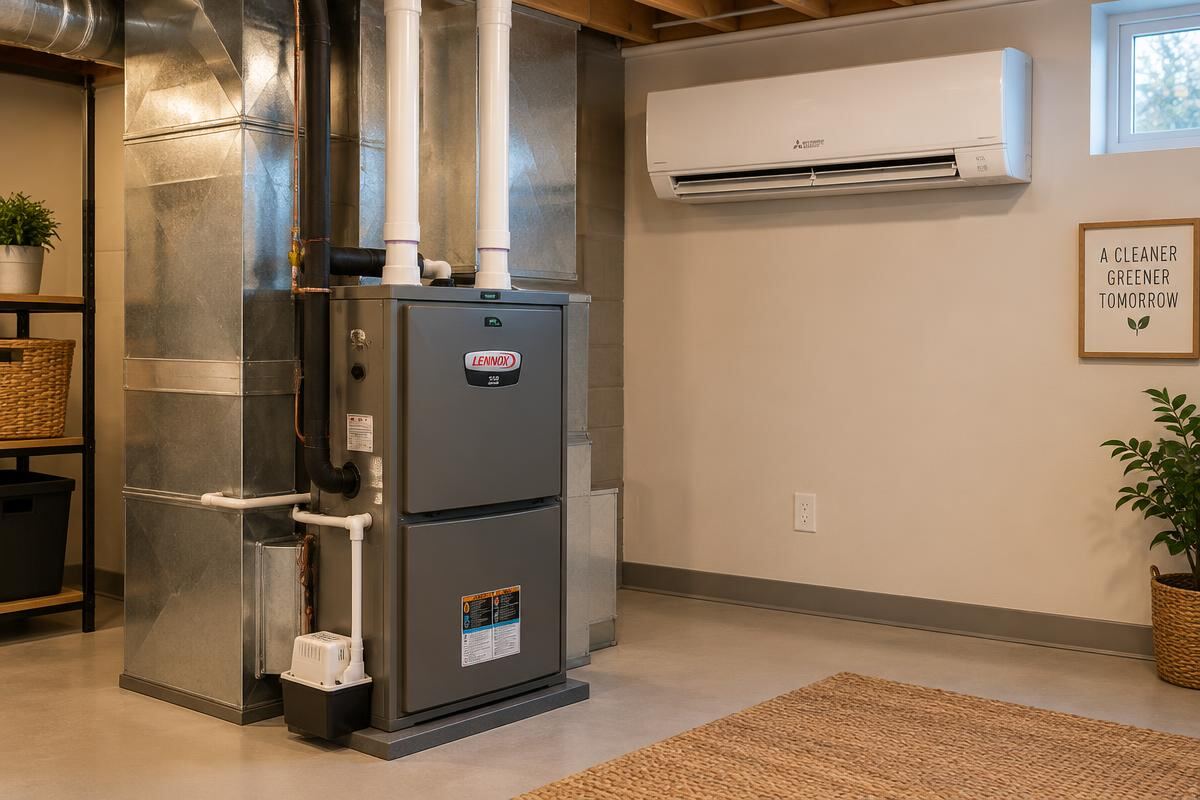
Modern high-efficiency furnaces vent through plastic pipe in a side wall and produce condensate that drains away. Older mid-efficiency units vent through a metal flue into a chimney. The type you have affects which parts can fail and how they are tested.
Ductwork is part of the system, not an afterthought. Leaky or poorly balanced ducts cause hot and cold rooms, noise and wasted energy, and no new furnace will fix a duct problem on its own.
One thing worth knowing about your heating and cooling system: most failures give warning signs weeks before a full breakdown. Unusual noises, longer run times and small changes in performance are the equipment asking for attention, and responding early almost always costs less than waiting for a complete stop.
Efficiency and your gas bill
Efficiency losses are usually gradual, which is why they go unnoticed. A heating and cooling system that runs a little longer each cycle costs a little more each month, and over a few years the drift adds up to real money.
Regular maintenance keeps equipment close to its rated performance. When replacement time comes, the efficiency jump from older equipment to new is often large enough to factor into the decision.
Maintenance tips to prevent future ac service
Changing your furnace filter every one to three months is the easiest maintenance you can do yourself. A clogged filter strains the blower, reduces airflow and can cause the system to overheat and shut down.
Keep the outdoor air conditioning or heat pump unit clear: a metre of space around it, no leaves or dryer lint on the coil, and no storage against it. Restricted airflow is a common cause of poor cooling and frozen lines.
Between professional visits, the biggest favour you can do your heating and cooling system is paying attention. Listen for new sounds, watch for changes in performance and deal with small issues before the busy season arrives.
Deciding between repair and replacement
There is no universal answer, but there are honest questions. How old is the heating and cooling system? Has it needed repeated repairs in recent years? Would new equipment cut your gas or electricity use enough to matter? Are parts still easy to get?
We walk through those questions with you on site and price both paths when the decision is close. If a repair buys you several more reliable years for a reasonable amount, we will say that too, even though replacement is the bigger job.
Pricing for ac service
The estimated range for ac service is $200 to $600, with many jobs averaging around $400. This is an estimated range based on typical market prices, and your final price is confirmed after assessment.
The main things that move the price are the age and type of the heating and cooling system, the parts needed, access (tight spaces, finished ceilings or rooftop work take longer), and whether permits or inspections are required. HST is added to the final invoice.
To get an accurate quote quickly, send the make and model, a photo of the unit and its rating plate, and a short description of the problem. You can use the quote form on this page or try our online price estimator for a starting range.
Habits that shorten the life of a heating and cooling system
Blocking vents and air intakes is a quiet problem. Furniture, storage, snow and landscaping can all restrict the airflow a heating and cooling system needs to run safely, and the damage builds slowly enough that nobody notices until performance drops.
Another common one is skipping routine care for years and then expecting a single visit to undo it. Maintenance works best as a habit, not a rescue.
If you live in a condo or townhome
Condo and townhouse owners have extra logistics: booking elevators, arranging parking, and sometimes getting property management approval before work starts. Mention your building when you request a quote so these are planned for rather than discovered on the day.
Some buildings also have shared systems. If your equipment connects to shared venting or mechanical rooms, your property manager may need to be involved, and it is better to know that before booking.
When to book ac service
Every trade has a rush season, and heating and gas work is no different. The first cold snap of fall fills schedules fast, and the first hot week of summer does the same for cooling equipment.
If your ac service is not urgent, the quiet weeks between seasons are the easiest time to book. You get more flexible appointment windows and, if a part has to be ordered, the wait matters less.
That said, a heating and cooling system showing warning signs should not wait for a convenient month. Small faults grow, and a breakdown in January is harder on everyone than a check in September.
How to choose a ac service provider
The right company treats your questions as part of the job, not an interruption. If an answer about your heating and cooling system feels evasive, keep looking.
- Get the diagnosis explained before approving any repair
- Confirm gas work will be done by a properly certified technician
- Ask who handles permits and inspections if the job needs them
- Compare quotes on the same scope: parts, labour, testing and cleanup
- Look for clear answers about repair versus replacement
- Check reviews that mention the same service you need
Getting a fair quote for ac service
The cheapest quote and the best value are rarely the same thing. Ask each company what is included, what could change the price and how the final invoice is calculated, then compare the answers side by side.
Be cautious of any quote given without seeing the equipment. Real pricing for heating and cooling system work starts with an assessment and a written number you approve before work begins.
Urgent problem or book-ahead job?
Not every fault is an emergency, and treating them all as one leads to stressed decisions. The clear emergencies involve safety: gas smells, carbon monoxide alarms and anything scorched or smoking. Comfort problems can usually wait a day or two for a proper assessment.
If the equipment still runs, note what it is doing and book a regular visit. If it involves gas, smoke or a safety alarm, follow the safety steps on this page first.
AC Service near you
Additions and finished basements change how air moves through a home. If some rooms never reach temperature after a renovation, the fix is often balancing or duct modification rather than bigger equipment.
AC Service is available city-wide: Fairview, Hurontario, Lakeview, Lisgar, Lorne Park, Malton, Meadowvale, Meadowvale Village, Mineola and Mississauga Valleys, and every neighbourhood around them. Travel time stays short, which helps when the problem cannot wait.
Timing for a typical ac service job
Most ac service visits take one to two hours once the technician is on site. Straightforward service and common repairs usually finish in a single visit, while jobs needing special-order parts or a permit inspection can stretch over two appointments.
The easiest way to shorten the visit is preparation: have the model and serial number ready, clear access to the heating and cooling system and describe the symptoms in the quote form. Technicians can often bring the likely part on the first trip.
Once the technician leaves
If something does not seem right after the work, contact us rather than adjusting the heating and cooling system yourself. Describing exactly what changed since the visit helps us respond quickly and accurately.
It also helps to note the date of the visit. Many maintenance tasks work on a yearly cycle, and a reminder set for the same month next year keeps the heating and cooling system on a sensible schedule.
How a ac service appointment works
The visit starts with a conversation. The technician asks what you have noticed, when it started and whether anything changed recently, such as a power outage, renovation or new appliance. This often points straight to the cause.
Next comes a visual inspection and testing. Depending on the heating and cooling system, that can include gas pressure readings, electrical tests on sensors and igniters, venting checks and a full operating cycle. Findings are explained as the work goes, and you can ask to see any worn or failed part.
Before any repair, you receive a written price for parts and labour. If a part needs ordering, we tell you the expected wait and whether the heating and cooling system is safe to use in the meantime. After the work, the system is tested again and you get notes on what was done.
Common problems that lead to ac service
These are the issues we see most often when homeowners ask about ac service. Several can share the same root cause, which is why testing comes before replacing parts.
Keep in mind that the same symptom can have different causes on different models of heating and cooling system. That is why we diagnose rather than guess, and why a written price comes after testing, not before.
- System short-cycles, turning on and off every few minutes
- Loud banging, squealing or grinding from the blower
- Water around the furnace from a blocked condensate drain
- Uneven temperatures between floors
- A burning or musty smell when the system starts
- A humming sound from the outdoor unit with no fan movement
- Thermostat display is blank or unresponsive
- Furnace runs but blows cold or lukewarm air
What you get when you book with EmberRise Pro
- A technician who works on heating and cooling systems regularly
- A written price before any work begins
- Plain-language notes on what was found and fixed
- Honest advice on repair versus replacement
- Tidy work areas and protected floors
A word on safety
A furnace burns fuel inside your home, so a cracked heat exchanger or blocked vent can release carbon monoxide. Keep carbon monoxide alarms on every level and call a technician if an alarm sounds, after getting everyone outside.