
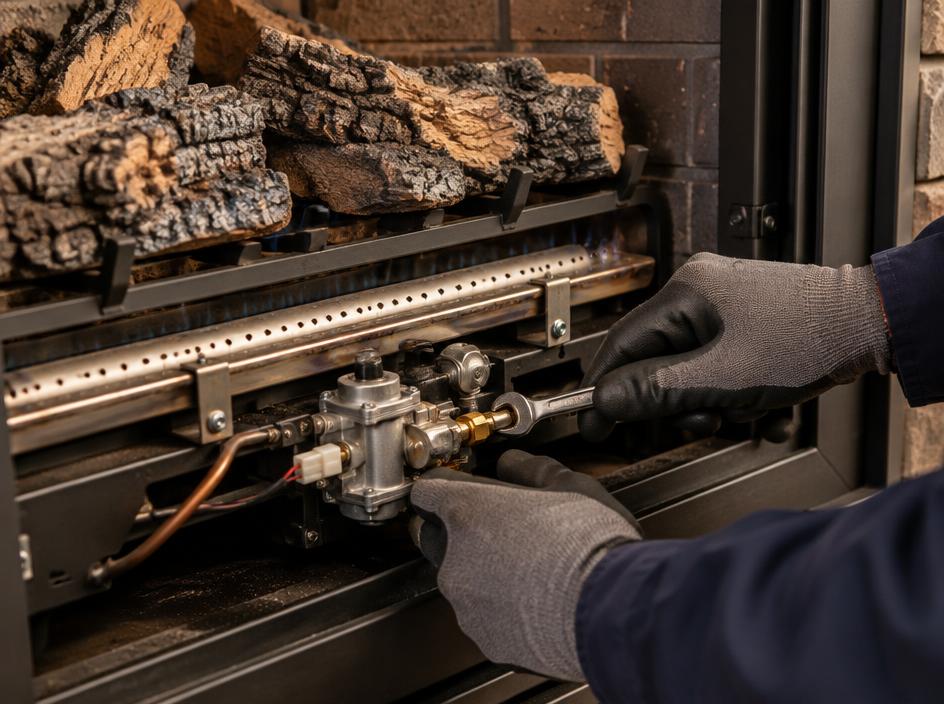
Signs you need gas fireplace repair
- Pilot light will not stay lit or keeps going out
- Burner lights, then shuts off after a few minutes
- Glass turns white or cloudy quickly
- Yellow, lazy or sooty flames instead of crisp blue-based flames
- Clicking with no ignition, or the remote or wall switch stopped working
- Unusual smells, rumbling or a fan that is louder than it used to be
What is included
- Safety check of gas connections, valve and venting
- Cleaning of burner, pilot assembly and glass
- Testing thermocouple, thermopile or electronic ignition
- Log, media and gasket placement check
- Clear written notes on what we found and any recommended parts
What is not included
- Replacement parts (quoted before any work)
- Masonry, drywall or mantel finishing
- Venting changes that need a new permit
Our process
- 1
Tell us the symptoms
Share the make, model if you have it, and what the fireplace is doing.
- 2
On-site diagnosis
A technician tests ignition, gas pressure and venting before recommending anything.
- 3
Clear quote
You get the price for parts and labour before work starts.
- 4
Repair and test
We complete the work, run the unit through a full cycle and explain what changed.
Repair or replace?
Most gas fireplaces under about 15 years old are worth repairing: thermocouples, thermopiles, igniters and valves are common parts. Replacement starts to make sense when the firebox is cracked, parts are discontinued, or repeated repairs cost more than half the price of a new insert.
Customer reviews
Sample review for design preview, not a real customer
“Our fireplace would light and then shut off after a minute. The technician explained it was the thermocouple, showed us the old part and had it running the same visit.”
Sample review for design preview, not a real customer
“Annual clean and check on our insert. Glass is spotless and they pointed out a worn gasket we should replace next season.”
Frequently asked questions
Related services
Nearby areas we serve
Complete guide
A homeowner's guide to gas fireplace repair
Most people search for gas fireplace repair when something has already gone wrong, or when they want to get ahead of a problem before the season starts. Either way, this guide gives you the full picture: how your gas fireplace works, what fails, how we approach the job and how pricing works.
Gas Fireplace Repair covers diagnosis, service and repair for your gas fireplace. We start by understanding the symptoms, then test the parts most likely to be involved.
You get a clear explanation of what we found and a written price before any work begins, so you stay in control of the decision.
Gas Fireplace Repair near you
Fireplace work spans several generations of equipment. Older masonry openings in Port Credit and Mineola often hold gas inserts, post-war bungalows in Applewood and Dixie tend to have factory-built units, and newer developments in Churchill Meadows favour sleek linear models. The age and style of the installation shapes both the likely faults and the parts we bring.
Gas Fireplace Repair is available city-wide: Port Credit, Rathwood, Rockwood Village, Sheridan, Streetsville, Applewood, Central Erin Mills, Churchill Meadows, Clarkson and Cooksville, and every neighbourhood around them. Travel time stays short, which helps when the problem cannot wait.
What happens during a gas fireplace repair visit
The visit starts with a conversation. The technician asks what you have noticed, when it started and whether anything changed recently, such as a power outage, renovation or new appliance. This often points straight to the cause.
Next comes a visual inspection and testing. Depending on the gas fireplace, that can include gas pressure readings, electrical tests on sensors and igniters, venting checks and a full operating cycle. Findings are explained as the work goes, and you can ask to see any worn or failed part.
Before any repair, you receive a written price for parts and labour. If a part needs ordering, we tell you the expected wait and whether the gas fireplace is safe to use in the meantime. After the work, the system is tested again and you get notes on what was done.
How long gas fireplace repair takes
Most gas fireplace repair visits take one to two hours once the technician is on site. Straightforward service and common repairs usually finish in a single visit, while jobs needing special-order parts or a permit inspection can stretch over two appointments.
The easiest way to shorten the visit is preparation: have the model and serial number ready, clear access to the gas fireplace and describe the symptoms in the quote form. Technicians can often bring the likely part on the first trip.
Keeping your gas fireplace in good shape
If the glass fogs or hazes quickly after cleaning, mention it when booking. Fast re-hazing can point to a venting or combustion issue that a standard cleaning will not solve on its own.
Annual service is the single best way to keep a gas fireplace safe and reliable. A technician removes the glass, cleans the burner and pilot, vacuums the firebox, checks log placement, inspects the gasket and tests the ignition parts with a meter. Venting terminations outside are checked for blockages such as bird nests, leaves and snow.
Between professional visits, the biggest favour you can do your gas fireplace is paying attention. Listen for new sounds, watch for changes in performance and deal with small issues before the busy season arrives.
Common problems that lead to gas fireplace repair
These are the issues we see most often when homeowners ask about gas fireplace repair. Several can share the same root cause, which is why testing comes before replacing parts.
It is tempting to ignore an intermittent fault, but intermittent problems on a gas fireplace tend to become permanent ones at the worst possible time. A check while the symptom is still mild is usually a shorter, cheaper visit.
- The unit works from the wall switch but not the remote
- Blower fan is noisy, slow or stops working
- A smell of hot dust or burning at the first start of the season
- Remote control or wall switch works some days and not others
- Fireplace shuts itself off after running for a while
- Flames lift off the burner or make a roaring noise
- A faint gas smell near the unit that comes and goes
- Burner will not come on even though the pilot is lit, often a thermopile, switch or wiring fault
Habits that shorten the life of a gas fireplace
Well-meaning DIY is behind a surprising number of gas fireplace repair calls. Opening sealed components or adjusting gas and combustion parts without training can create a safety hazard where none existed, and it often makes the professional repair more involved.
The safer rule is simple: basic cleaning and filter care from the owner's manual is fine, and anything involving gas, combustion, wiring or internal parts belongs to a certified technician.
If you live in a condo or townhome
In multi-unit buildings, access is the schedule. Elevator bookings, concierge instructions and parking limits can matter as much as the repair itself, so include those details in your quote request.
Check your condo documents before booking: some buildings require contractors to register with management, and some repairs to shared elements are the corporation's responsibility rather than yours.
What to ask before hiring for gas fireplace repair
A good provider makes the process easy to follow. You should understand what is being done to your gas fireplace and why, and never feel pressured into an upgrade you did not ask for.
- Get the diagnosis explained before approving any repair
- Confirm gas work will be done by a properly certified technician
- Ask who handles permits and inspections if the job needs them
- Compare quotes on the same scope: parts, labour, testing and cleanup
- Look for clear answers about repair versus replacement
- Check reviews that mention the same service you need
Understanding your gas fireplace
The heart of the system is the gas valve and the pilot. On a standing pilot unit a small flame heats a thermocouple and a thermopile, which produce a tiny electric current that holds the valve open. On electronic ignition units an igniter lights the pilot only when you call for heat. Knowing which type you have helps a technician narrow down a fault quickly, which is why we always ask for the make and model when you book.
A gas fireplace burns natural gas or propane inside a sealed firebox. Most units homes are direct vent: one pipe pulls outside air in for combustion and a second pipe sends exhaust back out, so the fire never uses the air in your living room. Older B-vent and vent-free styles exist, but they behave differently and need a different kind of check.
One thing worth knowing about your gas fireplace: most failures give warning signs weeks before a full breakdown. Unusual noises, longer run times and small changes in performance are the equipment asking for attention, and responding early almost always costs less than waiting for a complete stop.
What to watch for after your gas fireplace repair
Most homeowners forget the details of a repair within weeks, so take thirty seconds to save the invoice and notes somewhere you will find them. Future you, and any future technician, will be glad you did.
Over the following days, use the gas fireplace normally. If performance feels different from before the visit, better or worse, that is useful information and worth passing on.
Older equipment: what changes
Older equipment is not automatically bad equipment. Plenty of twenty-year-old units run safely and well. What changes with age is parts availability, efficiency and the math on repairs, so the decision framework shifts rather than the answer.
If your gas fireplace is past its expected lifespan, it is worth knowing roughly what replacement would cost before something fails. A number in hand turns an emergency decision into a planned one.
What gas fireplace repair costs
The estimated range for gas fireplace repair is $200 to $600 plus parts, with many jobs averaging around $400. This is an estimated range based on typical market prices, and your final price is confirmed after assessment.
The main things that move the price are the age and type of the gas fireplace, the parts needed, access (tight spaces, finished ceilings or rooftop work take longer), and whether permits or inspections are required. HST is added to the final invoice.
To get an accurate quote quickly, send the make and model, a photo of the unit and its rating plate, and a short description of the problem. You can use the quote form on this page or try our online price estimator for a starting range.
Why your service history matters
Every visit produces information worth keeping: what was tested, what was replaced and what was recommended. File the invoices and notes with your home documents, because the next technician starts faster with a history in hand.
A documented service history also helps when you sell. Buyers and home inspectors look kindly on equipment with clear maintenance records.
Best time of year for gas fireplace repair
Timing affects both availability and cost of waiting. During peak season, appointment slots fill days ahead and parts suppliers run leaner. During the off-season, the same gas fireplace repair can often be booked within a day or two.
A sensible rule homeowners: heating equipment gets checked in early fall, cooling equipment in spring, and anything showing symptoms gets checked now, regardless of the calendar.
If you are reading this because something already failed, do not worry about timing. Send the details through the quote form and we will give you a realistic answer about how soon we can attend.
When gas fireplace repair can wait, and when it cannot
Some symptoms mean stop using the equipment now: a gas smell, a carbon monoxide alarm, visible scorching, or water pooling where it can reach wiring. Others, like a gradual drop in performance, are safe to book at a convenient time.
When you are unsure, describe the symptom in the quote form and ask. An honest answer about urgency costs nothing and can save a rushed decision about your gas fireplace.
Questions worth asking your technician
Good questions get good answers. Ask what failed and why, what else was close to failing, what the repair prevents and what could have prevented the failure. A technician who welcomes these questions is one worth keeping.
Also ask what to watch for in the weeks after the visit. Every repair has a short list of signs that would mean something related is developing, and knowing them costs nothing.
Repair or replace?
A simple rule many homeowners use: if a repair costs more than half the price of new equipment and the gas fireplace is near the end of its expected life, replacement is usually the better value. If the unit is younger and the fault is a common part, repair almost always wins.
Other things to weigh are efficiency, safety and how much you rely on the equipment. We give you both options with prices when it is a close call, and we will say so when a repair is not worth it.
Before the technician arrives
A few minutes of preparation makes the visit faster. Make sure the gas fireplace is reachable, the area around it is clear and an adult is home to approve the written price before work begins.
Write down the symptoms you have noticed and when they started. If the problem comes and goes, a short video on your phone can be more useful than any description.
What you get when you book with EmberRise Pro
- A technician who works on gas fireplaces regularly
- A written price before any work begins
- Plain-language notes on what was found and fixed
- Honest advice on repair versus replacement
- Tidy work areas and protected floors
Safety notes worth reading
Every home with a gas fireplace should have a working carbon monoxide alarm on each level, especially near bedrooms. Never run a fireplace with the glass removed or cracked, and keep the area in front clear of furniture and decorations.