
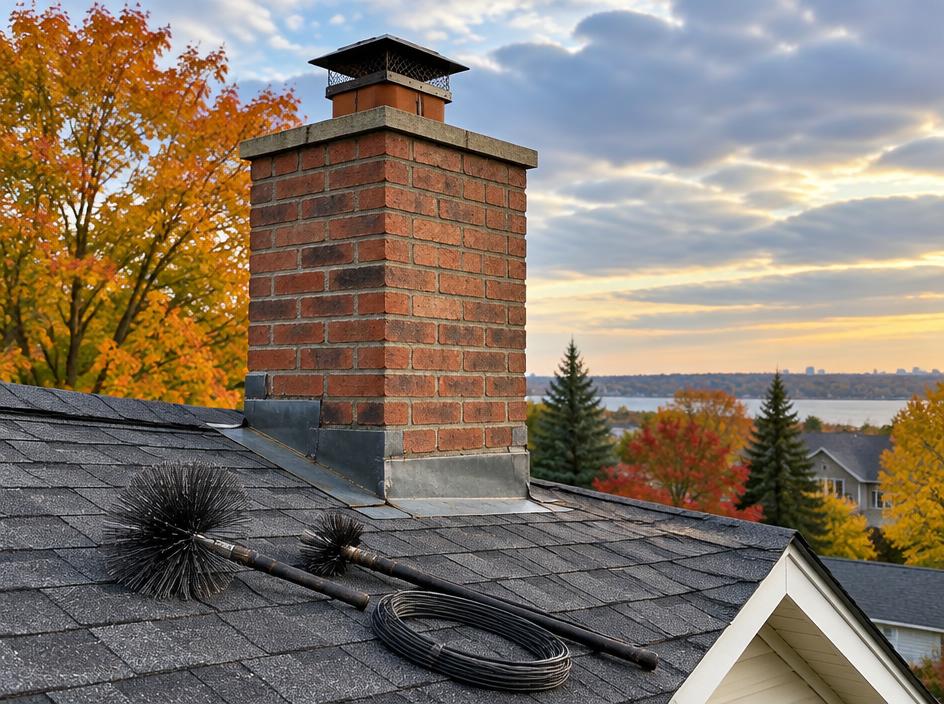
Signs you need chimney sweep
- Smoke backs into the room when the fire is lit
- Strong, campfire-like smell from the fireplace in warm or humid weather
- Black, flaky or tar-like deposits inside the firebox or flue
- Debris, animals or nesting noises in the chimney
- It has been more than a year since the last sweep
What is included
- Protection of the floor and furniture around the fireplace
- Brushing and vacuuming of the flue, smoke chamber and firebox
- Visual check of the damper, liner and chimney cap
- Photos and notes on condition and any concerns
What is not included
- Masonry repointing or crown rebuilding
- Chimney liner replacement (quoted separately)
- Removal of glazed, third-degree creosote that needs chemical treatment
Our process
- 1
Book a visit
Let us know how often the fireplace is used and when it was last swept.
- 2
Prepare the room
We lay drop sheets and seal the opening to keep dust contained.
- 3
Sweep and inspect
Rotary brushes and a HEPA vacuum clear deposits; we check condition as we go.
- 4
Report
You receive notes and photos with any recommended next steps.
Repair or replace?
A blocked or dirty chimney almost always needs cleaning, not replacement. Liners or caps may need replacing if they are cracked, rusted or missing; masonry issues are best referred to a mason.
Customer reviews
Sample review for design preview, not a real customer
“Birds had nested in the flue. They cleared it safely, installed a cap and checked draft before we used the fireplace again.”
Sample review for design preview, not a real customer
“Booked a sweep before the first cold week. Clean, careful work with drop sheets everywhere and a clear photo report afterwards.”
Frequently asked questions
Related services
Nearby areas we serve
Complete guide
A homeowner's guide to chimney sweep
Most people search for chimney sweep when something has already gone wrong, or when they want to get ahead of a problem before the season starts. Either way, this guide gives you the full picture: how your chimney sweep works, what fails, how we approach the job and how pricing works.
Chimney Sweep removes the buildup that makes a chimney sweep run poorly or unsafely. We protect floors and furniture, contain dust and leave the area tidy.
A cleaning visit is also a chance to spot worn parts early, before they fail in the middle of the season.
Timing for a typical chimney sweep job
Homeowners often ask whether they need to take a day off work for chimney sweep. For most visits, no: the work itself is usually one to two hours, and a morning or afternoon arrival window is enough.
Larger jobs are different. Work involving permits, inspections or ordered parts follows the supplier and inspector schedules, and your quote will spell out the expected timeline before you approve anything.
How to choose a chimney sweep provider
A good provider makes the process easy to follow. You should understand what is being done to your chimney sweep and why, and never feel pressured into an upgrade you did not ask for.
- Get the diagnosis explained before approving any repair
- Confirm gas work will be done by a properly certified technician
- Ask who handles permits and inspections if the job needs them
- Compare quotes on the same scope: parts, labour, testing and cleanup
- Look for clear answers about repair versus replacement
- Check reviews that mention the same service you need
When repair makes sense, and when it does not
A simple rule many homeowners use: if a repair costs more than half the price of new equipment and the chimney sweep is near the end of its expected life, replacement is usually the better value. If the unit is younger and the fault is a common part, repair almost always wins.
Other things to weigh are efficiency, safety and how much you rely on the equipment. We give you both options with prices when it is a close call, and we will say so when a repair is not worth it.
If your equipment is getting old
Older equipment is not automatically bad equipment. Plenty of twenty-year-old units run safely and well. What changes with age is parts availability, efficiency and the math on repairs, so the decision framework shifts rather than the answer.
If your chimney sweep is past its expected lifespan, it is worth knowing roughly what replacement would cost before something fails. A number in hand turns an emergency decision into a planned one.
Chimney Sweep near you
Chimneys fall into two broad families: the original masonry stacks on older homes in Mineola, Cooksville and Streetsville, and the factory-built metal systems common in newer subdivisions. Masonry fails through weather and mortar; metal systems fail through rust and worn components. Each needs a different eye.
We provide chimney sweep, including Lisgar, Lorne Park, Malton, Meadowvale, Meadowvale Village, Mineola, Mississauga Valleys, Port Credit, Rathwood and Rockwood Village. If your neighbourhood is not listed, ask anyway; we cover the whole city.
After the work is done
Most homeowners forget the details of a repair within weeks, so take thirty seconds to save the invoice and notes somewhere you will find them. Future you, and any future technician, will be glad you did.
Over the following days, use the chimney sweep normally. If performance feels different from before the visit, better or worse, that is useful information and worth passing on.
Maintenance tips to prevent future chimney sweep
Keep tree branches trimmed back from the chimney top and check the cap after major windstorms. Both are cheap prevention compared to water or blockage damage.
A chimney that is used regularly should be inspected once a year and swept when deposits build up. A sweep uses brushes and rods sized to the flue, along with a vacuum to keep dust out of the room. The inspection that follows looks at the liner, damper, smoke chamber, crown and cap.
Between professional visits, the biggest favour you can do your chimney sweep is paying attention. Listen for new sounds, watch for changes in performance and deal with small issues before the busy season arrives.
Timing your chimney sweep around the seasons
winters are long and summers are humid, so demand for home heating and gas services rises and falls with the weather. Fireplaces, furnaces and water heaters get the most calls in October through January, while air conditioners and pool heaters peak from May through August.
Booking chimney sweep just before the busy season usually gives you more choice of appointment times and leaves room to order parts without rushing. If your chimney sweep has been showing small warning signs, such as new noises, slower performance or higher gas bills, it is worth having it checked before a minor fault becomes a breakdown.
Emergencies do not follow a calendar, though. If something stops working at a bad moment, contact us with as much detail as you can and we will tell you honestly how soon a technician can get there.
What chimney sweep costs
Most chimney sweep jobs fall somewhere between $200 to $400, and a typical job lands close to $300. Treat these as indicative market figures: the real number depends on your chimney sweep and is only confirmed after we assess it.
What pushes a job toward the high end? Hard-to-reach equipment, older units with discontinued parts, extra venting or gas work, and permit requirements. What keeps it low? A common fault on a common unit with good access.
The fastest way to a firm number is the quote form on this page. Include the make, model and a photo if you can, and mention anything unusual about access. Our price estimator also gives a ballpark range if you just want a starting point.
Efficiency and your gas bill
A well-maintained chimney sweep uses less energy than a neglected one, and the difference shows up on your utility bill. Clean burners, good airflow and correct settings are not luxuries; they are the difference between the efficiency on the rating plate and the efficiency you actually get.
If your gas or electricity use has crept up without a change in habits, the equipment is a reasonable place to look. A service visit can confirm whether performance has drifted.
What to expect when we arrive
Every visit follows the same basic shape: listen first, test second, repair third. Skipping the first two steps is how homeowners end up paying for parts they did not need, so we do not skip them.
Testing on a chimney sweep can involve pressure readings, electrical checks on sensors and controls, venting inspection and a full operating cycle. The technician explains each finding as it happens, and you can ask questions at any point.
Nothing is done without your approval. You get the price in writing first, options when there is more than one way to solve the problem, and honest advice if the chimney sweep is not worth repairing. The work area is left clean when we go.
What to ask during the visit
You do not need technical knowledge to interview your technician. "What did you find?", "What are my options?" and "What would you do if it were your house?" cover most of what matters.
Write the answers down or ask for them in the visit notes. When the next decision about your chimney sweep comes up, you will be glad you did.
Warranties and paperwork
Manufacturer warranties usually expect the equipment to be installed and serviced properly, so keep your invoices and service records. If your chimney sweep is still under warranty, say so when booking, because the process for parts may differ.
We are an independent service company, not a warranty provider. We will tell you honestly when a claim through the manufacturer or installer is your better route.
Common problems that lead to chimney sweep
These are the issues we see most often when homeowners ask about chimney sweep. Several can share the same root cause, which is why testing comes before replacing parts.
If you recognize one of these on your chimney sweep, note when it happens and what else was running at the time. Patterns like "only on cold mornings" or "only when several appliances run together" are valuable clues that can shorten the diagnosis.
- Animals, nests or debris in the flue
- Water stains on the ceiling or wall next to the chimney
- A damp, musty smell from the fireplace in summer
- Bits of tile or flue liner collecting in the firebox
- Crumbling mortar, loose bricks or white staining on the outside
- Smoke backs into the room when you light a fire
- Furnace or water heater venting problems traced to the chimney
- A strong campfire smell during warm or humid weather
Getting a fair quote for chimney sweep
The cheapest quote and the best value are rarely the same thing. Ask each company what is included, what could change the price and how the final invoice is calculated, then compare the answers side by side.
Be cautious of any quote given without seeing the equipment. Real pricing for chimney sweep work starts with an assessment and a written number you approve before work begins.
How to get ready for the visit
Before we arrive, gather anything that tells the story of your chimney sweep: the model and serial number if you can find them, previous invoices, and notes about what the equipment has been doing.
Plan for access and parking, especially in condos and townhomes where entry needs booking or a fob. The smoother the arrival, the more of the visit goes to actual diagnosis and repair.
Understanding your chimney sweep
Masonry chimneys also face the weather. Ontario freeze-thaw cycles push water into mortar joints, crack crowns and loosen flashing. A chimney cap keeps rain, animals and debris out of the flue, and a working damper stops heated indoor air escaping when the fireplace is not in use.
Factory-built chimneys are metal systems: a stainless inner liner, insulation and a galvanized outer casing, usually running inside a framed chase. They do not need repointing, but the cap, storm collar and chase cover are common rust points that let water in.
The details vary by model, but the pattern holds across chimney sweeps homes: a small wear part usually fails first, and catching it early keeps the repair small. That is why we test the cheap, common failures before the expensive ones, and why a symptom that seems minor is still worth a call.
Mistakes that make chimney sweep problems worse
The most expensive mistake we see is ignoring small changes: a new noise, a slower start, a faint smell. Each one is the chimney sweep telling you something, and the repair is almost always smaller while the symptom is small.
The second mistake is repeated resetting. Turning a unit off and on can clear an error code temporarily, but the fault that caused it is still there, and safety switches that trip repeatedly are doing an important job.
What is included on every visit
- A technician who works on chimney sweeps regularly
- A written price before any work begins
- Plain-language notes on what was found and fixed
- Honest advice on repair versus replacement
- Tidy work areas and protected floors
A word on safety
If you see flames or sparks from the top of the chimney, or hear a loud roaring sound, leave the home and call 911. Do not use a fireplace after a chimney fire until it has been inspected.