
Signs you need gas line installation
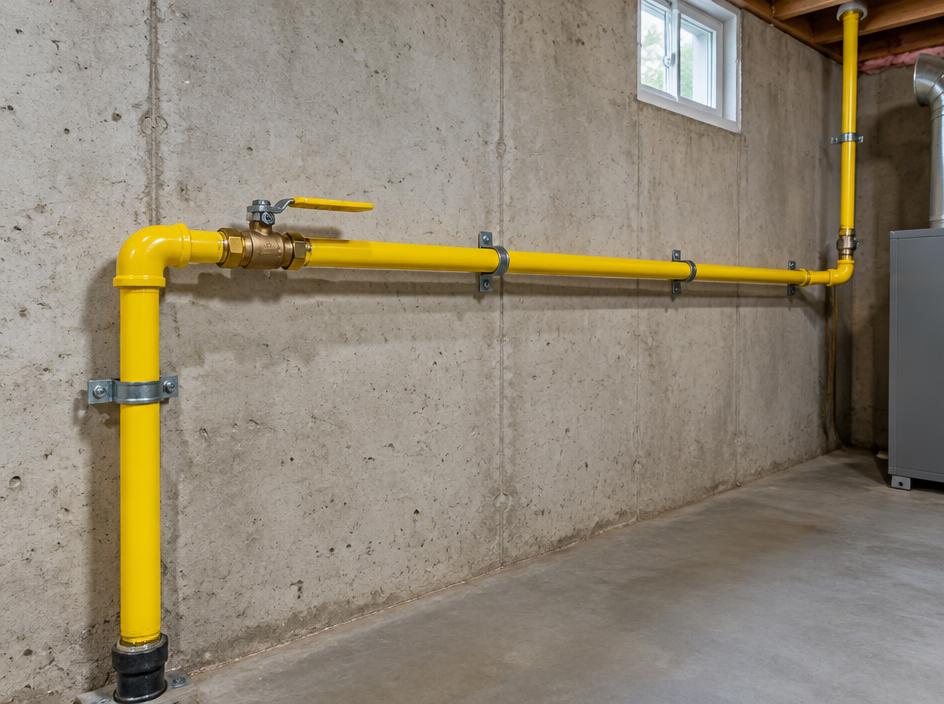
- You are adding a BBQ, range, dryer, fireplace, pool heater or generator
- A rotten-egg smell near an appliance or the meter (leave and call the gas utility first)
- Hissing near gas piping or a dead patch of grass over an underground line
- An appliance has been removed and the line needs to be capped
- Old or corroded piping from a previous renovation
What is included
- Load calculation and line sizing for the appliances you plan to run
- Installation with approved materials and shut-off valves
- Pressure test and leak test of the new or repaired section
- Guidance on permits and inspection requirements
What is not included
- Gas utility meter changes (handled by the utility)
- Trenching through hardscape, drywall patching or painting
- Appliance purchase
Our process
- 1
Describe the job
Tell us what appliance you are connecting and where.
- 2
Site check
We confirm the route, length and pipe size needed.
- 3
Install or repair
Work is done with proper fittings, supports and shut-offs.
- 4
Test
The line is pressure-tested and appliances are checked before we leave.
Repair or replace?
A single leaking fitting can usually be repaired. Corroded, undersized or improperly installed sections are safer to replace than patch, especially before adding a new appliance.
Customer reviews
Sample review for design preview, not a real customer
“Faint smell near the dryer. After we called the gas utility, they came out, found a loose fitting, repaired it and retested.”
Sample review for design preview, not a real customer
“Needed a gas line run to a new BBQ on the deck. The quote was clear, they pressure tested the line and explained the permit side.”
Frequently asked questions
Related services
Nearby areas we serve
Complete guide
Gas Line Installation: what to know
This page is for homeowners dealing with a gas line problem or planning ahead. It walks through how the equipment works, the issues we see most, what a visit involves and what you can expect to pay, all in plain language.
Gas Line Installation starts with planning: the right size and type of gas line, where it goes, how it vents and whether the gas supply can handle it. Getting these right avoids performance problems later.
Your quote lists the equipment, venting, gas work, permits and removal of the old unit if needed, so you can compare options clearly.
Why your service history matters
Take a photo of the rating plate on your gas line and keep it with your records. Model and serial numbers are the first thing any technician or parts supplier will ask for, and they are rarely in a convenient spot.
Note the date of each service visit and set a reminder for the next one. Most gas line care runs on a yearly cycle, and a reminder is the cheapest maintenance tool there is.
What to ask during the visit
You do not need technical knowledge to interview your technician. "What did you find?", "What are my options?" and "What would you do if it were your house?" cover most of what matters.
Write the answers down or ask for them in the visit notes. When the next decision about your gas line comes up, you will be glad you did.
Gas Line Installation near you
Homes converting from oil or electric heating sometimes need a new gas service from the street, which involves the utility as well as the in-home piping. That kind of project has a longer timeline and is best planned months ahead.
We provide gas line installation, including Rathwood, Rockwood Village, Sheridan, Streetsville, Applewood, Central Erin Mills, Churchill Meadows, Clarkson, Cooksville and Creditview. If your neighbourhood is not listed, ask anyway; we cover the whole city.
Efficiency and your gas bill
Efficiency losses are usually gradual, which is why they go unnoticed. A gas line that runs a little longer each cycle costs a little more each month, and over a few years the drift adds up to real money.
Regular maintenance keeps equipment close to its rated performance. When replacement time comes, the efficiency jump from older equipment to new is often large enough to factor into the decision.
A year in the life of your equipment
Spring is for closing out heating season and preparing cooling and pool equipment. Summer belongs to air conditioning, BBQ lines and outdoor work. Fall is furnace and fireplace season, and winter is when everything that was ignored announces itself.
Booking gas line installation in its natural off-season means shorter waits and more flexibility. It also means a problem found early stays a small problem.
How a gas line installation appointment works
The visit starts with a conversation. The technician asks what you have noticed, when it started and whether anything changed recently, such as a power outage, renovation or new appliance. This often points straight to the cause.
Next comes a visual inspection and testing. Depending on the gas line, that can include gas pressure readings, electrical tests on sensors and igniters, venting checks and a full operating cycle. Findings are explained as the work goes, and you can ask to see any worn or failed part.
Before any repair, you receive a written price for parts and labour. If a part needs ordering, we tell you the expected wait and whether the gas line is safe to use in the meantime. After the work, the system is tested again and you get notes on what was done.
How long gas line installation takes
A routine gas line installation appointment is usually measured in hours, not days. What slows a job down is hard-to-reach equipment, discontinued parts, and discoveries along the way, such as venting or connections that also need work.
If something changes the timeline, we tell you as soon as we know, so you are never left guessing when the gas line will be back in service.
When to book gas line installation
Every trade has a rush season, and heating and gas work is no different. The first cold snap of fall fills schedules fast, and the first hot week of summer does the same for cooling equipment.
If your gas line installation is not urgent, the quiet weeks between seasons are the easiest time to book. You get more flexible appointment windows and, if a part has to be ordered, the wait matters less.
That said, a gas line showing warning signs should not wait for a convenient month. Small faults grow, and a breakdown in January is harder on everyone than a check in September.
Common problems that lead to gas line installation
These are the issues we see most often when homeowners ask about gas line installation. Several can share the same root cause, which is why testing comes before replacing parts.
It is tempting to ignore an intermittent fault, but intermittent problems on a gas line tend to become permanent ones at the worst possible time. A check while the symptom is still mild is usually a shorter, cheaper visit.
- A permit or inspection needed for a renovation or insurance claim
- A faint gas smell near an appliance or the meter
- Meter relocation for a basement apartment or addition
- Weak flames when several appliances run together
- Hissing sounds near pipes or fittings
- Renovation work that needs a line capped or rerouted
- An appliance that fails its startup checks on a shared line
- A new range, dryer, BBQ, fire table or pool heater needs a gas connection
How a gas line works
Outdoor gas work has its own rules. Buried lines need proper depth and marking, and connections for BBQs, fire tables and pool heaters need shutoffs and fittings rated for outdoor use.
Natural gas enters your home at the meter and travels through a network of pipes to each appliance: furnace, water heater, range, dryer, fireplace and any outdoor equipment. Each branch ends at a shutoff valve so a single appliance can be isolated without turning off gas to the whole house.
No two gas lines are exactly alike, and age matters as much as brand. Older equipment often has simpler parts that are easy to source, while newer units are more efficient but rely on sensors and control boards that need proper testing equipment to diagnose. Knowing which you have shapes the whole visit.
What to watch for after your gas line installation
If something does not seem right after the work, contact us rather than adjusting the gas line yourself. Describing exactly what changed since the visit helps us respond quickly and accurately.
It also helps to note the date of the visit. Many maintenance tasks work on a yearly cycle, and a reminder set for the same month next year keeps the gas line on a sensible schedule.
Maintenance tips to prevent future gas line installation
Know where your gas meter and main shutoff are, and make sure everyone in the household can find them. In an emergency, the utility may give instructions over the phone, and knowing the layout saves time.
Outdoor lines for BBQs and heaters should be protected from mechanical damage and checked for corrosion, particularly where pipe passes through walls and decks.
Between professional visits, the biggest favour you can do your gas line is paying attention. Listen for new sounds, watch for changes in performance and deal with small issues before the busy season arrives.
Pricing for gas line installation
The estimated range for gas line installation is $500 to $1,500, with many jobs averaging around $1,000. This is an estimated range based on typical market prices, and your final price is confirmed after assessment.
The main things that move the price are the age and type of the gas line, the parts needed, access (tight spaces, finished ceilings or rooftop work take longer), and whether permits or inspections are required. HST is added to the final invoice.
To get an accurate quote quickly, send the make and model, a photo of the unit and its rating plate, and a short description of the problem. You can use the quote form on this page or try our online price estimator for a starting range.
Preparing for your appointment
A few minutes of preparation makes the visit faster. Make sure the gas line is reachable, the area around it is clear and an adult is home to approve the written price before work begins.
Write down the symptoms you have noticed and when they started. If the problem comes and goes, a short video on your phone can be more useful than any description.
Getting a fair quote for gas line installation
The cheapest quote and the best value are rarely the same thing. Ask each company what is included, what could change the price and how the final invoice is calculated, then compare the answers side by side.
Be cautious of any quote given without seeing the equipment. Real pricing for gas line work starts with an assessment and a written number you approve before work begins.
How to choose a gas line installation provider
A good provider makes the process easy to follow. You should understand what is being done to your gas line and why, and never feel pressured into an upgrade you did not ask for.
- Ask for a written price before work begins, not just an hourly rate
- Confirm the technician holds the right gas certificate for the work
- Ask whether permits are needed and who arranges them
- Check that old parts can be shown to you on request
- Make sure the company explains repair versus replacement honestly
- Read recent, verifiable reviews from local customers
What not to do with a gas line
Blocking vents and air intakes is a quiet problem. Furniture, storage, snow and landscaping can all restrict the airflow a gas line needs to run safely, and the damage builds slowly enough that nobody notices until performance drops.
Another common one is skipping routine care for years and then expecting a single visit to undo it. Maintenance works best as a habit, not a rescue.
Repair or replace?
A simple rule many homeowners use: if a repair costs more than half the price of new equipment and the gas line is near the end of its expected life, replacement is usually the better value. If the unit is younger and the fault is a common part, repair almost always wins.
Other things to weigh are efficiency, safety and how much you rely on the equipment. We give you both options with prices when it is a close call, and we will say so when a repair is not worth it.
How we handle every job
- A technician who works on gas lines regularly
- A written price before any work begins
- Plain-language notes on what was found and fixed
- Honest advice on repair versus replacement
- Tidy work areas and protected floors
Safety first
If you smell gas, leave the home immediately. Do not use switches, phones or anything that could create a spark inside. Once outside, call your gas utility's emergency line and 911. Never try to locate or repair a gas leak yourself.