
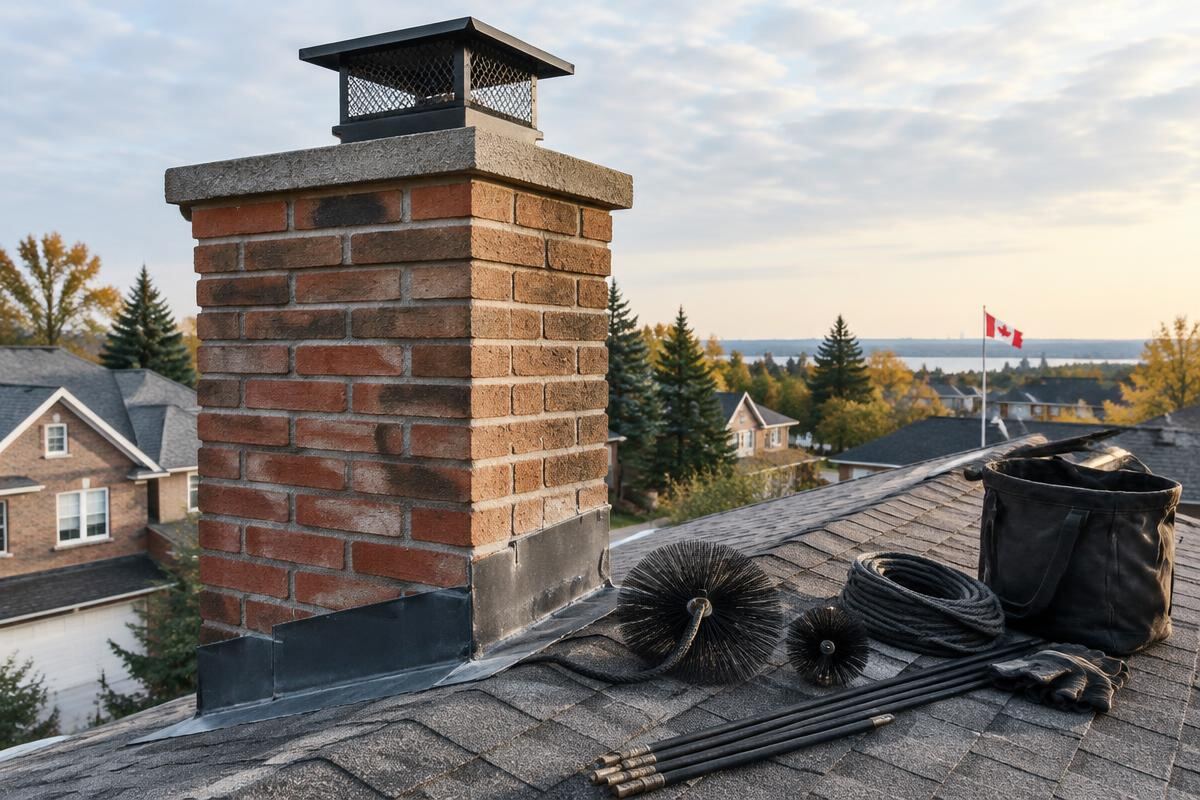
Signs you need chimney soot cleaning
- Smoke backs into the room when the fire is lit
- Strong, campfire-like smell from the fireplace in warm or humid weather
- Black, flaky or tar-like deposits inside the firebox or flue
- Debris, animals or nesting noises in the chimney
- It has been more than a year since the last sweep
What is included
- Protection of the floor and furniture around the fireplace
- Brushing and vacuuming of the flue, smoke chamber and firebox
- Visual check of the damper, liner and chimney cap
- Photos and notes on condition and any concerns
What is not included
- Masonry repointing or crown rebuilding
- Chimney liner replacement (quoted separately)
- Removal of glazed, third-degree creosote that needs chemical treatment
Our process
- 1
Book a visit
Let us know how often the fireplace is used and when it was last swept.
- 2
Prepare the room
We lay drop sheets and seal the opening to keep dust contained.
- 3
Sweep and inspect
Rotary brushes and a HEPA vacuum clear deposits; we check condition as we go.
- 4
Report
You receive notes and photos with any recommended next steps.
Repair or replace?
A blocked or dirty chimney almost always needs cleaning, not replacement. Liners or caps may need replacing if they are cracked, rusted or missing; masonry issues are best referred to a mason.
Customer reviews
Sample review for design preview, not a real customer
“Birds had nested in the flue. They cleared it safely, installed a cap and checked draft before we used the fireplace again.”
Sample review for design preview, not a real customer
“Booked a sweep before the first cold week. Clean, careful work with drop sheets everywhere and a clear photo report afterwards.”
Frequently asked questions
Related services
Nearby areas we serve
Complete guide
Chimney Soot Cleaning, explained without the jargon
Most people search for chimney soot cleaning when something has already gone wrong, or when they want to get ahead of a problem before the season starts. Either way, this guide gives you the full picture: how your chimney soot works, what fails, how we approach the job and how pricing works.
Chimney Soot Cleaning removes the buildup that makes a chimney soot run poorly or unsafely. We protect floors and furniture, contain dust and leave the area tidy.
A cleaning visit is also a chance to spot worn parts early, before they fail in the middle of the season.
Mistakes that make chimney soot problems worse
Blocking vents and air intakes is a quiet problem. Furniture, storage, snow and landscaping can all restrict the airflow a chimney soot needs to run safely, and the damage builds slowly enough that nobody notices until performance drops.
Another common one is skipping routine care for years and then expecting a single visit to undo it. Maintenance works best as a habit, not a rescue.
Chimney Soot Cleaning neighbourhoods
Homes near the Credit River and Lake Ontario see more wind-driven rain, which is hard on crowns, caps and flashing. Exterior masonry on these chimneys often needs attention sooner than the same brickwork sheltered mid-block.
We provide chimney soot cleaning, including Rathwood, Rockwood Village, Sheridan, Streetsville, Applewood, Central Erin Mills, Churchill Meadows, Clarkson, Cooksville and Creditview. If your neighbourhood is not listed, ask anyway; we cover the whole city.
Understanding your chimney soot
Draft depends on more than the flue. A chimney that is too short, a cold exterior flue, or a tightly sealed house competing with kitchen and bathroom fans can all cause smoke to spill. Solving smoke problems sometimes means addressing house air pressure, not just the chimney.
Masonry chimneys also face the weather. Ontario freeze-thaw cycles push water into mortar joints, crack crowns and loosen flashing. A chimney cap keeps rain, animals and debris out of the flue, and a working damper stops heated indoor air escaping when the fireplace is not in use.
No two chimney soots are exactly alike, and age matters as much as brand. Older equipment often has simpler parts that are easy to source, while newer units are more efficient but rely on sensors and control boards that need proper testing equipment to diagnose. Knowing which you have shapes the whole visit.
Maintenance tips to prevent future chimney soot cleaning
Burning dry, seasoned hardwood and keeping fires hot enough to draft well both reduce creosote. Small, smouldering fires that burn overnight are one of the most common causes of heavy buildup.
Keep tree branches trimmed back from the chimney top and check the cap after major windstorms. Both are cheap prevention compared to water or blockage damage.
Homeowners often ask what they can safely do themselves. The honest answer: keep the area around the chimney soot clear and clean, follow the owner's manual for basic care, and leave anything involving gas, combustion or internal parts to a certified technician.
Questions worth asking your technician
You do not need technical knowledge to interview your technician. "What did you find?", "What are my options?" and "What would you do if it were your house?" cover most of what matters.
Write the answers down or ask for them in the visit notes. When the next decision about your chimney soot comes up, you will be glad you did.
How long to expect for chimney soot cleaning
Homeowners often ask whether they need to take a day off work for chimney soot cleaning. For most visits, no: the work itself is usually one to two hours, and a morning or afternoon arrival window is enough.
Larger jobs are different. Work involving permits, inspections or ordered parts follows the supplier and inspector schedules, and your quote will spell out the expected timeline before you approve anything.
Once the technician leaves
Most homeowners forget the details of a repair within weeks, so take thirty seconds to save the invoice and notes somewhere you will find them. Future you, and any future technician, will be glad you did.
Over the following days, use the chimney soot normally. If performance feels different from before the visit, better or worse, that is useful information and worth passing on.
What happens during a chimney soot cleaning visit
Every visit follows the same basic shape: listen first, test second, repair third. Skipping the first two steps is how homeowners end up paying for parts they did not need, so we do not skip them.
Testing on a chimney soot can involve pressure readings, electrical checks on sensors and controls, venting inspection and a full operating cycle. The technician explains each finding as it happens, and you can ask questions at any point.
Nothing is done without your approval. You get the price in writing first, options when there is more than one way to solve the problem, and honest advice if the chimney soot is not worth repairing. The work area is left clean when we go.
Urgent problem or book-ahead job?
Some symptoms mean stop using the equipment now: a gas smell, a carbon monoxide alarm, visible scorching, or water pooling where it can reach wiring. Others, like a gradual drop in performance, are safe to book at a convenient time.
When you are unsure, describe the symptom in the quote form and ask. An honest answer about urgency costs nothing and can save a rushed decision about your chimney soot.
How to get ready for the visit
Clear a path to the equipment and about a metre of space around it. Move fragile items, keep pets in another room and let us know about any access codes, parking limits or building rules if you live in a condo or townhouse complex.
If you have past service records, manuals or warranty paperwork, keep them handy. They help the technician understand the history of your chimney soot.
What to ask before hiring for chimney soot cleaning
The right company treats your questions as part of the job, not an interruption. If an answer about your chimney soot feels evasive, keep looking.
- Get the diagnosis explained before approving any repair
- Confirm gas work will be done by a properly certified technician
- Ask who handles permits and inspections if the job needs them
- Compare quotes on the same scope: parts, labour, testing and cleanup
- Look for clear answers about repair versus replacement
- Check reviews that mention the same service you need
Warranty questions for chimney soot cleaning work
Manufacturer warranties usually expect the equipment to be installed and serviced properly, so keep your invoices and service records. If your chimney soot is still under warranty, say so when booking, because the process for parts may differ.
We are an independent service company, not a warranty provider. We will tell you honestly when a claim through the manufacturer or installer is your better route.
What chimney soot cleaning looks like season by season
Every season writes its own service calls. The first cold week brings ignition failures, the first heat wave brings cooling complaints, and pool opening season brings heaters that did not survive the winter.
Your chimney soot has a natural moment in that calendar when a check is cheapest and easiest to book. The quote form is open year-round, so pick the quiet season rather than the loud one.
Keeping records that pay off later
Take a photo of the rating plate on your chimney soot and keep it with your records. Model and serial numbers are the first thing any technician or parts supplier will ask for, and they are rarely in a convenient spot.
Note the date of each service visit and set a reminder for the next one. Most chimney soot care runs on a yearly cycle, and a reminder is the cheapest maintenance tool there is.
Best time of year for chimney soot cleaning
winters are long and summers are humid, so demand for home heating and gas services rises and falls with the weather. Fireplaces, furnaces and water heaters get the most calls in October through January, while air conditioners and pool heaters peak from May through August.
Booking chimney soot cleaning just before the busy season usually gives you more choice of appointment times and leaves room to order parts without rushing. If your chimney soot has been showing small warning signs, such as new noises, slower performance or higher gas bills, it is worth having it checked before a minor fault becomes a breakdown.
Emergencies do not follow a calendar, though. If something stops working at a bad moment, contact us with as much detail as you can and we will tell you honestly how soon a technician can get there.
Pricing for chimney soot cleaning
Most chimney soot cleaning jobs fall somewhere between $200 to $400, and a typical job lands close to $300. Treat these as indicative market figures: the real number depends on your chimney soot and is only confirmed after we assess it.
What pushes a job toward the high end? Hard-to-reach equipment, older units with discontinued parts, extra venting or gas work, and permit requirements. What keeps it low? A common fault on a common unit with good access.
The fastest way to a firm number is the quote form on this page. Include the make, model and a photo if you can, and mention anything unusual about access. Our price estimator also gives a ballpark range if you just want a starting point.
The issues behind most chimney soot cleaning calls
A chimney soot rarely fails without warning. These are the symptoms that bring local homeowners to us, and most of them are cheaper to fix early than late.
If you recognize one of these on your chimney soot, note when it happens and what else was running at the time. Patterns like "only on cold mornings" or "only when several appliances run together" are valuable clues that can shorten the diagnosis.
- Visible cracks or leaning in the exterior stack
- Bits of cement or crown coating in the firebox after rain
- Black flakes or crumbly deposits falling into the firebox
- A damper that sticks, will not seal or will not open
- Crumbling mortar, loose bricks or white staining on the outside
- A strong campfire smell during warm or humid weather
- Furnace or water heater venting problems traced to the chimney
- Fires that are hard to start and burn poorly even with dry wood
Repair or replace?
A simple rule many homeowners use: if a repair costs more than half the price of new equipment and the chimney soot is near the end of its expected life, replacement is usually the better value. If the unit is younger and the fault is a common part, repair almost always wins.
Other things to weigh are efficiency, safety and how much you rely on the equipment. We give you both options with prices when it is a close call, and we will say so when a repair is not worth it.
How we handle every job
- Respect for your home: floor protection and a clean work area
- Straight answers about your chimney soot, including when repair is not worth it
- Options explained in plain language, not trade jargon
- Written pricing approved by you before any repair
- Follow-up notes so you know exactly what was done
Safety first
A loud roaring sound, dense smoke or visible sparks from the chimney top can mean a chimney fire: get everyone out and call 911. Even a small chimney fire can crack the liner, so the fireplace stays off until an inspection confirms it is safe.