
You light a fire for a cozy evening and within minutes the room smells like a campsite. Smoke curls out from the top of the fireplace opening, the smoke alarm chirps, and you end up opening every window in the house. Smoke coming back into the house from a fireplace is frustrating, but it is also a signal that something about the chimney is not working the way it should.
A healthy chimney pulls smoke up and out because hot gases rise and the flue gives them a clear path. When that draft is weak or blocked, smoke takes the easiest route, which is often into your home. This guide walks through the most common reasons a fireplace smokes homes, which ones are dangerous, what a chimney sweep and inspection involves, and how to stop it from happening again.
How chimney draft works
Draft is the upward flow of air and smoke through a chimney. It depends on the temperature difference between the flue gases and the outside air, the height and size of the flue, and how easily replacement air can enter the house. A warm flue on a cold day draws strongly. A cold flue, a short chimney, or a tightly sealed house can draw weakly or even reverse.
Older homes often have masonry chimneys built for open wood fireplaces, while newer homes may have factory-built chimneys with metal flues. Both rely on the same physics. When something interrupts the draft, whether it is a blockage, a cold column of air or a pressure imbalance, the smoke has nowhere to go but back into the room.
The most common causes of a smoking fireplace
When we inspect a fireplace that is pushing smoke indoors, the cause usually falls into one of a few groups. Some are simple habits, and some point to a chimney that needs work.
- A closed or partly closed damper, or a damper plate that has rusted or slipped out of position.
- Heavy creosote or soot buildup narrowing the flue so smoke cannot escape fast enough.
- A blockage such as a bird or squirrel nest, fallen bricks, leaves or debris on the smoke shelf.
- A cold flue, especially on the first fire of the season or on chimneys built on an outside wall.
- Negative air pressure in the home from exhaust fans, a clothes dryer or a tight, well-sealed house.
- Wet or unseasoned firewood that smoulders and produces far more smoke than a clean fire.
- A damaged or missing chimney cap that allows wind to push down the flue.
- A flue that is too small for the fireplace opening, often after renovations.
Why creosote buildup is the cause you should not ignore
Creosote is a tar-like residue that condenses inside the flue when wood smoke cools. It starts as a light, flaky soot, then builds into a crusty layer and eventually a shiny, glazed coating that is very hard to remove. Each layer narrows the flue and reduces draft, which makes fires smokier, which deposits even more creosote. It is a cycle that tends to get worse every season.
More importantly, creosote is flammable. Most chimney fires start when a hot fire ignites the deposits inside the flue. Some are loud and dramatic, while others smoulder quietly and crack flue tiles without anyone noticing. If your fireplace has started to smoke and you cannot remember the last chimney cleaning, stop using it until it has been swept and inspected.
What you can safely try right now
A few simple checks can help you tell whether you are dealing with a habit problem or a chimney problem. None of them involve climbing on the roof or reaching up the flue.
- Make sure the damper is fully open before lighting and stays open until the fire is completely out.
- Turn off kitchen and bathroom exhaust fans and avoid running the dryer while the fire is going.
- Crack a nearby window slightly for the first few minutes to give the fire replacement air.
- Burn only dry, seasoned hardwood. Wood should be split, stored off the ground and dried for at least six months.
- Build smaller, hotter fires rather than large smouldering ones.
If the fireplace still smokes after these steps, the chimney itself needs attention. Please do not try to clear a blockage yourself or burn anything to dry out the flue. A roof can be dangerous, and a blocked chimney can send carbon monoxide into the house.
What a chimney sweep and inspection includes
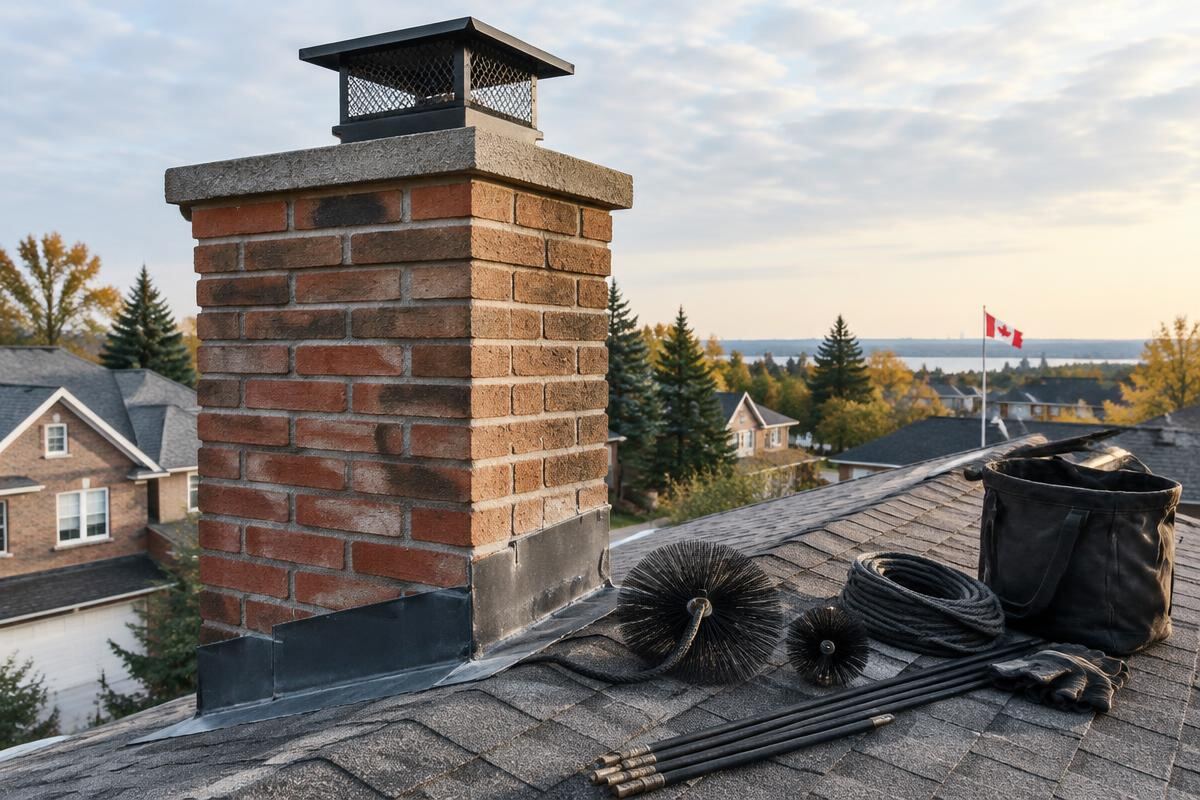
A professional chimney cleaning starts with protecting your home. The technician lays drop cloths, seals the fireplace opening and uses a vacuum system to contain soot. The flue is then brushed from bottom, top or both using rods and brushes sized to the flue, and the smoke chamber, smoke shelf and firebox are cleaned out.
The inspection is just as important as the sweep. Our technicians look at the damper, firebox, smoke chamber, flue liner, cap and crown, and note anything that could affect draft or safety: cracked tiles, gaps, missing mortar, animal entry points or water damage. You get a plain-language explanation of what was found and, if repairs are needed, a clear quote before any further work begins.
How much does chimney cleaning cost?
Chimney sweep pricing depends on the type of chimney, how much buildup there is, roof access, and whether the flue has glazed creosote that needs special removal. A routine sweep on an accessible chimney with light soot sits at the lower end. Heavy creosote, multiple flues or difficult roofs raise the price.
Our pricing page lists estimated ranges for chimney cleaning, creosote removal and related repairs. They are estimated ranges only, and the final price is confirmed after assessment. We confirm the cost before work starts, and we will tell you honestly if the chimney only needs a sweep rather than repairs.
Repairs that fix a smoky chimney for good
Sometimes cleaning is enough. Other times the inspection shows a problem that keeps causing smoke. Common fixes include replacing a warped damper, installing a top-sealing damper, adding or replacing a chimney cap to stop downdrafts and animals, repairing cracked flue tiles or installing a stainless steel liner, and rebuilding a deteriorated chimney crown.
In homes where negative pressure is the issue, the solution may be bringing in combustion air, adjusting how exhaust fans are used, or in some cases converting to a sealed gas fireplace insert that does not rely on household air at all. Converting an old smoky wood fireplace to gas is a popular choice for homeowners who want the look of a fire without the smoke, wood or cleaning.
Not sure what's causing it?
A technician can diagnose it on the first visit and confirm the price before any work.
How often should you have your chimney swept?
For a wood-burning fireplace that gets regular use, an annual chimney inspection is the standard recommendation, with cleaning whenever buildup reaches a level that affects safety or draft. Many households that burn a few cords a winter need a sweep every year. Occasional users may need it less often, but the inspection should still happen yearly.
The best time to book is late summer or early fall, before the busy season starts and before the first cold night when you will want a fire. Booking early also gives time for any repairs to be completed before winter.
Signs of a chimney fire or flue damage
Sometimes a smoky fireplace follows an earlier chimney fire that nobody noticed. After a chimney fire, the inside of the flue can be cracked, the liner damaged and the creosote puffy or honeycombed. Watch for these signs:
- Puffy, flaky or honeycombed creosote in the firebox or on the damper.
- Cracked or missing flue tiles found in the firebox.
- Warped damper or metal parts.
- Discoloured or damaged chimney cap or crown.
- Smoke or smell entering other rooms or the attic.
- Roofing material near the chimney that looks heat damaged.
If you see any of these, stop using the fireplace and book an inspection. A damaged flue can let heat and gases reach the wood framing of the house. If you ever have an active chimney fire, get everyone out and call 911.
Wood choices that reduce smoke
The firewood you burn has a big effect on smoke. Properly seasoned hardwood such as maple, oak or ash burns hotter and cleaner than softwood or freshly cut wood. Wet wood wastes energy boiling off moisture, which cools the fire and creates heavy smoke and creosote.
Buy wood early in the year so it can dry, or ask your supplier for kiln-dried firewood. Store it off the ground, covered on top but open on the sides, and never burn painted wood, treated lumber, cardboard or garbage. These create toxic smoke and extra deposits in the chimney.
Smoky fireplace problems in different situations
Paying attention to when the fireplace smokes narrows down the cause. Smoke only at startup usually means a cold flue or a damper that was not fully open. Smoke halfway through a fire often points to too much wood, wet wood or a fire that has burned down into smouldering coals. Smoke only on windy days suggests downdrafts and a cap or chimney height issue.
Smoke whenever the kitchen fan or dryer runs points to negative pressure in the house. Smoke that started suddenly after years of good performance often means a blockage, such as a nest or fallen debris, or a damaged damper. Smoke smell when the fireplace is not in use, especially on hot or humid days, can mean heavy creosote deposits in the flue. Sharing these details when you book chimney cleaning helps the technician focus the inspection.
Book a chimney sweep
If smoke is coming into your house from the fireplace, a sweep and inspection will tell you exactly why. EmberRise Pro provides chimney cleaning, creosote removal and inspections neighbourhoods including Streetsville, Erindale, Clarkson and Mineola. Send a quote request describing what happens when you light a fire, and our team will confirm availability and pricing.