
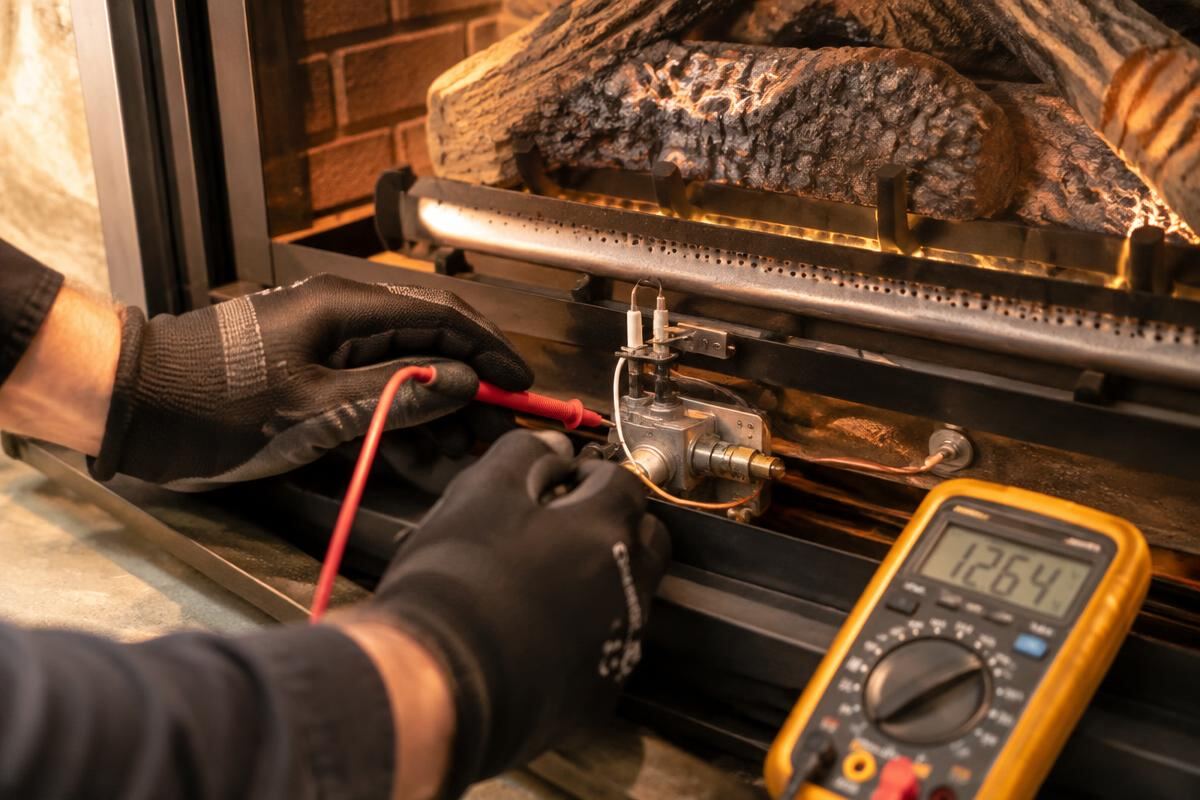
Signs you need fireplace technician
- Pilot light will not stay lit or keeps going out
- Burner lights, then shuts off after a few minutes
- Glass turns white or cloudy quickly
- Yellow, lazy or sooty flames instead of crisp blue-based flames
- Clicking with no ignition, or the remote or wall switch stopped working
- Unusual smells, rumbling or a fan that is louder than it used to be
What is included
- Safety check of gas connections, valve and venting
- Cleaning of burner, pilot assembly and glass
- Testing thermocouple, thermopile or electronic ignition
- Log, media and gasket placement check
- Clear written notes on what we found and any recommended parts
What is not included
- Replacement parts (quoted before any work)
- Masonry, drywall or mantel finishing
- Venting changes that need a new permit
Our process
- 1
Tell us the symptoms
Share the make, model if you have it, and what the fireplace is doing.
- 2
On-site diagnosis
A technician tests ignition, gas pressure and venting before recommending anything.
- 3
Clear quote
You get the price for parts and labour before work starts.
- 4
Repair and test
We complete the work, run the unit through a full cycle and explain what changed.
Repair or replace?
Most gas fireplaces under about 15 years old are worth repairing: thermocouples, thermopiles, igniters and valves are common parts. Replacement starts to make sense when the firebox is cracked, parts are discontinued, or repeated repairs cost more than half the price of a new insert.
Customer reviews
Sample review for design preview, not a real customer
“Our fireplace would light and then shut off after a minute. The technician explained it was the thermocouple, showed us the old part and had it running the same visit.”
Sample review for design preview, not a real customer
“Annual clean and check on our insert. Glass is spotless and they pointed out a worn gasket we should replace next season.”
Frequently asked questions
Related services
Nearby areas we serve
Complete guide
Fireplace Technician, explained without the jargon
Most people search for fireplace technician when something has already gone wrong, or when they want to get ahead of a problem before the season starts. Either way, this guide gives you the full picture: how your fireplace works, what fails, how we approach the job and how pricing works.
Finding the right fireplace technician matters as much as the repair itself. Look for a team that asks questions before arriving, explains what they find in plain language and gives you a written price first.
Our technicians work on fireplaces every week. They carry common parts, test before replacing and tell you when a repair is not worth the money.
When repair makes sense, and when it does not
There is no universal answer, but there are honest questions. How old is the fireplace? Has it needed repeated repairs in recent years? Would new equipment cut your gas or electricity use enough to matter? Are parts still easy to get?
We walk through those questions with you on site and price both paths when the decision is close. If a repair buys you several more reliable years for a reasonable amount, we will say that too, even though replacement is the bigger job.
How to avoid repeat fireplace technician calls
Booking in late summer or early fall avoids the rush that comes with the first cold week, when many homeowners switch their fireplace on at the same time and discover a problem.
Annual service is the single best way to keep a gas fireplace safe and reliable. A technician removes the glass, cleans the burner and pilot, vacuums the firebox, checks log placement, inspects the gasket and tests the ignition parts with a meter. Venting terminations outside are checked for blockages such as bird nests, leaves and snow.
Homeowners often ask what they can safely do themselves. The honest answer: keep the area around the fireplace clear and clean, follow the owner's manual for basic care, and leave anything involving gas, combustion or internal parts to a certified technician.
What happens during a fireplace technician visit
When the technician arrives, the first step is protecting your home: floor coverings where needed, and a tidy work area around the fireplace. Then come the questions. What you have seen, heard or smelled, and when it started, often matters more than any single test.
Diagnosis is done in a set order. We confirm the symptom, test the parts most likely to cause it and only then talk about repairs. You are shown what was found, in plain language, before anything is taken apart or replaced.
You approve a written price before work begins, and old parts are left with you on request. Once the repair is done, the fireplace is run through a full cycle to confirm the fix, and you get a summary of the work for your records.
Keeping records that pay off later
Every visit produces information worth keeping: what was tested, what was replaced and what was recommended. File the invoices and notes with your home documents, because the next technician starts faster with a history in hand.
A documented service history also helps when you sell. Buyers and home inspectors look kindly on equipment with clear maintenance records.
Fireplace Technician neighbourhoods
Outdoor gas fireplaces and fire tables have become common in newer backyards across Erin Mills and Churchill Meadows. They face the same ignition and burner issues as indoor units, plus weather exposure on controls and media.
Our technicians cover many neighbourhoods, from Port Credit, Rathwood, Rockwood Village, Sheridan, Streetsville, Applewood, Central Erin Mills, Churchill Meadows, Clarkson and Cooksville and everywhere in between. Not sure if you are in range? Send your address with the quote form and we will confirm.
Timing for a typical fireplace technician job
A routine fireplace technician appointment is usually measured in hours, not days. What slows a job down is hard-to-reach equipment, discontinued parts, and discoveries along the way, such as venting or connections that also need work.
If something changes the timeline, we tell you as soon as we know, so you are never left guessing when the fireplace will be back in service.
A year in the life of your equipment
Spring is for closing out heating season and preparing cooling and pool equipment. Summer belongs to air conditioning, BBQ lines and outdoor work. Fall is furnace and fireplace season, and winter is when everything that was ignored announces itself.
Booking fireplace technician in its natural off-season means shorter waits and more flexibility. It also means a problem found early stays a small problem.
When to book fireplace technician
Every trade has a rush season, and heating and gas work is no different. The first cold snap of fall fills schedules fast, and the first hot week of summer does the same for cooling equipment.
If your fireplace technician is not urgent, the quiet weeks between seasons are the easiest time to book. You get more flexible appointment windows and, if a part has to be ordered, the wait matters less.
That said, a fireplace showing warning signs should not wait for a convenient month. Small faults grow, and a breakdown in January is harder on everyone than a check in September.
If you live in a condo or townhome
In multi-unit buildings, access is the schedule. Elevator bookings, concierge instructions and parking limits can matter as much as the repair itself, so include those details in your quote request.
Check your condo documents before booking: some buildings require contractors to register with management, and some repairs to shared elements are the corporation's responsibility rather than yours.
The issues behind most fireplace technician calls
These are the issues we see most often when homeowners ask about fireplace technician. Several can share the same root cause, which is why testing comes before replacing parts.
If you recognize one of these on your fireplace, note when it happens and what else was running at the time. Patterns like "only on cold mornings" or "only when several appliances run together" are valuable clues that can shorten the diagnosis.
- The burner lights on one side but not the other
- Remote control or wall switch works some days and not others
- A smell of hot dust or burning at the first start of the season
- The unit works from the wall switch but not the remote
- Pilot lights but goes out when you release the knob, usually a weak thermocouple or a dirty pilot assembly
- Flames lift off the burner or make a roaring noise
- Flames are tall, yellow and lazy, or soot marks appear on the logs and glass
- Fireplace shuts itself off after running for a while
After the work is done
After any fireplace technician visit, run the equipment through a normal cycle and keep an eye on it for the first few days. New noises, smells or error codes should be reported right away, while the details of the visit are still fresh.
Keep the service notes with your home records. A history of what was repaired and when makes every future diagnosis faster, and it is useful documentation if you ever sell the home.
Understanding your fireplace
Around the burner sit the logs or media, the glass front with its gasket, an optional blower fan and the controls: a wall switch, thermostat or remote receiver. A problem with any of these parts can look like a gas problem from the outside, so a proper diagnosis tests each part in order instead of guessing.
A gas fireplace burns natural gas or propane inside a sealed firebox. Most units homes are direct vent: one pipe pulls outside air in for combustion and a second pipe sends exhaust back out, so the fire never uses the air in your living room. Older B-vent and vent-free styles exist, but they behave differently and need a different kind of check.
One thing worth knowing about your fireplace: most failures give warning signs weeks before a full breakdown. Unusual noises, longer run times and small changes in performance are the equipment asking for attention, and responding early almost always costs less than waiting for a complete stop.
Choosing the right company for fireplace technician
A good provider makes the process easy to follow. You should understand what is being done to your fireplace and why, and never feel pressured into an upgrade you did not ask for.
- Ask for a written price before work begins, not just an hourly rate
- Confirm the technician holds the right gas certificate for the work
- Ask whether permits are needed and who arranges them
- Check that old parts can be shown to you on request
- Make sure the company explains repair versus replacement honestly
- Read recent, verifiable reviews from local customers
Preparing for your appointment
Clear a path to the equipment and about a metre of space around it. Move fragile items, keep pets in another room and let us know about any access codes, parking limits or building rules if you live in a condo or townhouse complex.
If you have past service records, manuals or warranty paperwork, keep them handy. They help the technician understand the history of your fireplace.
Fireplace Technician cost
Most fireplace technician jobs fall somewhere between $200 to $600 plus parts, and a typical job lands close to $400. Treat these as indicative market figures: the real number depends on your fireplace and is only confirmed after we assess it.
What pushes a job toward the high end? Hard-to-reach equipment, older units with discontinued parts, extra venting or gas work, and permit requirements. What keeps it low? A common fault on a common unit with good access.
The fastest way to a firm number is the quote form on this page. Include the make, model and a photo if you can, and mention anything unusual about access. Our price estimator also gives a ballpark range if you just want a starting point.
Getting more from the energy you pay for
A well-maintained fireplace uses less energy than a neglected one, and the difference shows up on your utility bill. Clean burners, good airflow and correct settings are not luxuries; they are the difference between the efficiency on the rating plate and the efficiency you actually get.
If your gas or electricity use has crept up without a change in habits, the equipment is a reasonable place to look. A service visit can confirm whether performance has drifted.
weather and your fireplace
Life near Lake Ontario keeps humid in summer and biting in winter, and both extremes show up in service calls. Summer humidity stresses cooling equipment and chimney draft; winter cold stresses everything that burns fuel.
Equipment installed outdoors or in unheated spaces needs the most weather attention. Wind, snow and ice find the weak points first, so exterior terminations and cabinets deserve a look after every major storm.
Mistakes that make fireplace problems worse
Well-meaning DIY is behind a surprising number of fireplace technician calls. Opening sealed components or adjusting gas and combustion parts without training can create a safety hazard where none existed, and it often makes the professional repair more involved.
The safer rule is simple: basic cleaning and filter care from the owner's manual is fine, and anything involving gas, combustion, wiring or internal parts belongs to a certified technician.
How we handle every job
- A technician who works on fireplaces regularly
- A written price before any work begins
- Plain-language notes on what was found and fixed
- Honest advice on repair versus replacement
- Tidy work areas and protected floors
Safety notes worth reading
Keep fireplace remotes and control keys away from children, and treat the glass front as hot for at least an hour after the fire goes out. Barrier screens are a worthwhile addition in homes with young children or pets.