
You press the igniter, the little blue flame appears, and a few seconds after you let go it disappears. Or the fireplace runs fine for an hour and then the pilot quietly goes out on its own. A gas fireplace pilot light that won't stay lit is one of the most frequent calls we get from homeowners, especially in the first cold weeks of fall when the fireplace has been sitting unused all summer.
The good news is that the cause is usually a small, well-understood part rather than a failing fireplace. The less good news is that almost every fix involves the gas valve, the pilot assembly or the venting, which are jobs for a licensed gas technician. This guide explains what is happening inside the unit, what you can safely look at yourself, what a proper gas fireplace pilot light repair involves, and roughly what it costs, so you can make a clear decision about your next step.
How a gas fireplace pilot light actually works
Most gas fireplaces and inserts installed homes over the last thirty years use a standing pilot or an intermittent pilot. With a standing pilot, a small flame burns continuously and heats a sensor called a thermocouple, or a larger version called a thermopile. That heat creates a tiny electrical signal. As long as the gas valve receives the signal, it keeps the pilot gas flowing. If the signal drops, the valve closes. This is a safety design: if the flame goes out, gas stops.
Intermittent pilot and electronic ignition fireplaces work a little differently. They light the pilot only when you call for heat, using a spark igniter and a flame sensor, and they are controlled by a module that is usually powered by the house supply or batteries. On these units a pilot that won't stay lit is often an electrical or sensing problem rather than a heat problem. Knowing which type you have helps narrow things down, and the model number on the rating plate behind the lower grille tells a technician right away.
The most common reasons a pilot light keeps going out
When we troubleshoot a gas fireplace pilot that goes out, the same handful of causes come up over and over. Most of them come down to the flame not touching the sensor properly or the sensor no longer producing enough signal.
- A worn or weak thermocouple or thermopile that no longer generates enough voltage to hold the valve open.
- A dirty or partially blocked pilot orifice, which makes the flame small, yellow or lazy so it does not wrap around the sensor.
- Spider webs, dust and lint in the pilot tube, a very common problem after a summer off.
- A pilot flame bent away from the sensor by a shifted pilot hood or a draft from the venting.
- Loose or corroded wiring connections between the thermopile, the wall switch and the gas valve.
- A failing gas valve that cannot hold, which is less common but does happen on older units.
- Venting or air supply issues that starve the flame of oxygen or cause downdrafts.
Many of these overlap. A dirty pilot gives a weak flame, the weak flame under-heats an ageing thermopile, and the combination finally crosses the line on a cold, windy night. That is why a proper fireplace service cleans and tests the whole pilot assembly instead of swapping one part and hoping.
What you can safely check before you call
There are a few things a homeowner can look at without touching any gas parts. They take five minutes and sometimes save you a service call. If anything here feels uncertain, stop and let a technician handle it.
- Confirm the wall switch or remote has fresh batteries and that the receiver box, if you have one, also has fresh batteries.
- Check whether other gas appliances in the home, such as the furnace, water heater or stove, are working normally.
- Look through the glass for obvious signs like heavy white film, cracked glass, or a pilot flame that looks yellow and floppy instead of crisp blue.
- Step outside and make sure the exterior vent cap is not blocked by snow, leaves, a nest or a patio cover.
- Note when the pilot goes out: immediately after lighting, after a few minutes, or only when the main burner runs. This detail helps a technician a lot.
Please do not remove the glass, bend the pilot hood, take the gas valve apart or bypass any safety switch. Those parts are there to keep combustion gases out of your living room. And if you ever smell gas, leave the home right away, then call the gas utility emergency line and 911 from outside.
When a pilot problem is actually a safety warning
Not every pilot that goes out is a nuisance. Some are the fireplace protecting you. A thermocouple that drops out because the flame is being pushed around by poor venting is doing its job. If the glass gets sooty quickly, if there is a smell of exhaust in the room, if your carbon monoxide alarm sounds, or if the flames look tall, yellow and dirty, treat the fireplace as unsafe until it has been inspected.
Many newer fireplaces also have a spill switch or high-limit switch that cuts the gas when exhaust heat backs into the unit. If yours shuts off after twenty or thirty minutes of running, that can be a venting problem rather than a pilot problem. A technician will check the vent run, the termination and the draft before replacing any parts, because a new thermocouple will not fix a vent that is spilling.
What a professional gas fireplace pilot light repair includes
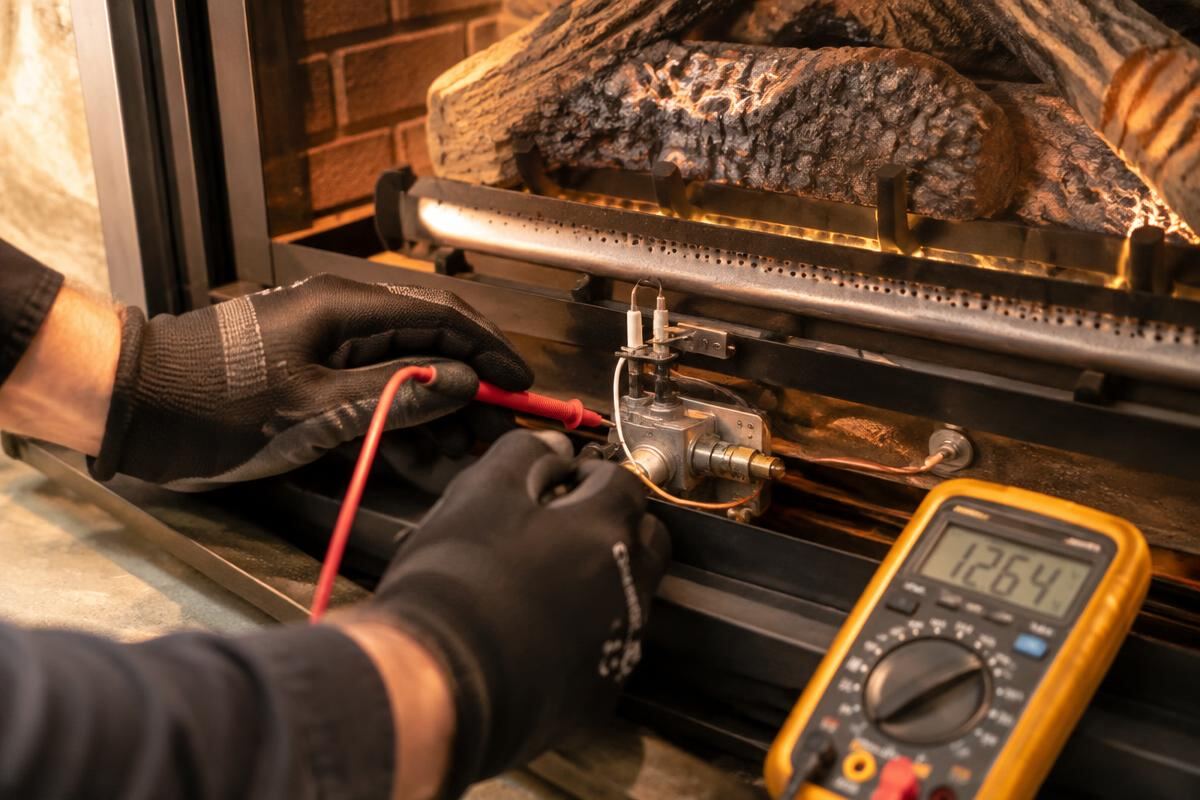
A good repair visit starts with diagnosis rather than parts. Our technicians confirm the fireplace model and ignition type, check incoming gas pressure, and measure the millivolt output from the thermocouple or thermopile under real operating conditions. Those readings show whether the sensor is weak, the flame is poor, or the valve is the problem.
From there the work is usually straightforward. The pilot assembly is cleaned, the orifice cleared, the pilot hood aligned, and connections cleaned and tightened. If the thermopile or thermocouple tests low, it is replaced with the correct part for that model. After the repair the technician tests the pilot and main burner, checks for leaks at the fittings that were touched, and looks over the glass gasket and venting while the unit is open. Most pilot light repairs are finished in a single visit when the part is common.
Gas fireplace pilot light repair cost
Price depends mostly on which part is at fault. A cleaning and adjustment with no new parts sits at the lower end of a standard service call. Replacing a thermocouple or thermopile adds the cost of the part, which varies by brand. A failed gas valve or ignition module is the most expensive outcome because the part costs more and the job takes longer.
We show estimated ranges on our pricing page so you have a reference before you call. They are estimated ranges only, and the final price is confirmed after the technician has assessed your unit. We will always tell you the price before any work starts, and if a repair does not make sense for an older fireplace, we will say so.
Not sure what's causing it?
A technician can diagnose it on the first visit and confirm the price before any work.
Repair or replace an older gas fireplace?
A pilot problem on its own is rarely a reason to replace a fireplace. Thermocouples and thermopiles are wear parts, much like brake pads, and replacing them is normal maintenance. Replacement starts to make sense when several things line up: the unit is past twenty years old, parts are discontinued, the valve has failed, the firebox or glass is damaged, or the fireplace never heated the room well to begin with.
If you are on the fence, ask for both options at the same visit. A technician can give you the repair price and a rough idea of what a modern gas fireplace insert would involve, including efficiency and remote or app control. That way you are comparing real numbers instead of guessing.
How to keep the pilot light from going out next season
The single best prevention is an annual gas fireplace cleaning and inspection, ideally in late summer or early fall before you need the heat. A yearly service cleans the pilot and burner, tests the thermopile output before it gets weak enough to fail, checks the venting and gaskets, and catches small issues while they are cheap. Homeowners who book a fireplace tune-up every year very rarely end up with a pilot that quits on the first cold night.
Between visits, keep the area around the exterior vent clear, replace remote batteries each fall, and do not store anything inside the lower control compartment. If you turn the pilot off for the summer, make a note to have it relit and checked when the season starts rather than discovering a problem during a cold snap.
Questions to ask when you book a fireplace technician
A short conversation before the visit helps you get a faster, more accurate repair. Share the brand and model if you can find it, roughly how old the fireplace is, whether it has a standing pilot or electronic ignition, and exactly what happens when you try to use it. Photos of the rating plate and the pilot area through the glass are very helpful.
It is also fair to ask the technician a few questions of your own: how they diagnose a pilot problem, whether they test thermopile output with a meter, what common parts they carry for your brand, and how pricing is confirmed. A good technician will be happy to explain, and the answers tell you a lot about how carefully the job will be done.
Standing pilot vs electronic ignition: does it change the fix?
Yes, quite a bit. On a standing pilot fireplace the usual suspects are the thermocouple, thermopile and pilot cleanliness. On an intermittent pilot or electronic ignition unit, the technician also checks the ignition module, spark electrode, flame sensor, batteries or adapter, and wiring. Knowing your ignition type before the visit means the technician can bring the right parts and finish the gas fireplace repair in one trip.
Book a gas fireplace repair technician
If your gas fireplace pilot light won't stay lit, the fastest path to a warm living room is a proper diagnosis. EmberRise Pro services most major fireplace brands, from Port Credit and Lorne Park to Meadowvale and Churchill Meadows. Send us a quote request with your fireplace brand, what the pilot is doing and when it started, and our team will confirm availability and pricing.