
Signs you need fireplace tune-up
- Pilot light will not stay lit or keeps going out
- Burner lights, then shuts off after a few minutes
- Glass turns white or cloudy quickly
- Yellow, lazy or sooty flames instead of crisp blue-based flames
- Clicking with no ignition, or the remote or wall switch stopped working
- Unusual smells, rumbling or a fan that is louder than it used to be
What is included
- Safety check of gas connections, valve and venting
- Cleaning of burner, pilot assembly and glass
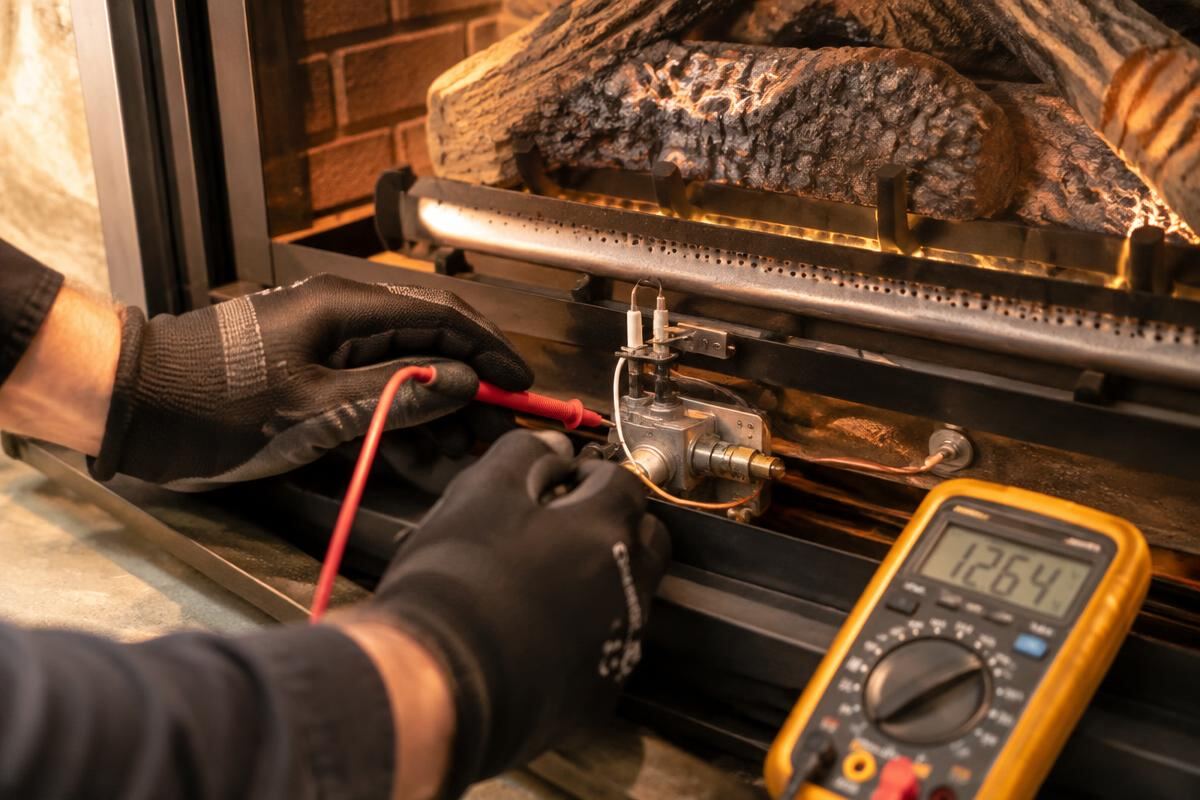
- Testing thermocouple, thermopile or electronic ignition
- Log, media and gasket placement check
- Clear written notes on what we found and any recommended parts
What is not included
- Replacement parts (quoted before any work)
- Masonry, drywall or mantel finishing
- Venting changes that need a new permit
Our process
- 1
Tell us the symptoms
Share the make, model if you have it, and what the fireplace is doing.
- 2
On-site diagnosis
A technician tests ignition, gas pressure and venting before recommending anything.
- 3
Clear quote
You get the price for parts and labour before work starts.
- 4
Repair and test
We complete the work, run the unit through a full cycle and explain what changed.
Repair or replace?
Most gas fireplaces under about 15 years old are worth repairing: thermocouples, thermopiles, igniters and valves are common parts. Replacement starts to make sense when the firebox is cracked, parts are discontinued, or repeated repairs cost more than half the price of a new insert.
Customer reviews
Sample review for design preview, not a real customer
“Annual clean and check on our insert. Glass is spotless and they pointed out a worn gasket we should replace next season.”
Sample review for design preview, not a real customer
“Our fireplace would light and then shut off after a minute. The technician explained it was the thermocouple, showed us the old part and had it running the same visit.”
Frequently asked questions
Related services
Nearby areas we serve
Complete guide
Fireplace Tune-Up: what to know
If you are looking for fireplace tune-up, this guide explains how the work is done, what usually goes wrong, what it tends to cost and how to choose the right team. It is written for homeowners, not trades, and avoids jargon where possible.
Fireplace Tune-Up covers diagnosis, service and repair for your fireplace. We start by understanding the symptoms, then test the parts most likely to be involved.
You get a clear explanation of what we found and a written price before any work begins, so you stay in control of the decision.
Preparing for your appointment
Clear a path to the equipment and about a metre of space around it. Move fragile items, keep pets in another room and let us know about any access codes, parking limits or building rules if you live in a condo or townhouse complex.
If you have past service records, manuals or warranty paperwork, keep them handy. They help the technician understand the history of your fireplace.
weather and your fireplace
Life near Lake Ontario keeps humid in summer and biting in winter, and both extremes show up in service calls. Summer humidity stresses cooling equipment and chimney draft; winter cold stresses everything that burns fuel.
Equipment installed outdoors or in unheated spaces needs the most weather attention. Wind, snow and ice find the weak points first, so exterior terminations and cabinets deserve a look after every major storm.
Efficiency and your gas bill
Efficiency losses are usually gradual, which is why they go unnoticed. A fireplace that runs a little longer each cycle costs a little more each month, and over a few years the drift adds up to real money.
Regular maintenance keeps equipment close to its rated performance. When replacement time comes, the efficiency jump from older equipment to new is often large enough to factor into the decision.
Choosing the right company for fireplace tune-up
A good provider makes the process easy to follow. You should understand what is being done to your fireplace and why, and never feel pressured into an upgrade you did not ask for.
- Get the diagnosis explained before approving any repair
- Confirm gas work will be done by a properly certified technician
- Ask who handles permits and inspections if the job needs them
- Compare quotes on the same scope: parts, labour, testing and cleanup
- Look for clear answers about repair versus replacement
- Check reviews that mention the same service you need
Habits that shorten the life of a fireplace
The most expensive mistake we see is ignoring small changes: a new noise, a slower start, a faint smell. Each one is the fireplace telling you something, and the repair is almost always smaller while the symptom is small.
The second mistake is repeated resetting. Turning a unit off and on can clear an error code temporarily, but the fault that caused it is still there, and safety switches that trip repeatedly are doing an important job.
Maintenance tips to prevent future fireplace tune-up
Between professional visits, keep the area around the fireplace clear and vacuum dust from the vents and blower intake every few months. Dust buildup is a common cause of the burning smell many homeowners notice at the first start of the season.
If the glass fogs or hazes quickly after cleaning, mention it when booking. Fast re-hazing can point to a venting or combustion issue that a standard cleaning will not solve on its own.
A simple habit that pays off: once a month during the season, take a minute to look at and listen to your fireplace while it runs. You know what normal looks and sounds like for your own equipment, which makes you the best early-warning system it has.
Timing your fireplace tune-up around the seasons
Every trade has a rush season, and heating and gas work is no different. The first cold snap of fall fills schedules fast, and the first hot week of summer does the same for cooling equipment.
If your fireplace tune-up is not urgent, the quiet weeks between seasons are the easiest time to book. You get more flexible appointment windows and, if a part has to be ordered, the wait matters less.
That said, a fireplace showing warning signs should not wait for a convenient month. Small faults grow, and a breakdown in January is harder on everyone than a check in September.
Fireplace Tune-Up cost
The estimated range for fireplace tune-up is $150 to $300, with many jobs averaging around $230. This is an estimated range based on typical market prices, and your final price is confirmed after assessment.
The main things that move the price are the age and type of the fireplace, the parts needed, access (tight spaces, finished ceilings or rooftop work take longer), and whether permits or inspections are required. HST is added to the final invoice.
To get an accurate quote quickly, send the make and model, a photo of the unit and its rating plate, and a short description of the problem. You can use the quote form on this page or try our online price estimator for a starting range.
Fireplace Tune-Up near you
Condo and townhouse fireplaces in City Centre and along the lakeshore are often smaller direct vent units vented through an exterior wall. Access rules, parking and elevator bookings can affect scheduling, so mention your building when you request a quote.
We provide fireplace tune-up, including Meadowvale Village, Mineola, Mississauga Valleys, Port Credit, Rathwood, Rockwood Village, Sheridan, Streetsville, Applewood and Central Erin Mills. If your neighbourhood is not listed, ask anyway; we cover the whole city.
Common problems that lead to fireplace tune-up
These are the issues we see most often when homeowners ask about fireplace tune-up. Several can share the same root cause, which is why testing comes before replacing parts.
It is tempting to ignore an intermittent fault, but intermittent problems on a fireplace tend to become permanent ones at the worst possible time. A check while the symptom is still mild is usually a shorter, cheaper visit.
- The burner lights on one side but not the other
- A faint gas smell near the unit that comes and goes
- Glass turns white or hazy within weeks of cleaning
- Flames lift off the burner or make a roaring noise
- A smell of hot dust or burning at the first start of the season
- Fireplace shuts itself off after running for a while
- The unit works from the wall switch but not the remote
- Condensation on the inside of the glass on cold starts
Warranty questions for fireplace tune-up work
Manufacturer warranties usually expect the equipment to be installed and serviced properly, so keep your invoices and service records. If your fireplace is still under warranty, say so when booking, because the process for parts may differ.
We are an independent service company, not a warranty provider. We will tell you honestly when a claim through the manufacturer or installer is your better route.
Timing for a typical fireplace tune-up job
Most fireplace tune-up visits take one to two hours once the technician is on site. Straightforward service and common repairs usually finish in a single visit, while jobs needing special-order parts or a permit inspection can stretch over two appointments.
The easiest way to shorten the visit is preparation: have the model and serial number ready, clear access to the fireplace and describe the symptoms in the quote form. Technicians can often bring the likely part on the first trip.
Once the technician leaves
After any fireplace tune-up visit, run the equipment through a normal cycle and keep an eye on it for the first few days. New noises, smells or error codes should be reported right away, while the details of the visit are still fresh.
Keep the service notes with your home records. A history of what was repaired and when makes every future diagnosis faster, and it is useful documentation if you ever sell the home.
Understanding your fireplace
Around the burner sit the logs or media, the glass front with its gasket, an optional blower fan and the controls: a wall switch, thermostat or remote receiver. A problem with any of these parts can look like a gas problem from the outside, so a proper diagnosis tests each part in order instead of guessing.
The venting matters as much as the firebox. Direct vent units draw combustion air from outside, so a blocked or damaged termination affects both safety and performance. Snow buildup, nesting birds and deteriorated seals around the wall thimble are all common finds on exterior checks.
One thing worth knowing about your fireplace: most failures give warning signs weeks before a full breakdown. Unusual noises, longer run times and small changes in performance are the equipment asking for attention, and responding early almost always costs less than waiting for a complete stop.
Urgent problem or book-ahead job?
Not every fault is an emergency, and treating them all as one leads to stressed decisions. The clear emergencies involve safety: gas smells, carbon monoxide alarms and anything scorched or smoking. Comfort problems can usually wait a day or two for a proper assessment.
If the equipment still runs, note what it is doing and book a regular visit. If it involves gas, smoke or a safety alarm, follow the safety steps on this page first.
Condo and townhouse notes
Condo and townhouse owners have extra logistics: booking elevators, arranging parking, and sometimes getting property management approval before work starts. Mention your building when you request a quote so these are planned for rather than discovered on the day.
Some buildings also have shared systems. If your equipment connects to shared venting or mechanical rooms, your property manager may need to be involved, and it is better to know that before booking.
When repair makes sense, and when it does not
There is no universal answer, but there are honest questions. How old is the fireplace? Has it needed repeated repairs in recent years? Would new equipment cut your gas or electricity use enough to matter? Are parts still easy to get?
We walk through those questions with you on site and price both paths when the decision is close. If a repair buys you several more reliable years for a reasonable amount, we will say that too, even though replacement is the bigger job.
What to expect when we arrive
Every visit follows the same basic shape: listen first, test second, repair third. Skipping the first two steps is how homeowners end up paying for parts they did not need, so we do not skip them.
Testing on a fireplace can involve pressure readings, electrical checks on sensors and controls, venting inspection and a full operating cycle. The technician explains each finding as it happens, and you can ask questions at any point.
Nothing is done without your approval. You get the price in writing first, options when there is more than one way to solve the problem, and honest advice if the fireplace is not worth repairing. The work area is left clean when we go.
How we handle every job
- Diagnosis first, parts second: we test before we replace
- Upfront written pricing you approve before work starts
- Familiarity with the fireplaces common homes
- Old parts shown or left with you on request
- A clear summary of the work for your records
Safety first
Every home with a gas fireplace should have a working carbon monoxide alarm on each level, especially near bedrooms. Never run a fireplace with the glass removed or cracked, and keep the area in front clear of furniture and decorations.