
Signs you need fix my fireplace
- Pilot light will not stay lit or keeps going out
- Burner lights, then shuts off after a few minutes
- Glass turns white or cloudy quickly
- Yellow, lazy or sooty flames instead of crisp blue-based flames
- Clicking with no ignition, or the remote or wall switch stopped working
- Unusual smells, rumbling or a fan that is louder than it used to be
What is included
- Safety check of gas connections, valve and venting
- Cleaning of burner, pilot assembly and glass
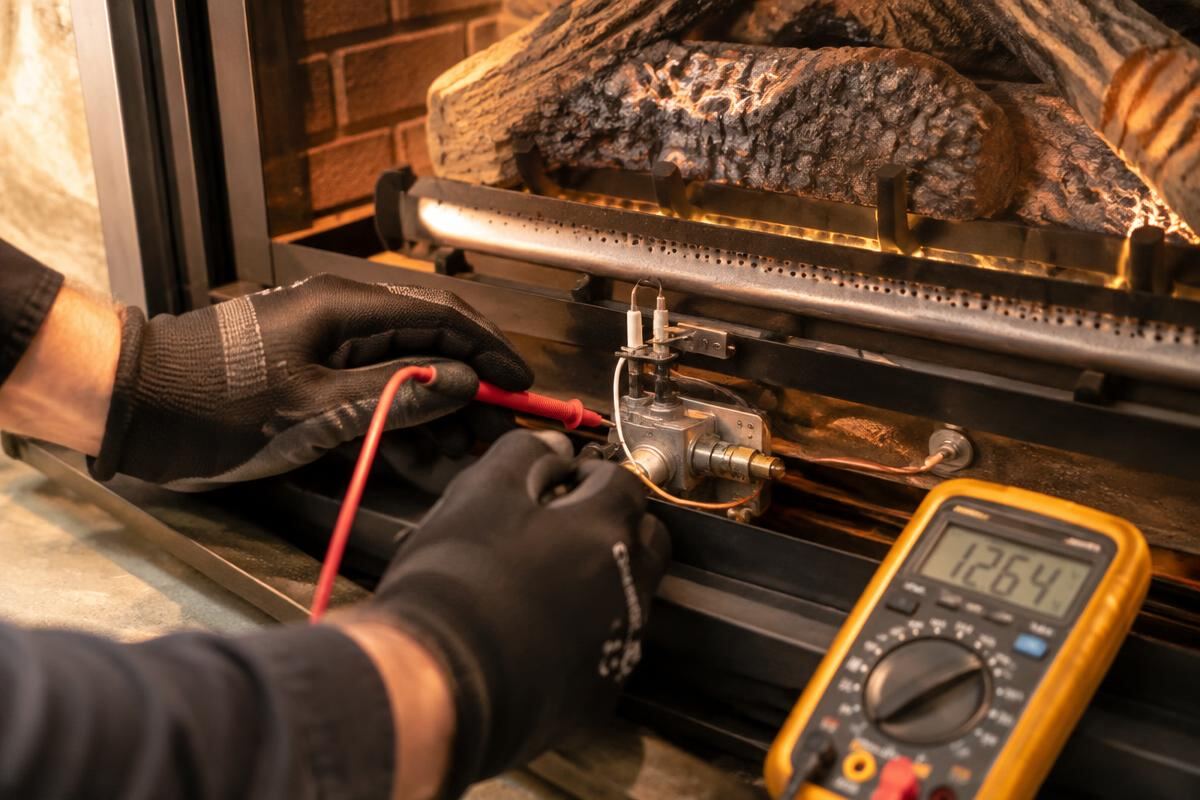
- Testing thermocouple, thermopile or electronic ignition
- Log, media and gasket placement check
- Clear written notes on what we found and any recommended parts
What is not included
- Replacement parts (quoted before any work)
- Masonry, drywall or mantel finishing
- Venting changes that need a new permit
Our process
- 1
Tell us the symptoms
Share the make, model if you have it, and what the fireplace is doing.
- 2
On-site diagnosis
A technician tests ignition, gas pressure and venting before recommending anything.
- 3
Clear quote
You get the price for parts and labour before work starts.
- 4
Repair and test
We complete the work, run the unit through a full cycle and explain what changed.
Repair or replace?
Most gas fireplaces under about 15 years old are worth repairing: thermocouples, thermopiles, igniters and valves are common parts. Replacement starts to make sense when the firebox is cracked, parts are discontinued, or repeated repairs cost more than half the price of a new insert.
Customer reviews
Sample review for design preview, not a real customer
“Our fireplace would light and then shut off after a minute. The technician explained it was the thermocouple, showed us the old part and had it running the same visit.”
Sample review for design preview, not a real customer
“Annual clean and check on our insert. Glass is spotless and they pointed out a worn gasket we should replace next season.”
Frequently asked questions
Related services
Nearby areas we serve
Complete guide
Fix my Fireplace, explained without the jargon
If you are looking for fix my fireplace, this guide explains how the work is done, what usually goes wrong, what it tends to cost and how to choose the right team. It is written for homeowners, not trades, and avoids jargon where possible.
Fix my Fireplace covers diagnosis, service and repair for your fix my fireplace. We start by understanding the symptoms, then test the parts most likely to be involved.
You get a clear explanation of what we found and a written price before any work begins, so you stay in control of the decision.
Timing for a typical fix my fireplace job
Most fix my fireplace visits take one to two hours once the technician is on site. Straightforward service and common repairs usually finish in a single visit, while jobs needing special-order parts or a permit inspection can stretch over two appointments.
The easiest way to shorten the visit is preparation: have the model and serial number ready, clear access to the fix my fireplace and describe the symptoms in the quote form. Technicians can often bring the likely part on the first trip.
Signs your fix my fireplace needs attention
A fix my fireplace rarely fails without warning. These are the symptoms that bring local homeowners to us, and most of them are cheaper to fix early than late.
If you recognize one of these on your fix my fireplace, note when it happens and what else was running at the time. Patterns like "only on cold mornings" or "only when several appliances run together" are valuable clues that can shorten the diagnosis.
- The unit works from the wall switch but not the remote
- Remote control or wall switch works some days and not others
- Blower fan is noisy, slow or stops working
- Fireplace shuts itself off after running for a while
- The burner lights on one side but not the other
- Burner will not come on even though the pilot is lit, often a thermopile, switch or wiring fault
- A faint gas smell near the unit that comes and goes
- A smell of hot dust or burning at the first start of the season
When repair makes sense, and when it does not
A simple rule many homeowners use: if a repair costs more than half the price of new equipment and the fix my fireplace is near the end of its expected life, replacement is usually the better value. If the unit is younger and the fault is a common part, repair almost always wins.
Other things to weigh are efficiency, safety and how much you rely on the equipment. We give you both options with prices when it is a close call, and we will say so when a repair is not worth it.
Fix my Fireplace neighbourhoods
Outdoor gas fireplaces and fire tables have become common in newer backyards across Erin Mills and Churchill Meadows. They face the same ignition and burner issues as indoor units, plus weather exposure on controls and media.
Our technicians cover many neighbourhoods, from Meadowvale, Meadowvale Village, Mineola, Mississauga Valleys, Port Credit, Rathwood, Rockwood Village, Sheridan, Streetsville and Applewood and everywhere in between. Not sure if you are in range? Send your address with the quote form and we will confirm.
Keeping records that pay off later
Take a photo of the rating plate on your fix my fireplace and keep it with your records. Model and serial numbers are the first thing any technician or parts supplier will ask for, and they are rarely in a convenient spot.
Note the date of each service visit and set a reminder for the next one. Most fix my fireplace care runs on a yearly cycle, and a reminder is the cheapest maintenance tool there is.
Fix my Fireplace cost
Homeowners often ask for a price over the phone, and honest companies resist giving one. Two fix my fireplaces with the same symptom can need very different repairs, so a phone quote is usually a guess. As a general guide, fix my fireplace tends to run $200 to $600 plus parts, averaging around $400, with the final price confirmed after assessment.
Your written quote separates parts and labour and lists anything extra, such as permits or disposal. Nothing is added later without your approval, and HST is shown on the final invoice.
If you are comparing quotes, make sure each one covers the same scope: diagnosis, parts, labour, testing and cleanup. A cheaper quote that excludes testing can cost more in the end.
What fix my fireplace looks like season by season
Every season writes its own service calls. The first cold week brings ignition failures, the first heat wave brings cooling complaints, and pool opening season brings heaters that did not survive the winter.
Your fix my fireplace has a natural moment in that calendar when a check is cheapest and easiest to book. The quote form is open year-round, so pick the quiet season rather than the loud one.
After the work is done
If something does not seem right after the work, contact us rather than adjusting the fix my fireplace yourself. Describing exactly what changed since the visit helps us respond quickly and accurately.
It also helps to note the date of the visit. Many maintenance tasks work on a yearly cycle, and a reminder set for the same month next year keeps the fix my fireplace on a sensible schedule.
How Ontario weather treats your equipment
's freeze-thaw cycles are hard on anything outdoors: vent terminations, chimney crowns, pool equipment and exterior gas lines all take seasonal punishment. A quick look at exterior equipment each spring and fall catches weather damage early.
Cold snaps also expose weak equipment. The night the temperature drops well below freezing is when marginal igniters, tired blowers and old sensors tend to give up, which is one more reason fall checks pay off.
Questions worth asking your technician
You do not need technical knowledge to interview your technician. "What did you find?", "What are my options?" and "What would you do if it were your house?" cover most of what matters.
Write the answers down or ask for them in the visit notes. When the next decision about your fix my fireplace comes up, you will be glad you did.
What is inside a fix my fireplace
A gas fireplace burns natural gas or propane inside a sealed firebox. Most units homes are direct vent: one pipe pulls outside air in for combustion and a second pipe sends exhaust back out, so the fire never uses the air in your living room. Older B-vent and vent-free styles exist, but they behave differently and need a different kind of check.
The venting matters as much as the firebox. Direct vent units draw combustion air from outside, so a blocked or damaged termination affects both safety and performance. Snow buildup, nesting birds and deteriorated seals around the wall thimble are all common finds on exterior checks.
The details vary by model, but the pattern holds across fix my fireplaces homes: a small wear part usually fails first, and catching it early keeps the repair small. That is why we test the cheap, common failures before the expensive ones, and why a symptom that seems minor is still worth a call.
What to ask before hiring for fix my fireplace
The right company treats your questions as part of the job, not an interruption. If an answer about your fix my fireplace feels evasive, keep looking.
- Get the diagnosis explained before approving any repair
- Confirm gas work will be done by a properly certified technician
- Ask who handles permits and inspections if the job needs them
- Compare quotes on the same scope: parts, labour, testing and cleanup
- Look for clear answers about repair versus replacement
- Check reviews that mention the same service you need
Keeping your fix my fireplace in good shape
Annual service is the single best way to keep a gas fireplace safe and reliable. A technician removes the glass, cleans the burner and pilot, vacuums the firebox, checks log placement, inspects the gasket and tests the ignition parts with a meter. Venting terminations outside are checked for blockages such as bird nests, leaves and snow.
Booking in late summer or early fall avoids the rush that comes with the first cold week, when many homeowners switch their fireplace on at the same time and discover a problem.
Between professional visits, the biggest favour you can do your fix my fireplace is paying attention. Listen for new sounds, watch for changes in performance and deal with small issues before the busy season arrives.
When to book fix my fireplace
winters are long and summers are humid, so demand for home heating and gas services rises and falls with the weather. Fireplaces, furnaces and water heaters get the most calls in October through January, while air conditioners and pool heaters peak from May through August.
Booking fix my fireplace just before the busy season usually gives you more choice of appointment times and leaves room to order parts without rushing. If your fix my fireplace has been showing small warning signs, such as new noises, slower performance or higher gas bills, it is worth having it checked before a minor fault becomes a breakdown.
Emergencies do not follow a calendar, though. If something stops working at a bad moment, contact us with as much detail as you can and we will tell you honestly how soon a technician can get there.
What to expect when we arrive
Every visit follows the same basic shape: listen first, test second, repair third. Skipping the first two steps is how homeowners end up paying for parts they did not need, so we do not skip them.
Testing on a fix my fireplace can involve pressure readings, electrical checks on sensors and controls, venting inspection and a full operating cycle. The technician explains each finding as it happens, and you can ask questions at any point.
Nothing is done without your approval. You get the price in writing first, options when there is more than one way to solve the problem, and honest advice if the fix my fireplace is not worth repairing. The work area is left clean when we go.
Comparing quotes without the guesswork
When you collect quotes for fix my fireplace, compare scope, not just the bottom line: diagnosis, parts, labour, testing, permits and cleanup should all be spelled out. A low number that leaves half of these out is not actually the low number.
A second opinion is always reasonable, especially on a big repair. Any company confident in its diagnosis will not mind you checking it.
Mistakes that make fix my fireplace problems worse
Blocking vents and air intakes is a quiet problem. Furniture, storage, snow and landscaping can all restrict the airflow a fix my fireplace needs to run safely, and the damage builds slowly enough that nobody notices until performance drops.
Another common one is skipping routine care for years and then expecting a single visit to undo it. Maintenance works best as a habit, not a rescue.
Before the technician arrives
A few minutes of preparation makes the visit faster. Make sure the fix my fireplace is reachable, the area around it is clear and an adult is home to approve the written price before work begins.
Write down the symptoms you have noticed and when they started. If the problem comes and goes, a short video on your phone can be more useful than any description.
What is included on every visit
- Diagnosis first, parts second: we test before we replace
- Upfront written pricing you approve before work starts
- Familiarity with the fix my fireplaces common homes
- Old parts shown or left with you on request
- A clear summary of the work for your records
Safety first
Keep fireplace remotes and control keys away from children, and treat the glass front as hot for at least an hour after the fire goes out. Barrier screens are a worthwhile addition in homes with young children or pets.