
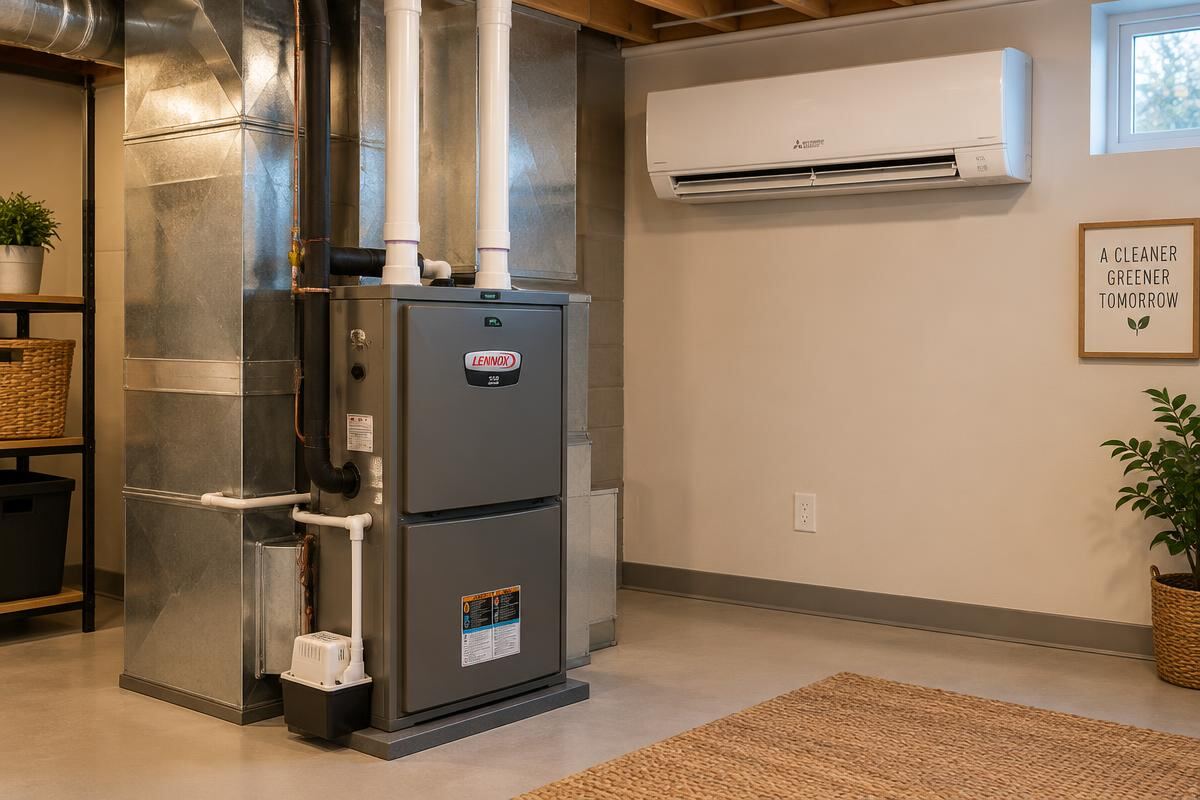
Signs you need furnace not turning on
- Furnace will not start, short-cycles or blows cold air
- AC runs but the house will not cool down
- Ice on the outdoor unit or refrigerant lines
- Water around the furnace or indoor ductless head
- Higher energy bills without a change in use
- New noises: banging, squealing, grinding or rattling
What is included
- Thermostat and electrical checks
- Inspection of burners, flame sensor, igniter and heat exchanger (furnaces)
- Coil, filter and condensate drain checks (AC, heat pump, ductless)
- Airflow and temperature split measurements
- Written summary and options
What is not included
- Major parts such as compressors, heat exchangers or blower motors (quoted first)
- Ductwork redesign
- Electrical panel upgrades
Our process
- 1
Book
Tell us the equipment type and what is happening.
- 2
Diagnose
We test the system and find the root cause.
- 3
Quote
You get a clear repair or replacement option with pricing.
- 4
Fix and verify
We complete the work and confirm the system heats or cools properly.
Repair or replace?
Furnaces and AC units are often worth repairing up to around 12 to 15 years old. If the equipment is older, uses phased-out refrigerant, or needs a major part, replacement is often the better long-term value.
Customer reviews
Sample review for design preview, not a real customer
“Furnace would not ignite on a cold morning. They traced it to a dirty flame sensor and checked the whole system before leaving.”
Sample review for design preview, not a real customer
“Clean install of a ductless head in our condo bedroom. They coordinated with building management, which saved me a lot of back and forth.”
Frequently asked questions
Related services
Nearby areas we serve
Complete guide
Furnace Not Turning On, explained without the jargon
Most people search for furnace not turning on when something has already gone wrong, or when they want to get ahead of a problem before the season starts. Either way, this guide gives you the full picture: how your furnace not turning on works, what fails, how we approach the job and how pricing works.
Furnace Not Turning On is one of the most common reasons people call us. In most cases it comes down to a sensor, igniter, control or supply issue that can be tested safely on site.
Note when the problem started, whether it happens every time and any error codes on the display. These details often save diagnosis time on your furnace not turning on.
Mistakes that make furnace not turning on problems worse
Well-meaning DIY is behind a surprising number of furnace not turning on calls. Opening sealed components or adjusting gas and combustion parts without training can create a safety hazard where none existed, and it often makes the professional repair more involved.
The safer rule is simple: basic cleaning and filter care from the owner's manual is fine, and anything involving gas, combustion, wiring or internal parts belongs to a certified technician.
Deciding between repair and replacement
Repair is usually right when the furnace not turning on is young, the fault is a standard part and the rest of the system is in good condition. Replacement starts making sense when repairs are stacking up, efficiency has dropped or a key part is no longer available.
Either way, you should never feel pushed. Our job is to give you the condition of your furnace not turning on, the cost of each option and an honest recommendation. The decision stays with you.
Getting more from the energy you pay for
A well-maintained furnace not turning on uses less energy than a neglected one, and the difference shows up on your utility bill. Clean burners, good airflow and correct settings are not luxuries; they are the difference between the efficiency on the rating plate and the efficiency you actually get.
If your gas or electricity use has crept up without a change in habits, the equipment is a reasonable place to look. A service visit can confirm whether performance has drifted.
Timing for a typical furnace not turning on job
Most furnace not turning on visits take one to two hours once the technician is on site. Straightforward service and common repairs usually finish in a single visit, while jobs needing special-order parts or a permit inspection can stretch over two appointments.
The easiest way to shorten the visit is preparation: have the model and serial number ready, clear access to the furnace not turning on and describe the symptoms in the quote form. Technicians can often bring the likely part on the first trip.
After the work is done
If something does not seem right after the work, contact us rather than adjusting the furnace not turning on yourself. Describing exactly what changed since the visit helps us respond quickly and accurately.
It also helps to note the date of the visit. Many maintenance tasks work on a yearly cycle, and a reminder set for the same month next year keeps the furnace not turning on on a sensible schedule.
Timing your furnace not turning on around the seasons
winters are long and summers are humid, so demand for home heating and gas services rises and falls with the weather. Fireplaces, furnaces and water heaters get the most calls in October through January, while air conditioners and pool heaters peak from May through August.
Booking furnace not turning on just before the busy season usually gives you more choice of appointment times and leaves room to order parts without rushing. If your furnace not turning on has been showing small warning signs, such as new noises, slower performance or higher gas bills, it is worth having it checked before a minor fault becomes a breakdown.
Emergencies do not follow a calendar, though. If something stops working at a bad moment, contact us with as much detail as you can and we will tell you honestly how soon a technician can get there.
Furnace Not Turning On neighbourhoods
Additions and finished basements change how air moves through a home. If some rooms never reach temperature after a renovation, the fix is often balancing or duct modification rather than bigger equipment.
Our technicians cover many neighbourhoods, from Rockwood Village, Sheridan, Streetsville, Applewood, Central Erin Mills, Churchill Meadows, Clarkson, Cooksville, Creditview and Dixie and everywhere in between. Not sure if you are in range? Send your address with the quote form and we will confirm.
How to choose a furnace not turning on provider
The right company treats your questions as part of the job, not an interruption. If an answer about your furnace not turning on feels evasive, keep looking.
- Ask for a written price before work begins, not just an hourly rate
- Confirm the technician holds the right gas certificate for the work
- Ask whether permits are needed and who arranges them
- Check that old parts can be shown to you on request
- Make sure the company explains repair versus replacement honestly
- Read recent, verifiable reviews from local customers
What is inside a furnace not turning on
The thermostat ties everything together. A failing thermostat or wiring fault can make a perfectly good furnace or air conditioner seem broken, so it is one of the first things a technician checks.
Ductwork is part of the system, not an afterthought. Leaky or poorly balanced ducts cause hot and cold rooms, noise and wasted energy, and no new furnace will fix a duct problem on its own.
No two furnace not turning ons are exactly alike, and age matters as much as brand. Older equipment often has simpler parts that are easy to source, while newer units are more efficient but rely on sensors and control boards that need proper testing equipment to diagnose. Knowing which you have shapes the whole visit.
Older equipment: what changes
Older equipment is not automatically bad equipment. Plenty of twenty-year-old units run safely and well. What changes with age is parts availability, efficiency and the math on repairs, so the decision framework shifts rather than the answer.
If your furnace not turning on is past its expected lifespan, it is worth knowing roughly what replacement would cost before something fails. A number in hand turns an emergency decision into a planned one.
Before the technician arrives
Clear a path to the equipment and about a metre of space around it. Move fragile items, keep pets in another room and let us know about any access codes, parking limits or building rules if you live in a condo or townhouse complex.
If you have past service records, manuals or warranty paperwork, keep them handy. They help the technician understand the history of your furnace not turning on.
Maintenance tips to prevent future furnace not turning on
A furnace tune-up in the fall and an air conditioner tune-up in the spring keep both running efficiently. Typical work includes cleaning the flame sensor and burners, checking the igniter, testing safety switches, inspecting the heat exchanger, checking refrigerant performance and cleaning the condenser coil.
Keep the outdoor air conditioning or heat pump unit clear: a metre of space around it, no leaves or dryer lint on the coil, and no storage against it. Restricted airflow is a common cause of poor cooling and frozen lines.
Homeowners often ask what they can safely do themselves. The honest answer: keep the area around the furnace not turning on clear and clean, follow the owner's manual for basic care, and leave anything involving gas, combustion or internal parts to a certified technician.
What furnace not turning on costs
The estimated range for furnace not turning on is $200 to $600, with many jobs averaging around $400. This is an estimated range based on typical market prices, and your final price is confirmed after assessment.
The main things that move the price are the age and type of the furnace not turning on, the parts needed, access (tight spaces, finished ceilings or rooftop work take longer), and whether permits or inspections are required. HST is added to the final invoice.
To get an accurate quote quickly, send the make and model, a photo of the unit and its rating plate, and a short description of the problem. You can use the quote form on this page or try our online price estimator for a starting range.
Why your service history matters
Every visit produces information worth keeping: what was tested, what was replaced and what was recommended. File the invoices and notes with your home documents, because the next technician starts faster with a history in hand.
A documented service history also helps when you sell. Buyers and home inspectors look kindly on equipment with clear maintenance records.
Getting a fair quote for furnace not turning on
The cheapest quote and the best value are rarely the same thing. Ask each company what is included, what could change the price and how the final invoice is calculated, then compare the answers side by side.
Be cautious of any quote given without seeing the equipment. Real pricing for furnace not turning on work starts with an assessment and a written number you approve before work begins.
What happens during a furnace not turning on visit
When the technician arrives, the first step is protecting your home: floor coverings where needed, and a tidy work area around the furnace not turning on. Then come the questions. What you have seen, heard or smelled, and when it started, often matters more than any single test.
Diagnosis is done in a set order. We confirm the symptom, test the parts most likely to cause it and only then talk about repairs. You are shown what was found, in plain language, before anything is taken apart or replaced.
You approve a written price before work begins, and old parts are left with you on request. Once the repair is done, the furnace not turning on is run through a full cycle to confirm the fix, and you get a summary of the work for your records.
The issues behind most furnace not turning on calls
Not every furnace not turning on problem looks the same from the outside. The list below covers what we find most often on furnace not turning on visits.
If you recognize one of these on your furnace not turning on, note when it happens and what else was running at the time. Patterns like "only on cold mornings" or "only when several appliances run together" are valuable clues that can shorten the diagnosis.
- Frequent breaker trips when the system starts
- Uneven temperatures between floors
- A burning or musty smell when the system starts
- Energy bills climbing with no change in usage
- System short-cycles, turning on and off every few minutes
- Loud banging, squealing or grinding from the blower
- Thermostat display is blank or unresponsive
- Ice on the refrigerant lines or outdoor unit
What furnace not turning on looks like season by season
Spring is for closing out heating season and preparing cooling and pool equipment. Summer belongs to air conditioning, BBQ lines and outdoor work. Fall is furnace and fireplace season, and winter is when everything that was ignored announces itself.
Booking furnace not turning on in its natural off-season means shorter waits and more flexibility. It also means a problem found early stays a small problem.
What is included on every visit
- Diagnosis first, parts second: we test before we replace
- Upfront written pricing you approve before work starts
- Familiarity with the furnace not turning ons common homes
- Old parts shown or left with you on request
- A clear summary of the work for your records
Safety notes worth reading
A furnace burns fuel inside your home, so a cracked heat exchanger or blocked vent can release carbon monoxide. Keep carbon monoxide alarms on every level and call a technician if an alarm sounds, after getting everyone outside.