
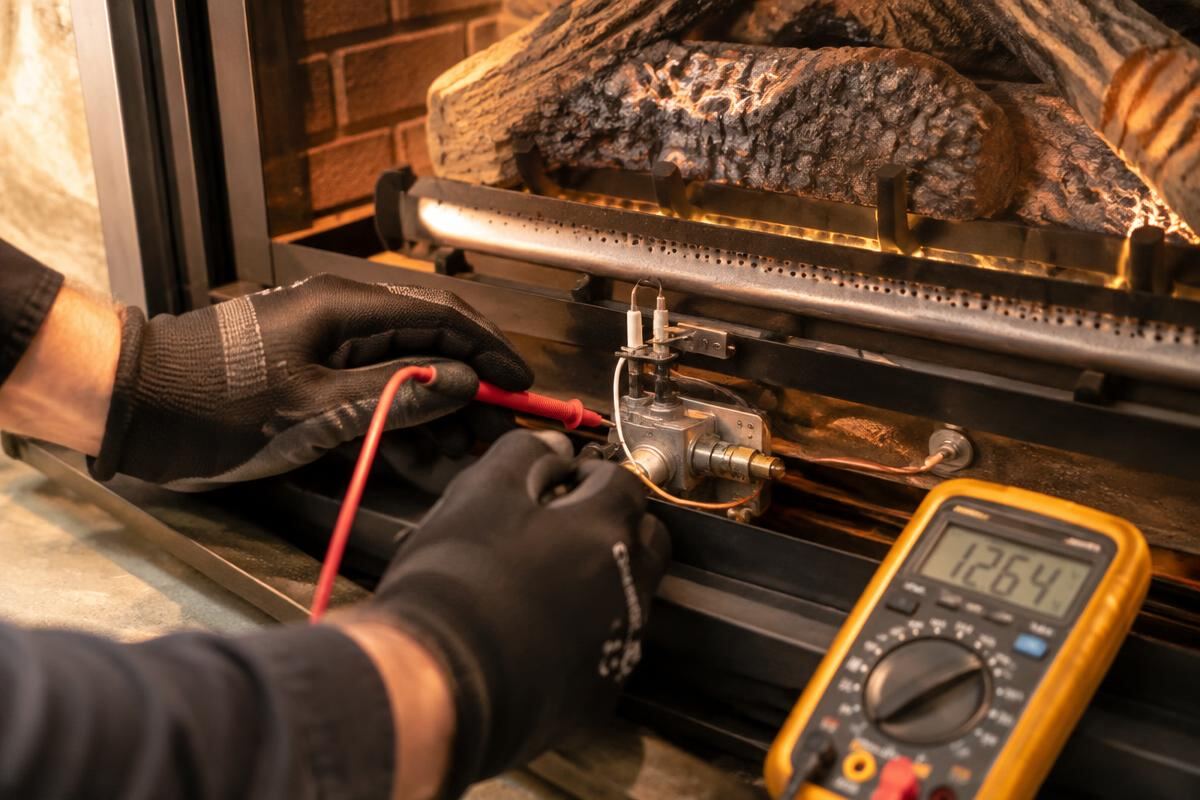
Signs you need gas fireplace cleaning
- Pilot light will not stay lit or keeps going out
- Burner lights, then shuts off after a few minutes
- Glass turns white or cloudy quickly
- Yellow, lazy or sooty flames instead of crisp blue-based flames
- Clicking with no ignition, or the remote or wall switch stopped working
- Unusual smells, rumbling or a fan that is louder than it used to be
What is included
- Safety check of gas connections, valve and venting
- Cleaning of burner, pilot assembly and glass
- Testing thermocouple, thermopile or electronic ignition
- Log, media and gasket placement check
- Clear written notes on what we found and any recommended parts
What is not included
- Replacement parts (quoted before any work)
- Masonry, drywall or mantel finishing
- Venting changes that need a new permit
Our process
- 1
Tell us the symptoms
Share the make, model if you have it, and what the fireplace is doing.
- 2
On-site diagnosis
A technician tests ignition, gas pressure and venting before recommending anything.
- 3
Clear quote
You get the price for parts and labour before work starts.
- 4
Repair and test
We complete the work, run the unit through a full cycle and explain what changed.
Repair or replace?
Most gas fireplaces under about 15 years old are worth repairing: thermocouples, thermopiles, igniters and valves are common parts. Replacement starts to make sense when the firebox is cracked, parts are discontinued, or repeated repairs cost more than half the price of a new insert.
Customer reviews
Sample review for design preview, not a real customer
“Our fireplace would light and then shut off after a minute. The technician explained it was the thermocouple, showed us the old part and had it running the same visit.”
Sample review for design preview, not a real customer
“Annual clean and check on our insert. Glass is spotless and they pointed out a worn gasket we should replace next season.”
Frequently asked questions
Related services
Nearby areas we serve
Complete guide
Gas Fireplace Cleaning, explained without the jargon
Most people search for gas fireplace cleaning when something has already gone wrong, or when they want to get ahead of a problem before the season starts. Either way, this guide gives you the full picture: how your gas fireplace works, what fails, how we approach the job and how pricing works.
Gas Fireplace Cleaning removes the buildup that makes a gas fireplace run poorly or unsafely. We protect floors and furniture, contain dust and leave the area tidy.
A cleaning visit is also a chance to spot worn parts early, before they fail in the middle of the season.
What happens during a gas fireplace cleaning visit
When the technician arrives, the first step is protecting your home: floor coverings where needed, and a tidy work area around the gas fireplace. Then come the questions. What you have seen, heard or smelled, and when it started, often matters more than any single test.
Diagnosis is done in a set order. We confirm the symptom, test the parts most likely to cause it and only then talk about repairs. You are shown what was found, in plain language, before anything is taken apart or replaced.
You approve a written price before work begins, and old parts are left with you on request. Once the repair is done, the gas fireplace is run through a full cycle to confirm the fix, and you get a summary of the work for your records.
Preparing for your appointment
A few minutes of preparation makes the visit faster. Make sure the gas fireplace is reachable, the area around it is clear and an adult is home to approve the written price before work begins.
Write down the symptoms you have noticed and when they started. If the problem comes and goes, a short video on your phone can be more useful than any description.
Urgent problem or book-ahead job?
Some symptoms mean stop using the equipment now: a gas smell, a carbon monoxide alarm, visible scorching, or water pooling where it can reach wiring. Others, like a gradual drop in performance, are safe to book at a convenient time.
When you are unsure, describe the symptom in the quote form and ask. An honest answer about urgency costs nothing and can save a rushed decision about your gas fireplace.
The issues behind most gas fireplace cleaning calls
Not every gas fireplace problem looks the same from the outside. The list below covers what we find most often on gas fireplace cleaning visits.
Keep in mind that the same symptom can have different causes on different models of gas fireplace. That is why we diagnose rather than guess, and why a written price comes after testing, not before.
- Remote control or wall switch works some days and not others
- Burner will not come on even though the pilot is lit, often a thermopile, switch or wiring fault
- Flames are tall, yellow and lazy, or soot marks appear on the logs and glass
- Pilot lights but goes out when you release the knob, usually a weak thermocouple or a dirty pilot assembly
- Flames lift off the burner or make a roaring noise
- Condensation on the inside of the glass on cold starts
- Blower fan is noisy, slow or stops working
- Electronic ignition clicks but nothing lights, which points to the igniter, flame sensor or control module
Understanding your gas fireplace
The heart of the system is the gas valve and the pilot. On a standing pilot unit a small flame heats a thermocouple and a thermopile, which produce a tiny electric current that holds the valve open. On electronic ignition units an igniter lights the pilot only when you call for heat. Knowing which type you have helps a technician narrow down a fault quickly, which is why we always ask for the make and model when you book.
The venting matters as much as the firebox. Direct vent units draw combustion air from outside, so a blocked or damaged termination affects both safety and performance. Snow buildup, nesting birds and deteriorated seals around the wall thimble are all common finds on exterior checks.
One thing worth knowing about your gas fireplace: most failures give warning signs weeks before a full breakdown. Unusual noises, longer run times and small changes in performance are the equipment asking for attention, and responding early almost always costs less than waiting for a complete stop.
How to choose a gas fireplace cleaning provider
A good provider makes the process easy to follow. You should understand what is being done to your gas fireplace and why, and never feel pressured into an upgrade you did not ask for.
- Ask for a written price before work begins, not just an hourly rate
- Confirm the technician holds the right gas certificate for the work
- Ask whether permits are needed and who arranges them
- Check that old parts can be shown to you on request
- Make sure the company explains repair versus replacement honestly
- Read recent, verifiable reviews from local customers
Questions worth asking your technician
You do not need technical knowledge to interview your technician. "What did you find?", "What are my options?" and "What would you do if it were your house?" cover most of what matters.
Write the answers down or ask for them in the visit notes. When the next decision about your gas fireplace comes up, you will be glad you did.
What to watch for after your gas fireplace cleaning
After any gas fireplace cleaning visit, run the equipment through a normal cycle and keep an eye on it for the first few days. New noises, smells or error codes should be reported right away, while the details of the visit are still fresh.
Keep the service notes with your home records. A history of what was repaired and when makes every future diagnosis faster, and it is useful documentation if you ever sell the home.
When to book gas fireplace cleaning
winters are long and summers are humid, so demand for home heating and gas services rises and falls with the weather. Fireplaces, furnaces and water heaters get the most calls in October through January, while air conditioners and pool heaters peak from May through August.
Booking gas fireplace cleaning just before the busy season usually gives you more choice of appointment times and leaves room to order parts without rushing. If your gas fireplace has been showing small warning signs, such as new noises, slower performance or higher gas bills, it is worth having it checked before a minor fault becomes a breakdown.
Emergencies do not follow a calendar, though. If something stops working at a bad moment, contact us with as much detail as you can and we will tell you honestly how soon a technician can get there.
Mistakes that make gas fireplace problems worse
Blocking vents and air intakes is a quiet problem. Furniture, storage, snow and landscaping can all restrict the airflow a gas fireplace needs to run safely, and the damage builds slowly enough that nobody notices until performance drops.
Another common one is skipping routine care for years and then expecting a single visit to undo it. Maintenance works best as a habit, not a rescue.
Gas Fireplace Cleaning near you
Outdoor gas fireplaces and fire tables have become common in newer backyards across Erin Mills and Churchill Meadows. They face the same ignition and burner issues as indoor units, plus weather exposure on controls and media.
Our technicians cover many neighbourhoods, from Rockwood Village, Sheridan, Streetsville, Applewood, Central Erin Mills, Churchill Meadows, Clarkson, Cooksville, Creditview and Dixie and everywhere in between. Not sure if you are in range? Send your address with the quote form and we will confirm.
Timing for a typical gas fireplace cleaning job
Most gas fireplace cleaning visits take one to two hours once the technician is on site. Straightforward service and common repairs usually finish in a single visit, while jobs needing special-order parts or a permit inspection can stretch over two appointments.
The easiest way to shorten the visit is preparation: have the model and serial number ready, clear access to the gas fireplace and describe the symptoms in the quote form. Technicians can often bring the likely part on the first trip.
Maintenance tips to prevent future gas fireplace cleaning
Between professional visits, keep the area around the fireplace clear and vacuum dust from the vents and blower intake every few months. Dust buildup is a common cause of the burning smell many homeowners notice at the first start of the season.
If the glass fogs or hazes quickly after cleaning, mention it when booking. Fast re-hazing can point to a venting or combustion issue that a standard cleaning will not solve on its own.
Homeowners often ask what they can safely do themselves. The honest answer: keep the area around the gas fireplace clear and clean, follow the owner's manual for basic care, and leave anything involving gas, combustion or internal parts to a certified technician.
Why your service history matters
Every visit produces information worth keeping: what was tested, what was replaced and what was recommended. File the invoices and notes with your home documents, because the next technician starts faster with a history in hand.
A documented service history also helps when you sell. Buyers and home inspectors look kindly on equipment with clear maintenance records.
Comparing quotes without the guesswork
When you collect quotes for gas fireplace cleaning, compare scope, not just the bottom line: diagnosis, parts, labour, testing, permits and cleanup should all be spelled out. A low number that leaves half of these out is not actually the low number.
A second opinion is always reasonable, especially on a big repair. Any company confident in its diagnosis will not mind you checking it.
Deciding between repair and replacement
A simple rule many homeowners use: if a repair costs more than half the price of new equipment and the gas fireplace is near the end of its expected life, replacement is usually the better value. If the unit is younger and the fault is a common part, repair almost always wins.
Other things to weigh are efficiency, safety and how much you rely on the equipment. We give you both options with prices when it is a close call, and we will say so when a repair is not worth it.
Warranties and paperwork
Manufacturer warranties usually expect the equipment to be installed and serviced properly, so keep your invoices and service records. If your gas fireplace is still under warranty, say so when booking, because the process for parts may differ.
We are an independent service company, not a warranty provider. We will tell you honestly when a claim through the manufacturer or installer is your better route.
What gas fireplace cleaning costs
The estimated range for gas fireplace cleaning is $150 to $300, with many jobs averaging around $230. This is an estimated range based on typical market prices, and your final price is confirmed after assessment.
The main things that move the price are the age and type of the gas fireplace, the parts needed, access (tight spaces, finished ceilings or rooftop work take longer), and whether permits or inspections are required. HST is added to the final invoice.
To get an accurate quote quickly, send the make and model, a photo of the unit and its rating plate, and a short description of the problem. You can use the quote form on this page or try our online price estimator for a starting range.
What is included on every visit
- A technician who works on gas fireplaces regularly
- A written price before any work begins
- Plain-language notes on what was found and fixed
- Honest advice on repair versus replacement
- Tidy work areas and protected floors
A word on safety
Test your carbon monoxide alarms monthly and keep one on every level of the home, particularly near sleeping areas. A fireplace with damaged or missing glass, or one that smells unusual when running, should stay off until a technician has checked it.