
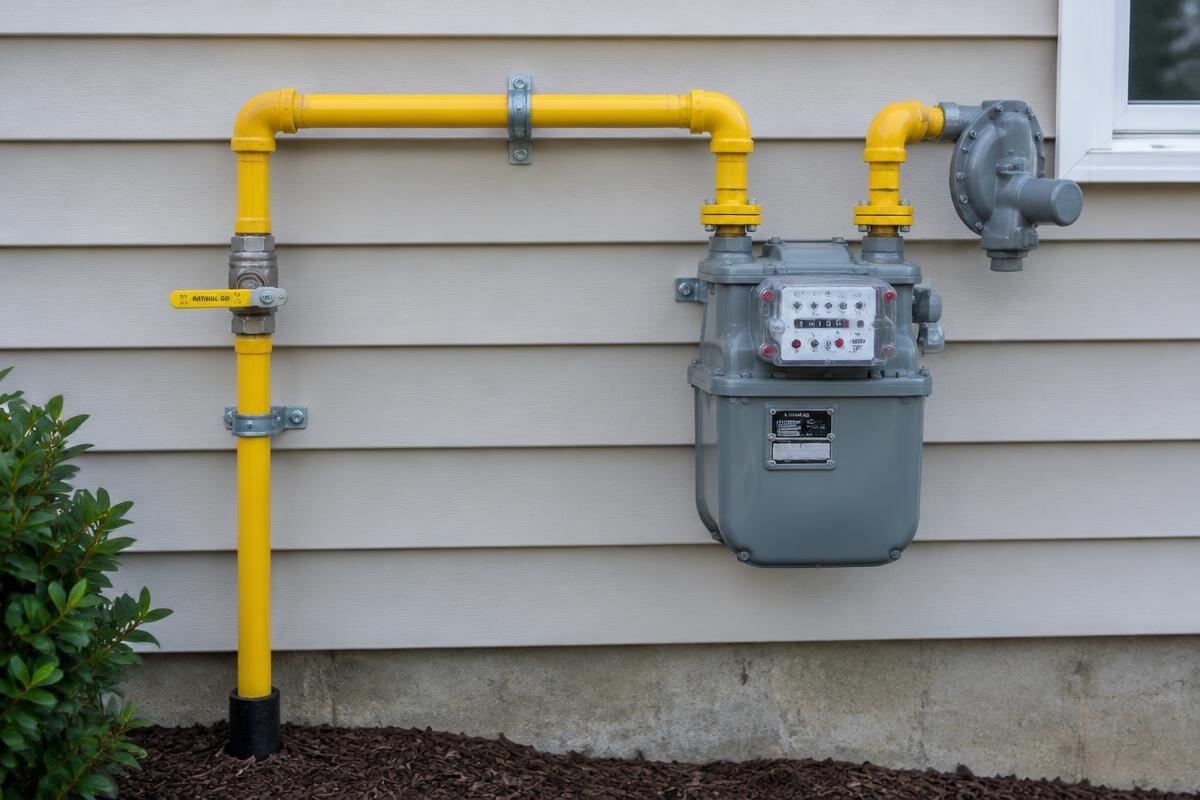
Signs you need gas piping
- You are adding a BBQ, range, dryer, fireplace, pool heater or generator
- A rotten-egg smell near an appliance or the meter (leave and call the gas utility first)
- Hissing near gas piping or a dead patch of grass over an underground line
- An appliance has been removed and the line needs to be capped
- Old or corroded piping from a previous renovation
What is included
- Load calculation and line sizing for the appliances you plan to run
- Installation with approved materials and shut-off valves
- Pressure test and leak test of the new or repaired section
- Guidance on permits and inspection requirements
What is not included
- Gas utility meter changes (handled by the utility)
- Trenching through hardscape, drywall patching or painting
- Appliance purchase
Our process
- 1
Describe the job
Tell us what appliance you are connecting and where.
- 2
Site check
We confirm the route, length and pipe size needed.
- 3
Install or repair
Work is done with proper fittings, supports and shut-offs.
- 4
Test
The line is pressure-tested and appliances are checked before we leave.
Repair or replace?
A single leaking fitting can usually be repaired. Corroded, undersized or improperly installed sections are safer to replace than patch, especially before adding a new appliance.
Customer reviews
Sample review for design preview, not a real customer
“Needed a gas line run to a new BBQ on the deck. The quote was clear, they pressure tested the line and explained the permit side.”
Sample review for design preview, not a real customer
“Faint smell near the dryer. After we called the gas utility, they came out, found a loose fitting, repaired it and retested.”
Frequently asked questions
Related services
Nearby areas we serve
Complete guide
A homeowner's guide to gas piping
Most people search for gas piping when something has already gone wrong, or when they want to get ahead of a problem before the season starts. Either way, this guide gives you the full picture: how your gas piping works, what fails, how we approach the job and how pricing works.
Gas Piping covers diagnosis, service and repair for your gas piping. We start by understanding the symptoms, then test the parts most likely to be involved.
You get a clear explanation of what we found and a written price before any work begins, so you stay in control of the decision.
Mistakes that make gas piping problems worse
Well-meaning DIY is behind a surprising number of gas piping calls. Opening sealed components or adjusting gas and combustion parts without training can create a safety hazard where none existed, and it often makes the professional repair more involved.
The safer rule is simple: basic cleaning and filter care from the owner's manual is fine, and anything involving gas, combustion, wiring or internal parts belongs to a certified technician.
Why your service history matters
Every visit produces information worth keeping: what was tested, what was replaced and what was recommended. File the invoices and notes with your home documents, because the next technician starts faster with a history in hand.
A documented service history also helps when you sell. Buyers and home inspectors look kindly on equipment with clear maintenance records.
Maintenance tips to prevent future gas piping
After any excavation or deck work near a buried line, have the line checked before heavy use. Soil movement and accidental contact are common causes of outdoor line damage.
Gas piping does not need regular servicing the way appliances do, but connections should be checked whenever an appliance is replaced. Leak testing, pressure testing and visual inspection of exposed pipe help catch problems early.
Between professional visits, the biggest favour you can do your gas piping is paying attention. Listen for new sounds, watch for changes in performance and deal with small issues before the busy season arrives.
What to ask during the visit
You do not need technical knowledge to interview your technician. "What did you find?", "What are my options?" and "What would you do if it were your house?" cover most of what matters.
Write the answers down or ask for them in the visit notes. When the next decision about your gas piping comes up, you will be glad you did.
Efficiency and your gas bill
A well-maintained gas piping uses less energy than a neglected one, and the difference shows up on your utility bill. Clean burners, good airflow and correct settings are not luxuries; they are the difference between the efficiency on the rating plate and the efficiency you actually get.
If your gas or electricity use has crept up without a change in habits, the equipment is a reasonable place to look. A service visit can confirm whether performance has drifted.
Best time of year for gas piping
Every trade has a rush season, and heating and gas work is no different. The first cold snap of fall fills schedules fast, and the first hot week of summer does the same for cooling equipment.
If your gas piping is not urgent, the quiet weeks between seasons are the easiest time to book. You get more flexible appointment windows and, if a part has to be ordered, the wait matters less.
That said, a gas piping showing warning signs should not wait for a convenient month. Small faults grow, and a breakdown in January is harder on everyone than a check in September.
How long gas piping takes
Most gas piping visits take one to two hours once the technician is on site. Straightforward service and common repairs usually finish in a single visit, while jobs needing special-order parts or a permit inspection can stretch over two appointments.
The easiest way to shorten the visit is preparation: have the model and serial number ready, clear access to the gas piping and describe the symptoms in the quote form. Technicians can often bring the likely part on the first trip.
Where we provide gas piping
Kitchen renovations in Mineola and Lorne Park, backyard upgrades in Erin Mills and Streetsville, and basement finishing projects across Meadowvale are the most common reasons homeowners call about gas lines. Each one needs careful routing around framing, finishes and existing services.
Our technicians cover many neighbourhoods, from Fairview, Hurontario, Lakeview, Lisgar, Lorne Park, Malton, Meadowvale, Meadowvale Village, Mineola and Mississauga Valleys and everywhere in between. Not sure if you are in range? Send your address with the quote form and we will confirm.
How a gas piping appointment works
When the technician arrives, the first step is protecting your home: floor coverings where needed, and a tidy work area around the gas piping. Then come the questions. What you have seen, heard or smelled, and when it started, often matters more than any single test.
Diagnosis is done in a set order. We confirm the symptom, test the parts most likely to cause it and only then talk about repairs. You are shown what was found, in plain language, before anything is taken apart or replaced.
You approve a written price before work begins, and old parts are left with you on request. Once the repair is done, the gas piping is run through a full cycle to confirm the fix, and you get a summary of the work for your records.
Preparing for your appointment
A few minutes of preparation makes the visit faster. Make sure the gas piping is reachable, the area around it is clear and an adult is home to approve the written price before work begins.
Write down the symptoms you have noticed and when they started. If the problem comes and goes, a short video on your phone can be more useful than any description.
Once the technician leaves
Most homeowners forget the details of a repair within weeks, so take thirty seconds to save the invoice and notes somewhere you will find them. Future you, and any future technician, will be glad you did.
Over the following days, use the gas piping normally. If performance feels different from before the visit, better or worse, that is useful information and worth passing on.
What to ask before hiring for gas piping
A good provider makes the process easy to follow. You should understand what is being done to your gas piping and why, and never feel pressured into an upgrade you did not ask for.
- Ask for a written price before work begins, not just an hourly rate
- Confirm the technician holds the right gas certificate for the work
- Ask whether permits are needed and who arranges them
- Check that old parts can be shown to you on request
- Make sure the company explains repair versus replacement honestly
- Read recent, verifiable reviews from local customers
A year in the life of your equipment
Spring is for closing out heating season and preparing cooling and pool equipment. Summer belongs to air conditioning, BBQ lines and outdoor work. Fall is furnace and fireplace season, and winter is when everything that was ignored announces itself.
Booking gas piping in its natural off-season means shorter waits and more flexibility. It also means a problem found early stays a small problem.
How a gas piping works
Outdoor gas work has its own rules. Buried lines need proper depth and marking, and connections for BBQs, fire tables and pool heaters need shutoffs and fittings rated for outdoor use.
In Ontario, gas work must be done by a licensed gas technician under the rules set by the provincial safety authority. Many projects also need a permit and an inspection. Your quote should state clearly who arranges these and whether the cost is included.
The details vary by model, but the pattern holds across gas pipings homes: a small wear part usually fails first, and catching it early keeps the repair small. That is why we test the cheap, common failures before the expensive ones, and why a symptom that seems minor is still worth a call.
Repair or replace?
There is no universal answer, but there are honest questions. How old is the gas piping? Has it needed repeated repairs in recent years? Would new equipment cut your gas or electricity use enough to matter? Are parts still easy to get?
We walk through those questions with you on site and price both paths when the decision is close. If a repair buys you several more reliable years for a reasonable amount, we will say that too, even though replacement is the bigger job.
Condo and townhouse notes
Condo and townhouse owners have extra logistics: booking elevators, arranging parking, and sometimes getting property management approval before work starts. Mention your building when you request a quote so these are planned for rather than discovered on the day.
Some buildings also have shared systems. If your equipment connects to shared venting or mechanical rooms, your property manager may need to be involved, and it is better to know that before booking.
The issues behind most gas piping calls
These are the issues we see most often when homeowners ask about gas piping. Several can share the same root cause, which is why testing comes before replacing parts.
Keep in mind that the same symptom can have different causes on different models of gas piping. That is why we diagnose rather than guess, and why a written price comes after testing, not before.
- Old unused lines that should be capped properly
- A new range, dryer, BBQ, fire table or pool heater needs a gas connection
- Outdoor pipe damaged by landscaping or deck work
- Meter relocation for a basement apartment or addition
- Corroded pipe or fittings in an older basement
- Hissing sounds near pipes or fittings
- A permit or inspection needed for a renovation or insurance claim
- Weak flames when several appliances run together
Pricing for gas piping
Most gas piping jobs fall somewhere between $500 to $1,500, and a typical job lands close to $1,000. Treat these as indicative market figures: the real number depends on your gas piping and is only confirmed after we assess it.
What pushes a job toward the high end? Hard-to-reach equipment, older units with discontinued parts, extra venting or gas work, and permit requirements. What keeps it low? A common fault on a common unit with good access.
The fastest way to a firm number is the quote form on this page. Include the make, model and a photo if you can, and mention anything unusual about access. Our price estimator also gives a ballpark range if you just want a starting point.
What is included on every visit
- Diagnosis first, parts second: we test before we replace
- Upfront written pricing you approve before work starts
- Familiarity with the gas pipings common homes
- Old parts shown or left with you on request
- A clear summary of the work for your records
Safety notes worth reading
Gas smells are never a wait-and-see situation. Get everyone outside without touching light switches or electronics, then call the gas utility's emergency line and 911 from outside. Locating and fixing the leak itself is licensed work, never a DIY job.