
Signs you need gas pool heater repair
- Heater will not fire or shows an ignition or pressure error
- Water is not reaching the set temperature
- Water leaking from the heater cabinet
- Soot, rust or burnt smell around the unit
- Heater cycles on and off rapidly
What is included
- Error code diagnosis and control board check
- Burner, igniter and flame sensor inspection
- Pressure switch, flow and bypass checks
- Heat exchanger and plumbing leak inspection
- Startup test and temperature rise check
What is not included
- Replacement heat exchangers or control boards (quoted first)
- Pool pump or filter replacement
- Pool opening, closing or chemical balancing
Our process
- 1
Share the details
Brand, model and any error code on the display help us bring the right parts.
- 2
On-site testing
We check gas supply, water flow and electrical controls.
- 3
Clear options
Repair or replacement options with pricing.
- 4
Repair and run
We fix, fire the heater and confirm temperature rise.
Repair or replace?
Igniters, sensors and pressure switches are inexpensive fixes. A leaking or heavily corroded heat exchanger on an older heater often means replacement is the smarter choice.
Customer reviews
Sample review for design preview, not a real customer
“Pool heater kept throwing an ignition code in June. They cleaned the burner tray, replaced the igniter and walked me through the startup sequence.”
Sample review for design preview, not a real customer
“Spring opening check on our heater. They found a small leak at a union before it became a bigger problem.”
Frequently asked questions
Related services
Nearby areas we serve
Complete guide
Gas Pool Heater Repair, explained without the jargon
This page is for homeowners dealing with a gas pool heater problem or planning ahead. It walks through how the equipment works, the issues we see most, what a visit involves and what you can expect to pay, all in plain language.
Gas Pool Heater Repair covers diagnosis, service and repair for your gas pool heater. We start by understanding the symptoms, then test the parts most likely to be involved.
You get a clear explanation of what we found and a written price before any work begins, so you stay in control of the decision.
How to get ready for the visit
A few minutes of preparation makes the visit faster. Make sure the gas pool heater is reachable, the area around it is clear and an adult is home to approve the written price before work begins.
Write down the symptoms you have noticed and when they started. If the problem comes and goes, a short video on your phone can be more useful than any description.
Deciding between repair and replacement
There is no universal answer, but there are honest questions. How old is the gas pool heater? Has it needed repeated repairs in recent years? Would new equipment cut your gas or electricity use enough to matter? Are parts still easy to get?
We walk through those questions with you on site and price both paths when the decision is close. If a repair buys you several more reliable years for a reasonable amount, we will say that too, even though replacement is the bigger job.
Best time of year for gas pool heater repair
Every trade has a rush season, and heating and gas work is no different. The first cold snap of fall fills schedules fast, and the first hot week of summer does the same for cooling equipment.
If your gas pool heater repair is not urgent, the quiet weeks between seasons are the easiest time to book. You get more flexible appointment windows and, if a part has to be ordered, the wait matters less.
That said, a gas pool heater showing warning signs should not wait for a convenient month. Small faults grow, and a breakdown in January is harder on everyone than a check in September.
Keeping your gas pool heater in good shape
Balanced pool chemistry protects the heater. Low pH or high chlorine can corrode the heat exchanger from the inside, which is one of the most expensive failures a pool heater can have.
A spring start-up and fall closing visit keep a pool heater in good shape. In the spring, the technician checks for winter damage, cleans the burner tray, tests safety switches and confirms gas pressure. In the fall, the heater is drained and protected so water does not freeze and crack the heat exchanger.
A simple habit that pays off: once a month during the season, take a minute to look at and listen to your gas pool heater while it runs. You know what normal looks and sounds like for your own equipment, which makes you the best early-warning system it has.
What is inside a gas pool heater
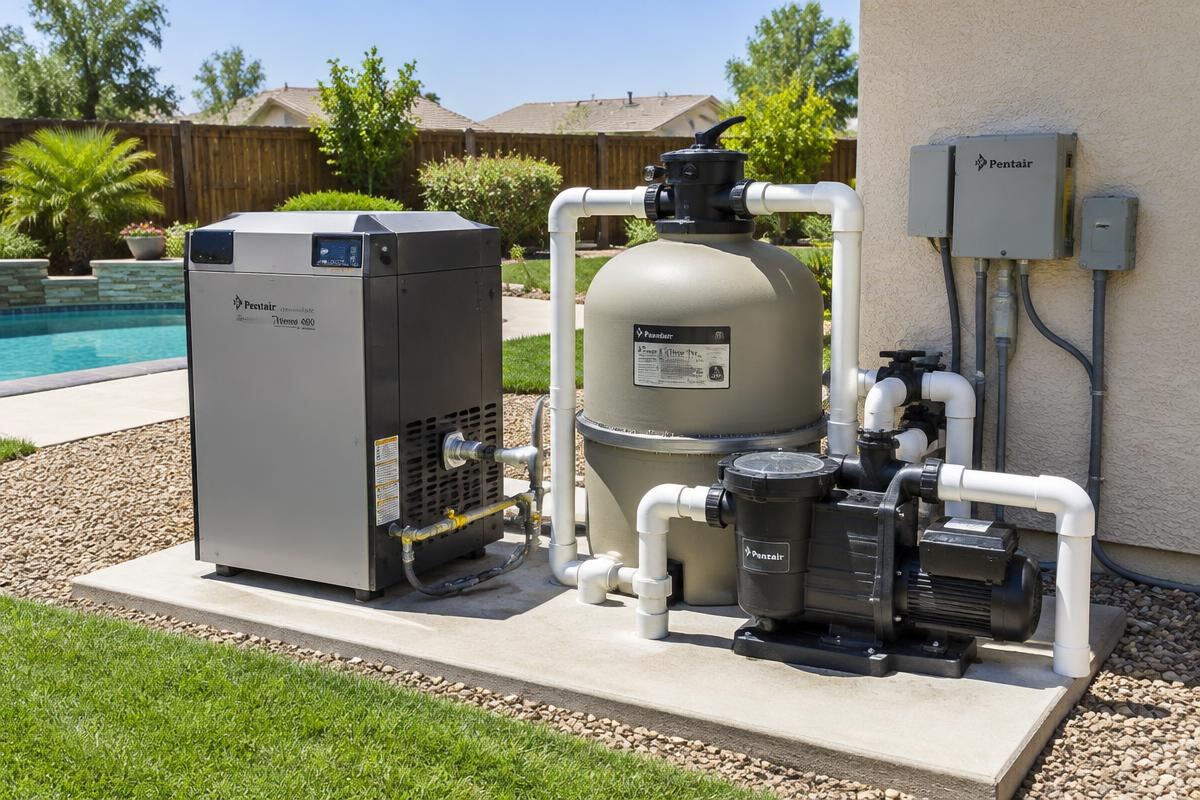
A gas pool heater burns natural gas or propane in a combustion chamber and passes pool water through a heat exchanger. The pump pushes water through the filter, then through the heater, then back into the pool. If water flow drops, safety switches stop the heater from firing.
Inside the heater, a pressure switch confirms there is enough water flow, a high-limit switch protects against overheating, an igniter lights the burner and a control board manages the sequence. Error codes on the display usually point to one of these parts.
No two gas pool heaters are exactly alike, and age matters as much as brand. Older equipment often has simpler parts that are easy to source, while newer units are more efficient but rely on sensors and control boards that need proper testing equipment to diagnose. Knowing which you have shapes the whole visit.
Gas Pool Heater Repair neighbourhoods
Pool heaters across Lorne Park, Erin Mills and Streetsville usually sit outdoors beside the equipment pad, taking the full force of sun, rain and freeze-thaw winters. That exposure is why seasonal service matters so much more for pool equipment than for indoor appliances.
We provide gas pool heater repair, including Rockwood Village, Sheridan, Streetsville, Applewood, Central Erin Mills, Churchill Meadows, Clarkson, Cooksville, Creditview and Dixie. If your neighbourhood is not listed, ask anyway; we cover the whole city.
Choosing the right company for gas pool heater repair
A good provider makes the process easy to follow. You should understand what is being done to your gas pool heater and why, and never feel pressured into an upgrade you did not ask for.
- Ask for a written price before work begins, not just an hourly rate
- Confirm the technician holds the right gas certificate for the work
- Ask whether permits are needed and who arranges them
- Check that old parts can be shown to you on request
- Make sure the company explains repair versus replacement honestly
- Read recent, verifiable reviews from local customers
The issues behind most gas pool heater repair calls
These are the issues we see most often when homeowners ask about gas pool heater repair. Several can share the same root cause, which is why testing comes before replacing parts.
If you recognize one of these on your gas pool heater, note when it happens and what else was running at the time. Patterns like "only on cold mornings" or "only when several appliances run together" are valuable clues that can shorten the diagnosis.
- The heater worked at opening but failed mid-season
- Heater will not ignite or shows an error code
- Pool does not reach the set temperature
- Heater cycles on and off while the pump runs
- Sooting, rust or scale on the heat exchanger
- Gas smell near the heater pad
- Display is blank or buttons do not respond
- A burnt or chemical smell from the heater cabinet
If you live in a condo or townhome
In multi-unit buildings, access is the schedule. Elevator bookings, concierge instructions and parking limits can matter as much as the repair itself, so include those details in your quote request.
Check your condo documents before booking: some buildings require contractors to register with management, and some repairs to shared elements are the corporation's responsibility rather than yours.
What to expect when we arrive
Every visit follows the same basic shape: listen first, test second, repair third. Skipping the first two steps is how homeowners end up paying for parts they did not need, so we do not skip them.
Testing on a gas pool heater can involve pressure readings, electrical checks on sensors and controls, venting inspection and a full operating cycle. The technician explains each finding as it happens, and you can ask questions at any point.
Nothing is done without your approval. You get the price in writing first, options when there is more than one way to solve the problem, and honest advice if the gas pool heater is not worth repairing. The work area is left clean when we go.
Warranties and paperwork
Manufacturer warranties usually expect the equipment to be installed and serviced properly, so keep your invoices and service records. If your gas pool heater is still under warranty, say so when booking, because the process for parts may differ.
We are an independent service company, not a warranty provider. We will tell you honestly when a claim through the manufacturer or installer is your better route.
What not to do with a gas pool heater
Well-meaning DIY is behind a surprising number of gas pool heater repair calls. Opening sealed components or adjusting gas and combustion parts without training can create a safety hazard where none existed, and it often makes the professional repair more involved.
The safer rule is simple: basic cleaning and filter care from the owner's manual is fine, and anything involving gas, combustion, wiring or internal parts belongs to a certified technician.
Pricing for gas pool heater repair
The estimated range for gas pool heater repair is $250 to $800, with many jobs averaging around $530. This is an estimated range based on typical market prices, and your final price is confirmed after assessment.
The main things that move the price are the age and type of the gas pool heater, the parts needed, access (tight spaces, finished ceilings or rooftop work take longer), and whether permits or inspections are required. HST is added to the final invoice.
To get an accurate quote quickly, send the make and model, a photo of the unit and its rating plate, and a short description of the problem. You can use the quote form on this page or try our online price estimator for a starting range.
What to watch for after your gas pool heater repair
Most homeowners forget the details of a repair within weeks, so take thirty seconds to save the invoice and notes somewhere you will find them. Future you, and any future technician, will be glad you did.
Over the following days, use the gas pool heater normally. If performance feels different from before the visit, better or worse, that is useful information and worth passing on.
Timing for a typical gas pool heater repair job
A routine gas pool heater repair appointment is usually measured in hours, not days. What slows a job down is hard-to-reach equipment, discontinued parts, and discoveries along the way, such as venting or connections that also need work.
If something changes the timeline, we tell you as soon as we know, so you are never left guessing when the gas pool heater will be back in service.
Questions worth asking your technician
You do not need technical knowledge to interview your technician. "What did you find?", "What are my options?" and "What would you do if it were your house?" cover most of what matters.
Write the answers down or ask for them in the visit notes. When the next decision about your gas pool heater comes up, you will be glad you did.
If your equipment is getting old
Age changes the questions, not necessarily the answer. On an older gas pool heater, we weigh the cost of the repair against the remaining realistic life, the availability of parts and whether efficiency losses are costing you every month.
Discontinued models deserve special mention: some parts are still made, some are available aftermarket and some are simply gone. We check availability before recommending a repair on older equipment.
How Ontario weather treats your equipment
Life near Lake Ontario keeps humid in summer and biting in winter, and both extremes show up in service calls. Summer humidity stresses cooling equipment and chimney draft; winter cold stresses everything that burns fuel.
Equipment installed outdoors or in unheated spaces needs the most weather attention. Wind, snow and ice find the weak points first, so exterior terminations and cabinets deserve a look after every major storm.
How we handle every job
- Respect for your home: floor protection and a clean work area
- Straight answers about your gas pool heater, including when repair is not worth it
- Options explained in plain language, not trade jargon
- Written pricing approved by you before any repair
- Follow-up notes so you know exactly what was done
Safety first
Pool heaters burn gas outdoors but still need clearances from windows, doors and property lines. Never cover a running heater, and keep plants, storage and pool chemicals away from its vents.