
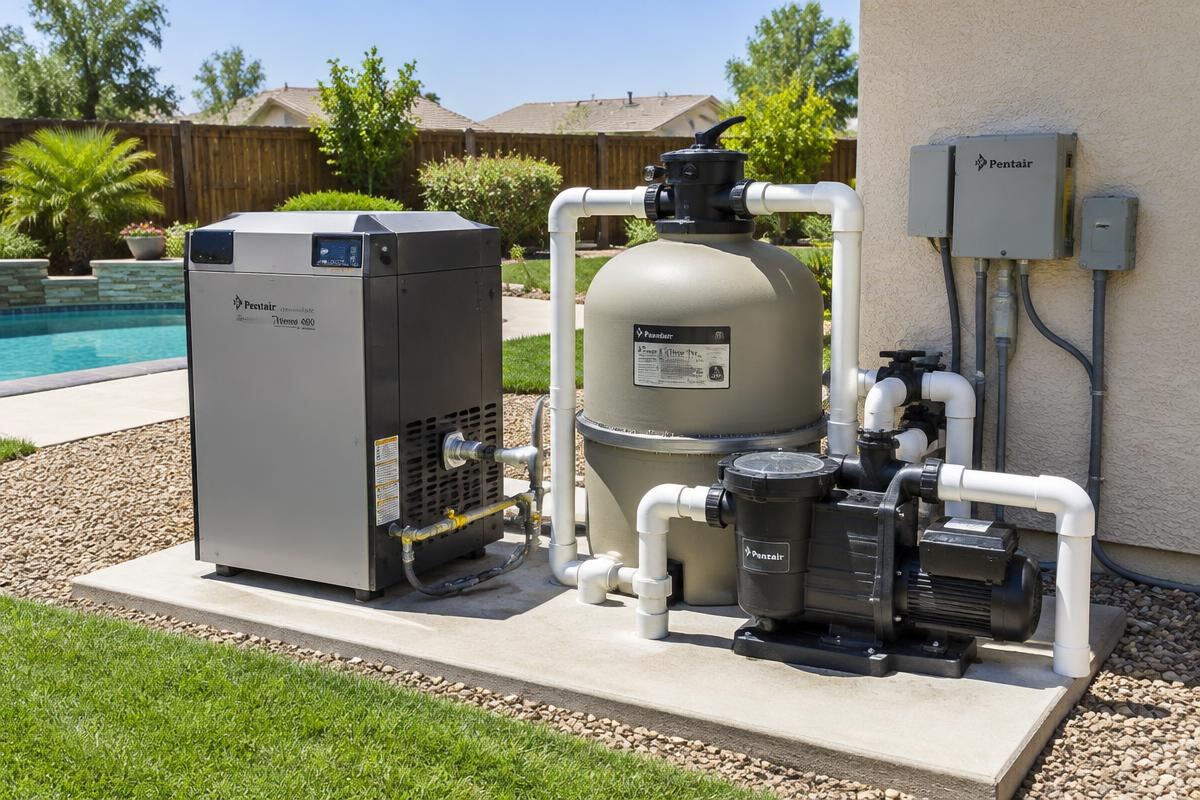
Signs you need pool heater
- Heater will not fire or shows an ignition or pressure error
- Water is not reaching the set temperature
- Water leaking from the heater cabinet
- Soot, rust or burnt smell around the unit
- Heater cycles on and off rapidly
What is included
- Error code diagnosis and control board check
- Burner, igniter and flame sensor inspection
- Pressure switch, flow and bypass checks
- Heat exchanger and plumbing leak inspection
- Startup test and temperature rise check
What is not included
- Replacement heat exchangers or control boards (quoted first)
- Pool pump or filter replacement
- Pool opening, closing or chemical balancing
Our process
- 1
Share the details
Brand, model and any error code on the display help us bring the right parts.
- 2
On-site testing
We check gas supply, water flow and electrical controls.
- 3
Clear options
Repair or replacement options with pricing.
- 4
Repair and run
We fix, fire the heater and confirm temperature rise.
Repair or replace?
Igniters, sensors and pressure switches are inexpensive fixes. A leaking or heavily corroded heat exchanger on an older heater often means replacement is the smarter choice.
Customer reviews
Sample review for design preview, not a real customer
“Spring opening check on our heater. They found a small leak at a union before it became a bigger problem.”
Sample review for design preview, not a real customer
“Pool heater kept throwing an ignition code in June. They cleaned the burner tray, replaced the igniter and walked me through the startup sequence.”
Frequently asked questions
Related services
Nearby areas we serve
Complete guide
A homeowner's guide to pool heater
This page is for homeowners dealing with a pool heater problem or planning ahead. It walks through how the equipment works, the issues we see most, what a visit involves and what you can expect to pay, all in plain language.
Pool Heater covers diagnosis, service and repair for your pool heater. We start by understanding the symptoms, then test the parts most likely to be involved.
You get a clear explanation of what we found and a written price before any work begins, so you stay in control of the decision.
Keeping your pool heater in good shape
Keep the area around the heater clear through the season: no leaning pool equipment, stored chemicals or dense shrubs against the cabinet. Good airflow keeps combustion safe and makes service visits faster.
Balanced pool chemistry protects the heater. Low pH or high chlorine can corrode the heat exchanger from the inside, which is one of the most expensive failures a pool heater can have.
Homeowners often ask what they can safely do themselves. The honest answer: keep the area around the pool heater clear and clean, follow the owner's manual for basic care, and leave anything involving gas, combustion or internal parts to a certified technician.
If you live in a condo or townhome
In multi-unit buildings, access is the schedule. Elevator bookings, concierge instructions and parking limits can matter as much as the repair itself, so include those details in your quote request.
Check your condo documents before booking: some buildings require contractors to register with management, and some repairs to shared elements are the corporation's responsibility rather than yours.
Efficiency and your gas bill
A well-maintained pool heater uses less energy than a neglected one, and the difference shows up on your utility bill. Clean burners, good airflow and correct settings are not luxuries; they are the difference between the efficiency on the rating plate and the efficiency you actually get.
If your gas or electricity use has crept up without a change in habits, the equipment is a reasonable place to look. A service visit can confirm whether performance has drifted.
Where we provide pool heater
Salt water pools are common in the area and are harder on heaters than traditional chlorine. If you have a salt system, mention it when booking, because exchanger material and inspection points differ.
We provide pool heater, including Hurontario, Lakeview, Lisgar, Lorne Park, Malton, Meadowvale, Meadowvale Village, Mineola, Mississauga Valleys and Port Credit. If your neighbourhood is not listed, ask anyway; we cover the whole city.
How long to expect for pool heater
Homeowners often ask whether they need to take a day off work for pool heater. For most visits, no: the work itself is usually one to two hours, and a morning or afternoon arrival window is enough.
Larger jobs are different. Work involving permits, inspections or ordered parts follows the supplier and inspector schedules, and your quote will spell out the expected timeline before you approve anything.
What to watch for after your pool heater
After any pool heater visit, run the equipment through a normal cycle and keep an eye on it for the first few days. New noises, smells or error codes should be reported right away, while the details of the visit are still fresh.
Keep the service notes with your home records. A history of what was repaired and when makes every future diagnosis faster, and it is useful documentation if you ever sell the home.
Pricing for pool heater
Most pool heater jobs fall somewhere between $3,500 to $6,500, and a typical job lands close to $5,000. Treat these as indicative market figures: the real number depends on your pool heater and is only confirmed after we assess it.
What pushes a job toward the high end? Hard-to-reach equipment, older units with discontinued parts, extra venting or gas work, and permit requirements. What keeps it low? A common fault on a common unit with good access.
The fastest way to a firm number is the quote form on this page. Include the make, model and a photo if you can, and mention anything unusual about access. Our price estimator also gives a ballpark range if you just want a starting point.
Deciding between repair and replacement
A simple rule many homeowners use: if a repair costs more than half the price of new equipment and the pool heater is near the end of its expected life, replacement is usually the better value. If the unit is younger and the fault is a common part, repair almost always wins.
Other things to weigh are efficiency, safety and how much you rely on the equipment. We give you both options with prices when it is a close call, and we will say so when a repair is not worth it.
How a pool heater works
A gas pool heater burns natural gas or propane in a combustion chamber and passes pool water through a heat exchanger. The pump pushes water through the filter, then through the heater, then back into the pool. If water flow drops, safety switches stop the heater from firing.
Corrosion is the quiet killer of pool heaters. The heat exchanger lives at the meeting point of pool water and combustion heat, so water chemistry and winter protection largely decide how long it survives.
One thing worth knowing about your pool heater: most failures give warning signs weeks before a full breakdown. Unusual noises, longer run times and small changes in performance are the equipment asking for attention, and responding early almost always costs less than waiting for a complete stop.
Questions worth asking your technician
You do not need technical knowledge to interview your technician. "What did you find?", "What are my options?" and "What would you do if it were your house?" cover most of what matters.
Write the answers down or ask for them in the visit notes. When the next decision about your pool heater comes up, you will be glad you did.
Timing your pool heater around the seasons
Every trade has a rush season, and heating and gas work is no different. The first cold snap of fall fills schedules fast, and the first hot week of summer does the same for cooling equipment.
If your pool heater is not urgent, the quiet weeks between seasons are the easiest time to book. You get more flexible appointment windows and, if a part has to be ordered, the wait matters less.
That said, a pool heater showing warning signs should not wait for a convenient month. Small faults grow, and a breakdown in January is harder on everyone than a check in September.
Getting a fair quote for pool heater
The cheapest quote and the best value are rarely the same thing. Ask each company what is included, what could change the price and how the final invoice is calculated, then compare the answers side by side.
Be cautious of any quote given without seeing the equipment. Real pricing for pool heater work starts with an assessment and a written number you approve before work begins.
What happens during a pool heater visit
Every visit follows the same basic shape: listen first, test second, repair third. Skipping the first two steps is how homeowners end up paying for parts they did not need, so we do not skip them.
Testing on a pool heater can involve pressure readings, electrical checks on sensors and controls, venting inspection and a full operating cycle. The technician explains each finding as it happens, and you can ask questions at any point.
Nothing is done without your approval. You get the price in writing first, options when there is more than one way to solve the problem, and honest advice if the pool heater is not worth repairing. The work area is left clean when we go.
What to ask before hiring for pool heater
A good provider makes the process easy to follow. You should understand what is being done to your pool heater and why, and never feel pressured into an upgrade you did not ask for.
- Ask for a written price before work begins, not just an hourly rate
- Confirm the technician holds the right gas certificate for the work
- Ask whether permits are needed and who arranges them
- Check that old parts can be shown to you on request
- Make sure the company explains repair versus replacement honestly
- Read recent, verifiable reviews from local customers
Why your service history matters
Every visit produces information worth keeping: what was tested, what was replaced and what was recommended. File the invoices and notes with your home documents, because the next technician starts faster with a history in hand.
A documented service history also helps when you sell. Buyers and home inspectors look kindly on equipment with clear maintenance records.
Before the technician arrives
A few minutes of preparation makes the visit faster. Make sure the pool heater is reachable, the area around it is clear and an adult is home to approve the written price before work begins.
Write down the symptoms you have noticed and when they started. If the problem comes and goes, a short video on your phone can be more useful than any description.
Signs your pool heater needs attention
A pool heater rarely fails without warning. These are the symptoms that bring local homeowners to us, and most of them are cheaper to fix early than late.
If you recognize one of these on your pool heater, note when it happens and what else was running at the time. Patterns like "only on cold mornings" or "only when several appliances run together" are valuable clues that can shorten the diagnosis.
- The heater worked at opening but failed mid-season
- Water leaking from the heater cabinet
- Pool does not reach the set temperature
- Gas smell near the heater pad
- The heater fires but the water temperature barely rises
- Sooting, rust or scale on the heat exchanger
- Heater starts, then shuts off after a few minutes
- Display is blank or buttons do not respond
What not to do with a pool heater
Blocking vents and air intakes is a quiet problem. Furniture, storage, snow and landscaping can all restrict the airflow a pool heater needs to run safely, and the damage builds slowly enough that nobody notices until performance drops.
Another common one is skipping routine care for years and then expecting a single visit to undo it. Maintenance works best as a habit, not a rescue.
What you get when you book with EmberRise Pro
- Respect for your home: floor protection and a clean work area
- Straight answers about your pool heater, including when repair is not worth it
- Options explained in plain language, not trade jargon
- Written pricing approved by you before any repair
- Follow-up notes so you know exactly what was done
Safety notes worth reading
Even outdoors, a gas pool heater needs clear space around its vents and air intakes. Keep covers off while it runs, and store pool chemicals, plants and equipment well away from the cabinet.