
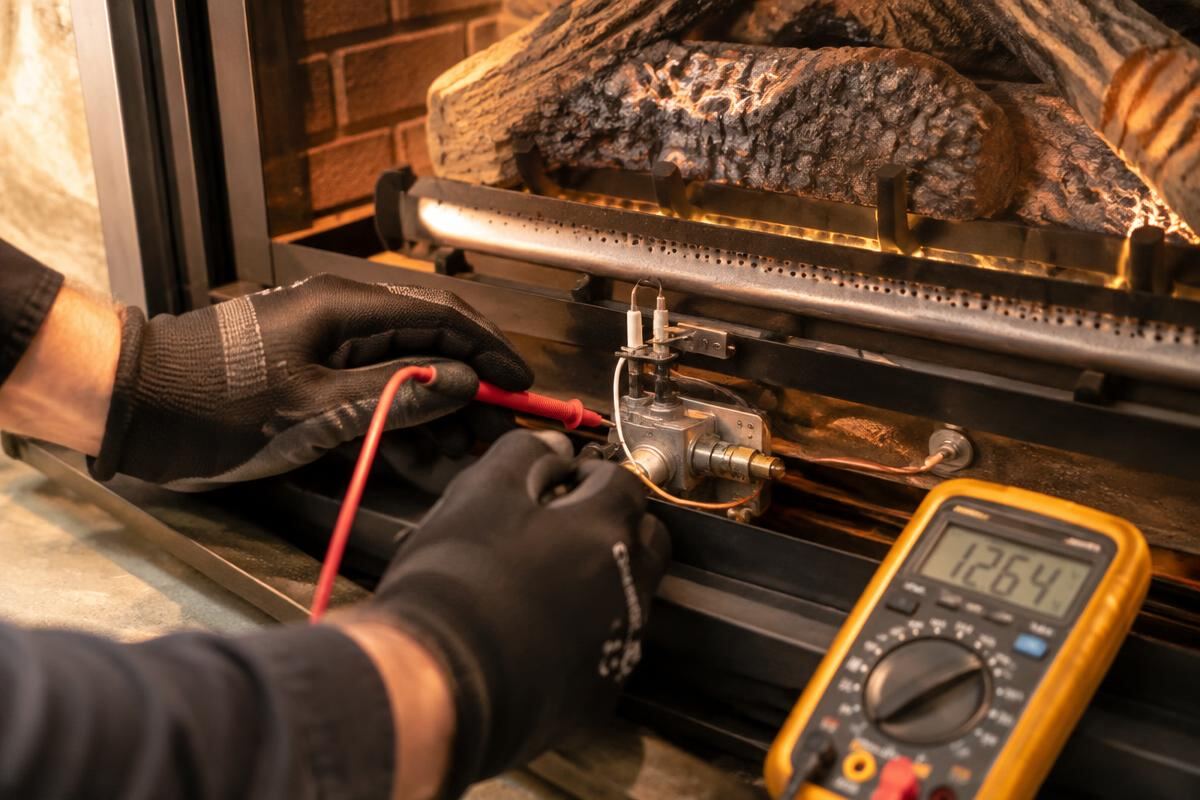
Signs you need wood fireplace repair
- Smoke backs into the room when the fire is lit
- Strong, campfire-like smell in warm or humid weather
- Cracked or crumbling firebrick or refractory panels inside the firebox
- Damper is stuck, loose or will not close fully
- Black, flaky or tar-like creosote deposits inside the firebox
- The fireplace has not been used or inspected in years
What is included
- Visual inspection of the firebox, damper and smoke chamber
- Check of the hearth, surround and clearances
- Condition report on the flue and chimney where accessible
- Clear written notes on what we found and any recommended work
What is not included
- Masonry repointing, crown or chimney rebuilding
- Chimney liner replacement (quoted separately)
- Wood to gas conversion (quoted separately as a gas job)
Our process
- 1
Tell us what you see
Share the age of the fireplace, how often it is used and any smoke or odour issues.
- 2
On-site inspection
We check the firebox, damper, smoke chamber and accessible flue for damage and buildup.
- 3
Clear options
You get a written summary of what is safe to use, what needs repair and what it would cost.
- 4
Repair and verify
Approved work is completed and the fireplace is checked before we leave.
Repair or replace?
Most wood-burning fireplace problems are repairable: firebrick panels, dampers, doors and screens are common parts. When the firebox structure itself is failing or you want the convenience of gas, converting to a gas insert is often the better long-term option, and we can quote both paths.
Customer reviews
Sample review for design preview, not a real customer
“Birds had nested in the flue. They cleared it safely, installed a cap and checked draft before we used the fireplace again.”
Sample review for design preview, not a real customer
“Booked a sweep before the first cold week. Clean, careful work with drop sheets everywhere and a clear photo report afterwards.”
Frequently asked questions
Related services
Nearby areas we serve
Complete guide
Wood Fireplace Repair: what to know
Most people search for wood fireplace repair when something has already gone wrong, or when they want to get ahead of a problem before the season starts. Either way, this guide gives you the full picture: how your wood fireplace works, what fails, how we approach the job and how pricing works.
Wood Fireplace Repair covers diagnosis, service and repair for your wood fireplace. We start by understanding the symptoms, then test the parts most likely to be involved.
You get a clear explanation of what we found and a written price before any work begins, so you stay in control of the decision.
Efficiency and your gas bill
A well-maintained wood fireplace uses less energy than a neglected one, and the difference shows up on your utility bill. Clean burners, good airflow and correct settings are not luxuries; they are the difference between the efficiency on the rating plate and the efficiency you actually get.
If your gas or electricity use has crept up without a change in habits, the equipment is a reasonable place to look. A service visit can confirm whether performance has drifted.
Warranty questions for wood fireplace repair work
Before approving a big repair, check whether the part is still covered. Many manufacturers warrant major components far longer than the labour coverage, and a five-minute check of your paperwork can save real money.
Ask for the warranty terms on any new part in writing: what is covered, for how long, and what the claim process looks like.
Wood Fireplace Repair neighbourhoods
Many chimneys now serve a gas furnace or water heater rather than a fireplace. These flues still need inspection: a blocked or deteriorated furnace flue is a carbon monoxide risk, not just a comfort issue.
Our technicians cover many neighbourhoods, from Rathwood, Rockwood Village, Sheridan, Streetsville, Applewood, Central Erin Mills, Churchill Meadows, Clarkson, Cooksville and Creditview and everywhere in between. Not sure if you are in range? Send your address with the quote form and we will confirm.
What is inside a wood fireplace
Wood-burning fireplaces leave creosote on the inside of the flue. It starts as a light, flaky soot, then hardens into a tar-like glaze if the fire burns cool or the wood is damp. Creosote is flammable, which is why regular sweeping matters for any chimney that sees regular fires.
Masonry chimneys also face the weather. Ontario freeze-thaw cycles push water into mortar joints, crack crowns and loosen flashing. A chimney cap keeps rain, animals and debris out of the flue, and a working damper stops heated indoor air escaping when the fireplace is not in use.
One thing worth knowing about your wood fireplace: most failures give warning signs weeks before a full breakdown. Unusual noises, longer run times and small changes in performance are the equipment asking for attention, and responding early almost always costs less than waiting for a complete stop.
What not to do with a wood fireplace
Blocking vents and air intakes is a quiet problem. Furniture, storage, snow and landscaping can all restrict the airflow a wood fireplace needs to run safely, and the damage builds slowly enough that nobody notices until performance drops.
Another common one is skipping routine care for years and then expecting a single visit to undo it. Maintenance works best as a habit, not a rescue.
When wood fireplace repair can wait, and when it cannot
Some symptoms mean stop using the equipment now: a gas smell, a carbon monoxide alarm, visible scorching, or water pooling where it can reach wiring. Others, like a gradual drop in performance, are safe to book at a convenient time.
When you are unsure, describe the symptom in the quote form and ask. An honest answer about urgency costs nothing and can save a rushed decision about your wood fireplace.
Timing your wood fireplace repair around the seasons
winters are long and summers are humid, so demand for home heating and gas services rises and falls with the weather. Fireplaces, furnaces and water heaters get the most calls in October through January, while air conditioners and pool heaters peak from May through August.
Booking wood fireplace repair just before the busy season usually gives you more choice of appointment times and leaves room to order parts without rushing. If your wood fireplace has been showing small warning signs, such as new noises, slower performance or higher gas bills, it is worth having it checked before a minor fault becomes a breakdown.
Emergencies do not follow a calendar, though. If something stops working at a bad moment, contact us with as much detail as you can and we will tell you honestly how soon a technician can get there.
How a wood fireplace repair appointment works
Every visit follows the same basic shape: listen first, test second, repair third. Skipping the first two steps is how homeowners end up paying for parts they did not need, so we do not skip them.
Testing on a wood fireplace can involve pressure readings, electrical checks on sensors and controls, venting inspection and a full operating cycle. The technician explains each finding as it happens, and you can ask questions at any point.
Nothing is done without your approval. You get the price in writing first, options when there is more than one way to solve the problem, and honest advice if the wood fireplace is not worth repairing. The work area is left clean when we go.
After the work is done
Most homeowners forget the details of a repair within weeks, so take thirty seconds to save the invoice and notes somewhere you will find them. Future you, and any future technician, will be glad you did.
Over the following days, use the wood fireplace normally. If performance feels different from before the visit, better or worse, that is useful information and worth passing on.
What wood fireplace repair costs
Most wood fireplace repair jobs fall somewhere between $200 to $600 plus parts, and a typical job lands close to $400. Treat these as indicative market figures: the real number depends on your wood fireplace and is only confirmed after we assess it.
What pushes a job toward the high end? Hard-to-reach equipment, older units with discontinued parts, extra venting or gas work, and permit requirements. What keeps it low? A common fault on a common unit with good access.
The fastest way to a firm number is the quote form on this page. Include the make, model and a photo if you can, and mention anything unusual about access. Our price estimator also gives a ballpark range if you just want a starting point.
What to ask before hiring for wood fireplace repair
The right company treats your questions as part of the job, not an interruption. If an answer about your wood fireplace feels evasive, keep looking.
- Ask for a written price before work begins, not just an hourly rate
- Confirm the technician holds the right gas certificate for the work
- Ask whether permits are needed and who arranges them
- Check that old parts can be shown to you on request
- Make sure the company explains repair versus replacement honestly
- Read recent, verifiable reviews from local customers
How long to expect for wood fireplace repair
Most wood fireplace repair visits take one to two hours once the technician is on site. Straightforward service and common repairs usually finish in a single visit, while jobs needing special-order parts or a permit inspection can stretch over two appointments.
The easiest way to shorten the visit is preparation: have the model and serial number ready, clear access to the wood fireplace and describe the symptoms in the quote form. Technicians can often bring the likely part on the first trip.
The issues behind most wood fireplace repair calls
These are the issues we see most often when homeowners ask about wood fireplace repair. Several can share the same root cause, which is why testing comes before replacing parts.
If you recognize one of these on your wood fireplace, note when it happens and what else was running at the time. Patterns like "only on cold mornings" or "only when several appliances run together" are valuable clues that can shorten the diagnosis.
- Water stains on the ceiling or wall next to the chimney
- Animals, nests or debris in the flue
- Fires that are hard to start and burn poorly even with dry wood
- Visible cracks or leaning in the exterior stack
- Rattling or buzzing sounds on windy days
- Crumbling mortar, loose bricks or white staining on the outside
- A damper that sticks, will not seal or will not open
- Smoke backs into the room when you light a fire
weather and your wood fireplace
's freeze-thaw cycles are hard on anything outdoors: vent terminations, chimney crowns, pool equipment and exterior gas lines all take seasonal punishment. A quick look at exterior equipment each spring and fall catches weather damage early.
Cold snaps also expose weak equipment. The night the temperature drops well below freezing is when marginal igniters, tired blowers and old sensors tend to give up, which is one more reason fall checks pay off.
Repair or replace?
There is no universal answer, but there are honest questions. How old is the wood fireplace? Has it needed repeated repairs in recent years? Would new equipment cut your gas or electricity use enough to matter? Are parts still easy to get?
We walk through those questions with you on site and price both paths when the decision is close. If a repair buys you several more reliable years for a reasonable amount, we will say that too, even though replacement is the bigger job.
How to avoid repeat wood fireplace repair calls
Burning dry, seasoned hardwood and keeping fires hot enough to draft well both reduce creosote. Small, smouldering fires that burn overnight are one of the most common causes of heavy buildup.
A chimney that is used regularly should be inspected once a year and swept when deposits build up. A sweep uses brushes and rods sized to the flue, along with a vacuum to keep dust out of the room. The inspection that follows looks at the liner, damper, smoke chamber, crown and cap.
A simple habit that pays off: once a month during the season, take a minute to look at and listen to your wood fireplace while it runs. You know what normal looks and sounds like for your own equipment, which makes you the best early-warning system it has.
How to get ready for the visit
A few minutes of preparation makes the visit faster. Make sure the wood fireplace is reachable, the area around it is clear and an adult is home to approve the written price before work begins.
Write down the symptoms you have noticed and when they started. If the problem comes and goes, a short video on your phone can be more useful than any description.
A year in the life of your equipment
Every season writes its own service calls. The first cold week brings ignition failures, the first heat wave brings cooling complaints, and pool opening season brings heaters that did not survive the winter.
Your wood fireplace has a natural moment in that calendar when a check is cheapest and easiest to book. The quote form is open year-round, so pick the quiet season rather than the loud one.
What you get when you book with EmberRise Pro
- A technician who works on wood fireplaces regularly
- A written price before any work begins
- Plain-language notes on what was found and fixed
- Honest advice on repair versus replacement
- Tidy work areas and protected floors
Safety first
A loud roaring sound, dense smoke or visible sparks from the chimney top can mean a chimney fire: get everyone out and call 911. Even a small chimney fire can crack the liner, so the fireplace stays off until an inspection confirms it is safe.