
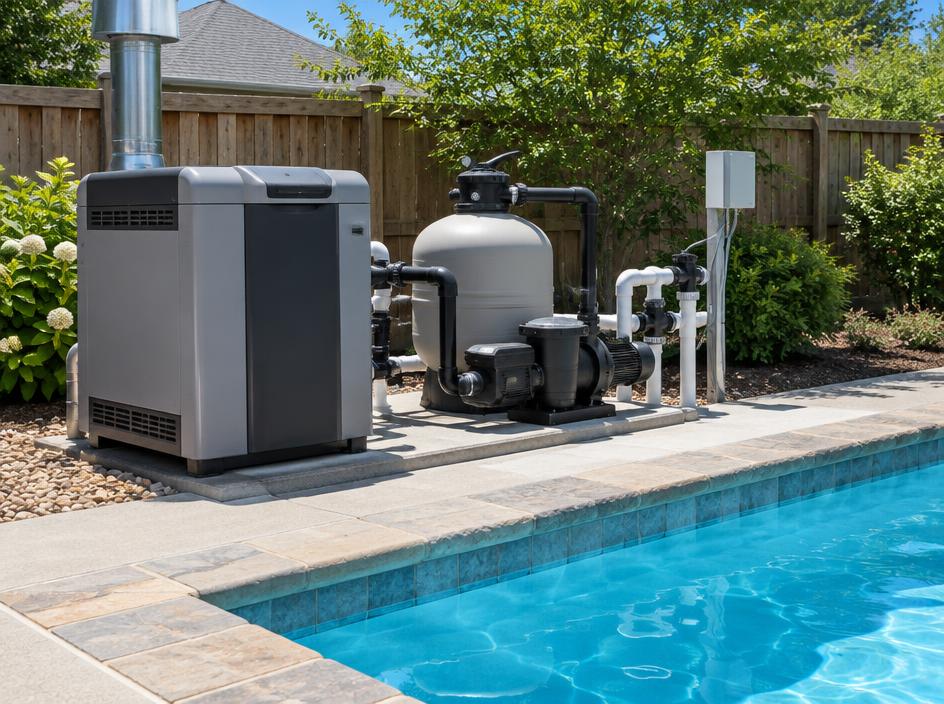
Signs you need pool furnace repair
- Heater will not fire or shows an ignition or pressure error
- Water is not reaching the set temperature
- Water leaking from the heater cabinet
- Soot, rust or burnt smell around the unit
- Heater cycles on and off rapidly
What is included
- Error code diagnosis and control board check
- Burner, igniter and flame sensor inspection
- Pressure switch, flow and bypass checks
- Heat exchanger and plumbing leak inspection
- Startup test and temperature rise check
What is not included
- Replacement heat exchangers or control boards (quoted first)
- Pool pump or filter replacement
- Pool opening, closing or chemical balancing
Our process
- 1
Share the details
Brand, model and any error code on the display help us bring the right parts.
- 2
On-site testing
We check gas supply, water flow and electrical controls.
- 3
Clear options
Repair or replacement options with pricing.
- 4
Repair and run
We fix, fire the heater and confirm temperature rise.
Repair or replace?
Igniters, sensors and pressure switches are inexpensive fixes. A leaking or heavily corroded heat exchanger on an older heater often means replacement is the smarter choice.
Customer reviews
Sample review for design preview, not a real customer
“Spring opening check on our heater. They found a small leak at a union before it became a bigger problem.”
Sample review for design preview, not a real customer
“Pool heater kept throwing an ignition code in June. They cleaned the burner tray, replaced the igniter and walked me through the startup sequence.”
Frequently asked questions
Related services
Nearby areas we serve
Complete guide
Pool Furnace Repair: what to know
Most people search for pool furnace repair when something has already gone wrong, or when they want to get ahead of a problem before the season starts. Either way, this guide gives you the full picture: how your pool furnace works, what fails, how we approach the job and how pricing works.
Pool Furnace Repair covers diagnosis, service and repair for your pool furnace. We start by understanding the symptoms, then test the parts most likely to be involved.
You get a clear explanation of what we found and a written price before any work begins, so you stay in control of the decision.
What to watch for after your pool furnace repair
If something does not seem right after the work, contact us rather than adjusting the pool furnace yourself. Describing exactly what changed since the visit helps us respond quickly and accurately.
It also helps to note the date of the visit. Many maintenance tasks work on a yearly cycle, and a reminder set for the same month next year keeps the pool furnace on a sensible schedule.
The issues behind most pool furnace repair calls
Not every pool furnace problem looks the same from the outside. The list below covers what we find most often on pool furnace repair visits.
Keep in mind that the same symptom can have different causes on different models of pool furnace. That is why we diagnose rather than guess, and why a written price comes after testing, not before.
- Heater cycles on and off while the pump runs
- Visible corrosion or white deposits on fittings
- Sooting, rust or scale on the heat exchanger
- Heater will not ignite or shows an error code
- Clicking or rumbling during start-up
- Heater starts, then shuts off after a few minutes
- Gas smell near the heater pad
- Pool does not reach the set temperature
Maintenance tips to prevent future pool furnace repair
Keep the area around the heater clear through the season: no leaning pool equipment, stored chemicals or dense shrubs against the cabinet. Good airflow keeps combustion safe and makes service visits faster.
Balanced pool chemistry protects the heater. Low pH or high chlorine can corrode the heat exchanger from the inside, which is one of the most expensive failures a pool heater can have.
Between professional visits, the biggest favour you can do your pool furnace is paying attention. Listen for new sounds, watch for changes in performance and deal with small issues before the busy season arrives.
How to get ready for the visit
Before we arrive, gather anything that tells the story of your pool furnace: the model and serial number if you can find them, previous invoices, and notes about what the equipment has been doing.
Plan for access and parking, especially in condos and townhomes where entry needs booking or a fob. The smoother the arrival, the more of the visit goes to actual diagnosis and repair.
Warranty questions for pool furnace repair work
Before approving a big repair, check whether the part is still covered. Many manufacturers warrant major components far longer than the labour coverage, and a five-minute check of your paperwork can save real money.
Ask for the warranty terms on any new part in writing: what is covered, for how long, and what the claim process looks like.
Older equipment: what changes
Older equipment is not automatically bad equipment. Plenty of twenty-year-old units run safely and well. What changes with age is parts availability, efficiency and the math on repairs, so the decision framework shifts rather than the answer.
If your pool furnace is past its expected lifespan, it is worth knowing roughly what replacement would cost before something fails. A number in hand turns an emergency decision into a planned one.
Timing for a typical pool furnace repair job
Most pool furnace repair visits take one to two hours once the technician is on site. Straightforward service and common repairs usually finish in a single visit, while jobs needing special-order parts or a permit inspection can stretch over two appointments.
The easiest way to shorten the visit is preparation: have the model and serial number ready, clear access to the pool furnace and describe the symptoms in the quote form. Technicians can often bring the likely part on the first trip.
What happens during a pool furnace repair visit
The visit starts with a conversation. The technician asks what you have noticed, when it started and whether anything changed recently, such as a power outage, renovation or new appliance. This often points straight to the cause.
Next comes a visual inspection and testing. Depending on the pool furnace, that can include gas pressure readings, electrical tests on sensors and igniters, venting checks and a full operating cycle. Findings are explained as the work goes, and you can ask to see any worn or failed part.
Before any repair, you receive a written price for parts and labour. If a part needs ordering, we tell you the expected wait and whether the pool furnace is safe to use in the meantime. After the work, the system is tested again and you get notes on what was done.
Why your service history matters
Take a photo of the rating plate on your pool furnace and keep it with your records. Model and serial numbers are the first thing any technician or parts supplier will ask for, and they are rarely in a convenient spot.
Note the date of each service visit and set a reminder for the next one. Most pool furnace care runs on a yearly cycle, and a reminder is the cheapest maintenance tool there is.
When repair makes sense, and when it does not
There is no universal answer, but there are honest questions. How old is the pool furnace? Has it needed repeated repairs in recent years? Would new equipment cut your gas or electricity use enough to matter? Are parts still easy to get?
We walk through those questions with you on site and price both paths when the decision is close. If a repair buys you several more reliable years for a reasonable amount, we will say that too, even though replacement is the bigger job.
Habits that shorten the life of a pool furnace
The most expensive mistake we see is ignoring small changes: a new noise, a slower start, a faint smell. Each one is the pool furnace telling you something, and the repair is almost always smaller while the symptom is small.
The second mistake is repeated resetting. Turning a unit off and on can clear an error code temporarily, but the fault that caused it is still there, and safety switches that trip repeatedly are doing an important job.
Where we provide pool furnace repair
Backyard pools are common in Lorne Park Road corridors, Erin Mills and Streetsville. Heaters there are often installed beside the pool equipment pad, exposed to sun, rain and winter cold, which makes seasonal care especially important.
Pool Furnace Repair is available city-wide: Mississauga Valleys, Port Credit, Rathwood, Rockwood Village, Sheridan, Streetsville, Applewood, Central Erin Mills, Churchill Meadows and Clarkson, and every neighbourhood around them. Travel time stays short, which helps when the problem cannot wait.
What pool furnace repair costs
Most pool furnace repair jobs fall somewhere between $250 to $800, and a typical job lands close to $530. Treat these as indicative market figures: the real number depends on your pool furnace and is only confirmed after we assess it.
What pushes a job toward the high end? Hard-to-reach equipment, older units with discontinued parts, extra venting or gas work, and permit requirements. What keeps it low? A common fault on a common unit with good access.
The fastest way to a firm number is the quote form on this page. Include the make, model and a photo if you can, and mention anything unusual about access. Our price estimator also gives a ballpark range if you just want a starting point.
weather and your pool furnace
Life near Lake Ontario keeps humid in summer and biting in winter, and both extremes show up in service calls. Summer humidity stresses cooling equipment and chimney draft; winter cold stresses everything that burns fuel.
Equipment installed outdoors or in unheated spaces needs the most weather attention. Wind, snow and ice find the weak points first, so exterior terminations and cabinets deserve a look after every major storm.
Questions worth asking your technician
You do not need technical knowledge to interview your technician. "What did you find?", "What are my options?" and "What would you do if it were your house?" cover most of what matters.
Write the answers down or ask for them in the visit notes. When the next decision about your pool furnace comes up, you will be glad you did.
How a pool furnace works
Heat pumps and solar systems are alternatives to gas. They cost less to run but heat more slowly. Many homeowners keep gas because it can bring a cool pool up to temperature quickly for a weekend.
Sizing matters with pool heaters. An undersized heater runs constantly and still struggles in spring and fall, while an oversized unit short-cycles. Heater size is matched to pool volume, desired temperature and how quickly you want the water to get there.
No two pool furnaces are exactly alike, and age matters as much as brand. Older equipment often has simpler parts that are easy to source, while newer units are more efficient but rely on sensors and control boards that need proper testing equipment to diagnose. Knowing which you have shapes the whole visit.
When to book pool furnace repair
winters are long and summers are humid, so demand for home heating and gas services rises and falls with the weather. Fireplaces, furnaces and water heaters get the most calls in October through January, while air conditioners and pool heaters peak from May through August.
Booking pool furnace repair just before the busy season usually gives you more choice of appointment times and leaves room to order parts without rushing. If your pool furnace has been showing small warning signs, such as new noises, slower performance or higher gas bills, it is worth having it checked before a minor fault becomes a breakdown.
Emergencies do not follow a calendar, though. If something stops working at a bad moment, contact us with as much detail as you can and we will tell you honestly how soon a technician can get there.
Choosing the right company for pool furnace repair
A good provider makes the process easy to follow. You should understand what is being done to your pool furnace and why, and never feel pressured into an upgrade you did not ask for.
- Get the diagnosis explained before approving any repair
- Confirm gas work will be done by a properly certified technician
- Ask who handles permits and inspections if the job needs them
- Compare quotes on the same scope: parts, labour, testing and cleanup
- Look for clear answers about repair versus replacement
- Check reviews that mention the same service you need
What you get when you book with EmberRise Pro
- Respect for your home: floor protection and a clean work area
- Straight answers about your pool furnace, including when repair is not worth it
- Options explained in plain language, not trade jargon
- Written pricing approved by you before any repair
- Follow-up notes so you know exactly what was done
A word on safety
Gas lines and bonding wires around pool equipment should never be moved or buried during landscaping without checking first. If you are redoing a deck or garden near the equipment pad, have the setup reviewed before work starts.