
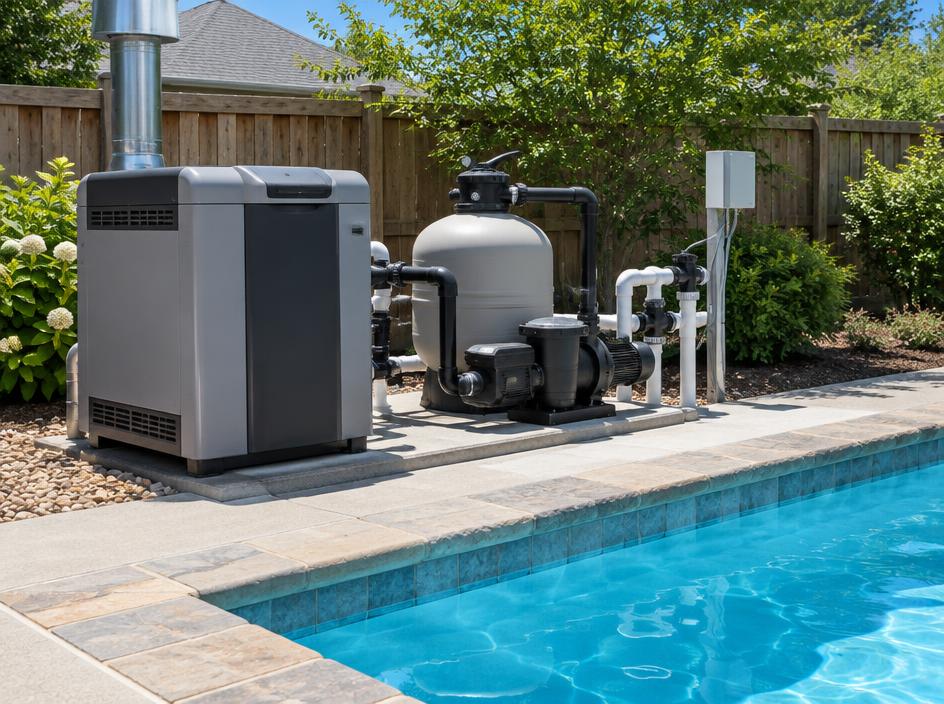
Signs you need pool heaters repair
- Heater will not fire or shows an ignition or pressure error
- Water is not reaching the set temperature
- Water leaking from the heater cabinet
- Soot, rust or burnt smell around the unit
- Heater cycles on and off rapidly
What is included
- Error code diagnosis and control board check
- Burner, igniter and flame sensor inspection
- Pressure switch, flow and bypass checks
- Heat exchanger and plumbing leak inspection
- Startup test and temperature rise check
What is not included
- Replacement heat exchangers or control boards (quoted first)
- Pool pump or filter replacement
- Pool opening, closing or chemical balancing
Our process
- 1
Share the details
Brand, model and any error code on the display help us bring the right parts.
- 2
On-site testing
We check gas supply, water flow and electrical controls.
- 3
Clear options
Repair or replacement options with pricing.
- 4
Repair and run
We fix, fire the heater and confirm temperature rise.
Repair or replace?
Igniters, sensors and pressure switches are inexpensive fixes. A leaking or heavily corroded heat exchanger on an older heater often means replacement is the smarter choice.
Customer reviews
Sample review for design preview, not a real customer
“Spring opening check on our heater. They found a small leak at a union before it became a bigger problem.”
Sample review for design preview, not a real customer
“Pool heater kept throwing an ignition code in June. They cleaned the burner tray, replaced the igniter and walked me through the startup sequence.”
Frequently asked questions
Related services
Nearby areas we serve
Complete guide
A homeowner's guide to pool heaters repair
Most people search for pool heaters repair when something has already gone wrong, or when they want to get ahead of a problem before the season starts. Either way, this guide gives you the full picture: how your pool heaters works, what fails, how we approach the job and how pricing works.
Pool Heaters Repair covers diagnosis, service and repair for your pool heaters. We start by understanding the symptoms, then test the parts most likely to be involved.
You get a clear explanation of what we found and a written price before any work begins, so you stay in control of the decision.
What to watch for after your pool heaters repair
If something does not seem right after the work, contact us rather than adjusting the pool heaters yourself. Describing exactly what changed since the visit helps us respond quickly and accurately.
It also helps to note the date of the visit. Many maintenance tasks work on a yearly cycle, and a reminder set for the same month next year keeps the pool heaters on a sensible schedule.
How to choose a pool heaters repair provider
The right company treats your questions as part of the job, not an interruption. If an answer about your pool heaters feels evasive, keep looking.
- Get the diagnosis explained before approving any repair
- Confirm gas work will be done by a properly certified technician
- Ask who handles permits and inspections if the job needs them
- Compare quotes on the same scope: parts, labour, testing and cleanup
- Look for clear answers about repair versus replacement
- Check reviews that mention the same service you need
Signs your pool heaters needs attention
Not every pool heaters problem looks the same from the outside. The list below covers what we find most often on pool heaters repair visits.
Keep in mind that the same symptom can have different causes on different models of pool heaters. That is why we diagnose rather than guess, and why a written price comes after testing, not before.
- Rodent damage to wiring after winter
- Water leaking from the heater cabinet
- The heater fires but the water temperature barely rises
- Pool does not reach the set temperature
- Heater will not ignite or shows an error code
- Display is blank or buttons do not respond
- Gas smell near the heater pad
- Visible corrosion or white deposits on fittings
How long pool heaters repair takes
A routine pool heaters repair appointment is usually measured in hours, not days. What slows a job down is hard-to-reach equipment, discontinued parts, and discoveries along the way, such as venting or connections that also need work.
If something changes the timeline, we tell you as soon as we know, so you are never left guessing when the pool heaters will be back in service.
When to book pool heaters repair
Every trade has a rush season, and heating and gas work is no different. The first cold snap of fall fills schedules fast, and the first hot week of summer does the same for cooling equipment.
If your pool heaters repair is not urgent, the quiet weeks between seasons are the easiest time to book. You get more flexible appointment windows and, if a part has to be ordered, the wait matters less.
That said, a pool heaters showing warning signs should not wait for a convenient month. Small faults grow, and a breakdown in January is harder on everyone than a check in September.
Getting more from the energy you pay for
Efficiency losses are usually gradual, which is why they go unnoticed. A pool heaters that runs a little longer each cycle costs a little more each month, and over a few years the drift adds up to real money.
Regular maintenance keeps equipment close to its rated performance. When replacement time comes, the efficiency jump from older equipment to new is often large enough to factor into the decision.
Warranties and paperwork
Manufacturer warranties usually expect the equipment to be installed and serviced properly, so keep your invoices and service records. If your pool heaters is still under warranty, say so when booking, because the process for parts may differ.
We are an independent service company, not a warranty provider. We will tell you honestly when a claim through the manufacturer or installer is your better route.
Before the technician arrives
Clear a path to the equipment and about a metre of space around it. Move fragile items, keep pets in another room and let us know about any access codes, parking limits or building rules if you live in a condo or townhouse complex.
If you have past service records, manuals or warranty paperwork, keep them handy. They help the technician understand the history of your pool heaters.
What to ask during the visit
Good questions get good answers. Ask what failed and why, what else was close to failing, what the repair prevents and what could have prevented the failure. A technician who welcomes these questions is one worth keeping.
Also ask what to watch for in the weeks after the visit. Every repair has a short list of signs that would mean something related is developing, and knowing them costs nothing.
Understanding your pool heaters
Sizing matters with pool heaters. An undersized heater runs constantly and still struggles in spring and fall, while an oversized unit short-cycles. Heater size is matched to pool volume, desired temperature and how quickly you want the water to get there.
Heat pumps and solar systems are alternatives to gas. They cost less to run but heat more slowly. Many homeowners keep gas because it can bring a cool pool up to temperature quickly for a weekend.
The details vary by model, but the pattern holds across pool heaterss homes: a small wear part usually fails first, and catching it early keeps the repair small. That is why we test the cheap, common failures before the expensive ones, and why a symptom that seems minor is still worth a call.
Mistakes that make pool heaters problems worse
The most expensive mistake we see is ignoring small changes: a new noise, a slower start, a faint smell. Each one is the pool heaters telling you something, and the repair is almost always smaller while the symptom is small.
The second mistake is repeated resetting. Turning a unit off and on can clear an error code temporarily, but the fault that caused it is still there, and safety switches that trip repeatedly are doing an important job.
Where we provide pool heaters repair
Many pool installations date from the 1990s and 2000s, and original heaters from those builds are now at or past the end of their working life. Replacement often includes updating gas connections and bonding to current requirements.
Pool Heaters Repair is available city-wide: Mississauga Valleys, Port Credit, Rathwood, Rockwood Village, Sheridan, Streetsville, Applewood, Central Erin Mills, Churchill Meadows and Clarkson, and every neighbourhood around them. Travel time stays short, which helps when the problem cannot wait.
Comparing quotes without the guesswork
When you collect quotes for pool heaters repair, compare scope, not just the bottom line: diagnosis, parts, labour, testing, permits and cleanup should all be spelled out. A low number that leaves half of these out is not actually the low number.
A second opinion is always reasonable, especially on a big repair. Any company confident in its diagnosis will not mind you checking it.
When repair makes sense, and when it does not
There is no universal answer, but there are honest questions. How old is the pool heaters? Has it needed repeated repairs in recent years? Would new equipment cut your gas or electricity use enough to matter? Are parts still easy to get?
We walk through those questions with you on site and price both paths when the decision is close. If a repair buys you several more reliable years for a reasonable amount, we will say that too, even though replacement is the bigger job.
When pool heaters repair can wait, and when it cannot
Some symptoms mean stop using the equipment now: a gas smell, a carbon monoxide alarm, visible scorching, or water pooling where it can reach wiring. Others, like a gradual drop in performance, are safe to book at a convenient time.
When you are unsure, describe the symptom in the quote form and ask. An honest answer about urgency costs nothing and can save a rushed decision about your pool heaters.
Pricing for pool heaters repair
The estimated range for pool heaters repair is $250 to $800, with many jobs averaging around $530. This is an estimated range based on typical market prices, and your final price is confirmed after assessment.
The main things that move the price are the age and type of the pool heaters, the parts needed, access (tight spaces, finished ceilings or rooftop work take longer), and whether permits or inspections are required. HST is added to the final invoice.
To get an accurate quote quickly, send the make and model, a photo of the unit and its rating plate, and a short description of the problem. You can use the quote form on this page or try our online price estimator for a starting range.
How a pool heaters repair appointment works
Every visit follows the same basic shape: listen first, test second, repair third. Skipping the first two steps is how homeowners end up paying for parts they did not need, so we do not skip them.
Testing on a pool heaters can involve pressure readings, electrical checks on sensors and controls, venting inspection and a full operating cycle. The technician explains each finding as it happens, and you can ask questions at any point.
Nothing is done without your approval. You get the price in writing first, options when there is more than one way to solve the problem, and honest advice if the pool heaters is not worth repairing. The work area is left clean when we go.
How to avoid repeat pool heaters repair calls
Check the heater display periodically while the pool is open. An error code that appears intermittently is much easier to diagnose early than after the heater has locked out completely.
Keep the area around the heater clear through the season: no leaning pool equipment, stored chemicals or dense shrubs against the cabinet. Good airflow keeps combustion safe and makes service visits faster.
Between professional visits, the biggest favour you can do your pool heaters is paying attention. Listen for new sounds, watch for changes in performance and deal with small issues before the busy season arrives.
How we handle every job
- Respect for your home: floor protection and a clean work area
- Straight answers about your pool heaters, including when repair is not worth it
- Options explained in plain language, not trade jargon
- Written pricing approved by you before any repair
- Follow-up notes so you know exactly what was done
Safety notes worth reading
Gas lines and bonding wires around pool equipment should never be moved or buried during landscaping without checking first. If you are redoing a deck or garden near the equipment pad, have the setup reviewed before work starts.