
The first shower of the morning is fine, but by the time the second person steps in the water is lukewarm. Or the dishwasher and a shower at the same time leave everyone cold. Running out of hot water too fast is one of the most common household complaints we hear, and it tends to show up gradually until one day it becomes impossible to ignore.
The cause depends on the type of water heater you have and its age. Tank water heaters usually lose capacity because of sediment or a failing part. Tankless water heaters usually struggle because of scale, flow limits or sizing. This guide explains how each type works, the most common causes, what you can safely check, what repair or maintenance involves, and when replacement or an upgrade makes more sense.
How tank and tankless water heaters differ
A tank water heater stores and heats a set amount of water, often 40 or 50 gallons homes. A gas burner under the tank keeps it hot, and the hot water you use is replaced by cold water that is then heated. Once the stored hot water is used, you have to wait for the tank to recover.
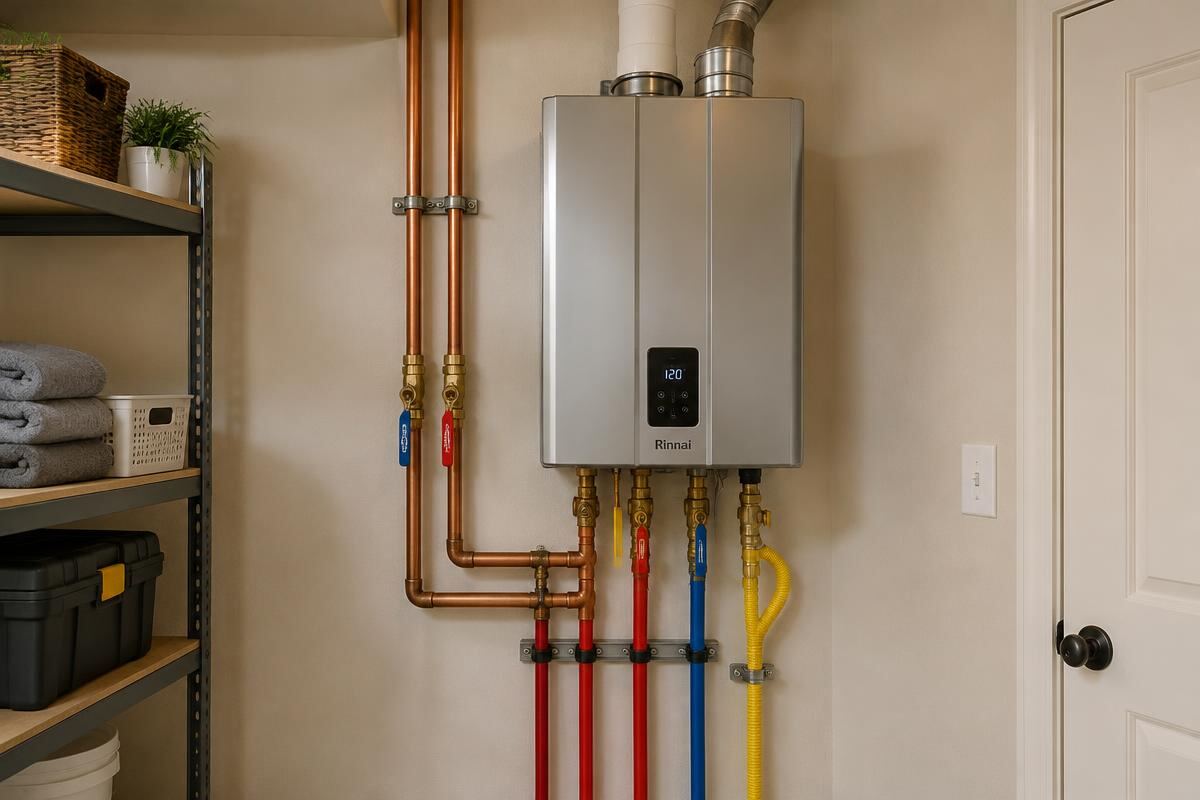
A tankless water heater heats water on demand as it flows through a heat exchanger. It never runs out the way a tank does, but it can only heat a certain flow rate at once. If too many fixtures run together, or if scale builds inside the heat exchanger, the temperature drops. Both types can deliver great hot water when they are sized and maintained correctly.
Why a tank water heater runs out of hot water quickly
When a tank heater starts running out early, the cause is usually one of these.
- Sediment buildup at the bottom of the tank, which takes up space and insulates the water from the burner.
- A broken dip tube, which lets incoming cold water mix with the hot water at the top of the tank.
- A thermostat or gas control set too low or not working properly.
- A burner or pilot problem that slows recovery.
- A tank that is simply too small for how the household uses hot water now.
- An ageing tank near the end of its life, often ten to fifteen years old.
Rumbling or popping sounds during heating are a common sign of heavy sediment. Rusty water or water around the base are signs the tank itself may be failing and should be checked soon.
Why a tankless water heater goes cold
Tankless heaters have their own set of issues. The most common in our area is scale, because hard water leaves mineral deposits in the heat exchanger. Scale reduces heat transfer and can trigger error codes or temperature swings.
- Scale buildup in the heat exchanger from hard water.
- Running too many fixtures at once beyond the unit's flow capacity.
- A clogged inlet filter screen restricting flow.
- Minimum flow issues with low-flow fixtures, causing the burner to shut off.
- Venting, gas supply or combustion air problems.
- Error codes related to ignition or flame detection.
What you can safely check
Some quick checks can help you understand the problem without touching gas parts or opening the unit.
- Notice whether the problem happens with one fixture or the whole home.
- Check whether several fixtures were running at the same time.
- On a tank, look at the temperature setting on the gas control and note it.
- Look for water around the base of a tank or under a tankless unit.
- On a tankless unit, write down any error code on the display.
- Check whether low hot water pressure is affecting only one tap, which may be a fixture issue.
Please do not attempt to drain a tank that is leaking, remove gas parts, or relight the burner yourself. If you smell gas, leave the home right away, then call the gas utility emergency line and 911.
What water heater repair and maintenance involve
For tank heaters, a technician inspects the burner, flue, gas control and venting, checks the dip tube and anode rod condition, and flushes sediment from the tank. If a part such as the thermocouple, gas control or dip tube has failed, it can often be replaced on the visit.
For tankless heaters, maintenance usually includes descaling the heat exchanger with a pump and approved solution, cleaning the inlet filter, checking the venting, testing combustion and clearing error history. When done regularly, descaling restores performance and helps the unit last much longer.
Water heater repair cost
Costs depend on the type of heater, the part involved, and whether maintenance has been skipped for a long time. Flushing a tank or descaling a tankless unit are at the lower end. Part replacements such as a thermocouple or dip tube are mid-range. Gas controls and major tankless components cost more.
Our pricing page shows estimated ranges for water heater repair, maintenance and installation. They are estimated ranges only, and the final price is confirmed after assessment. We confirm the price before any work starts.
Repair, replace or switch to tankless?
If your tank water heater is more than ten to twelve years old, leaking or rusting, replacement is usually the better choice. If the tank is fine but too small for your family, a larger tank or a tankless water heater installation can solve the problem for good.
Tankless heaters suit households that want endless hot water and save space in the utility room. They require proper gas line sizing and venting, so installation is more involved. A technician can compare the cost, gas supply and installation requirements for both options before you decide.
Not sure what's causing it?
A technician can diagnose it on the first visit and confirm the price before any work.
How to keep your hot water flowing
Regular maintenance is the best prevention. Flushing a tank heater once a year and descaling a tankless unit every one to two years, depending on water hardness, keeps performance high. Ask a technician to check the anode rod in a tank every few years.
Set the temperature to a safe, comfortable level, avoid running every hot water appliance at the same time on a small heater, and address leaks or strange noises early. Small issues are cheaper to fix than a flooded basement.
Warning signs your water heater needs attention
Running out of hot water is often just the first symptom. Other signs that a water heater needs service or is nearing the end of its life include:
- Rumbling, popping or crackling noises while the burner runs.
- Rusty or discoloured hot water.
- A metallic taste or smell in hot water.
- Moisture, rust or corrosion around the base or fittings of a tank.
- Water temperature that swings between hot and cold during a shower.
- Frequent error codes or shutdowns on a tankless unit.
- A pilot light that will not stay lit on a tank heater.
If you see water pooling under a tank, call promptly. A small leak can turn into a large one with little warning, and water damage in a finished basement is expensive.
Choosing the right size water heater
Many households run out of hot water simply because their needs changed. A tank that was fine for two people may struggle when children become teenagers, when a rain shower head is added, or when a soaker tub is installed during a bathroom renovation.
For tank heaters, sizing considers the first-hour rating, which is how much hot water the heater can deliver in an hour starting with a full tank. For tankless heaters, sizing considers peak flow in litres or gallons per minute and the temperature rise needed in winter, when incoming water is coldest. In , incoming water is much colder in January than in July, which is why some tankless units feel fine in summer and fall short in winter. A technician can size the heater properly based on your fixtures and habits.
Hard water and its effect on hot water performance
Water in many parts of the region carries enough minerals to cause noticeable scale over time. In tank heaters, these minerals settle as sediment. In tankless heaters, they form scale on the hottest surfaces inside the heat exchanger. Both reduce efficiency and capacity.
Regular flushing and descaling is the simplest defence. Some homeowners also choose a water softener or scale-reduction system to protect their water heater and fixtures. If you notice white crust on taps and shower heads, your water heater is likely dealing with the same minerals inside.
Hot water problems in different situations
When the hot water runs out matters. If it runs out only during busy mornings, your water heater may be undersized for the household or sediment has reduced its capacity. If it runs out quickly at any time of day, a broken dip tube or failing burner is more likely. If the water gets hot, then cold, then hot again during a single shower on a tankless system, it often points to scale, a low-flow fixture or a minimum flow problem.
If hot water disappears completely, a pilot that has gone out, a tripped safety device or an ignition failure is the likely cause. If the water is hot but there is very little pressure, the issue may be a clogged aerator, a partly closed valve or scale in the piping. Describing these patterns when you request water heater repair helps the technician bring the right parts and solve the problem on the first visit.
Book water heater service
If you keep running out of hot water, EmberRise Pro can diagnose the cause and recommend the right fix. We service tank and tankless water heaters, including Meadowvale, Lisgar, Erin Mills and Applewood. Send a quote request with your heater type, age if known and what is happening, and our team will confirm availability and pricing.